



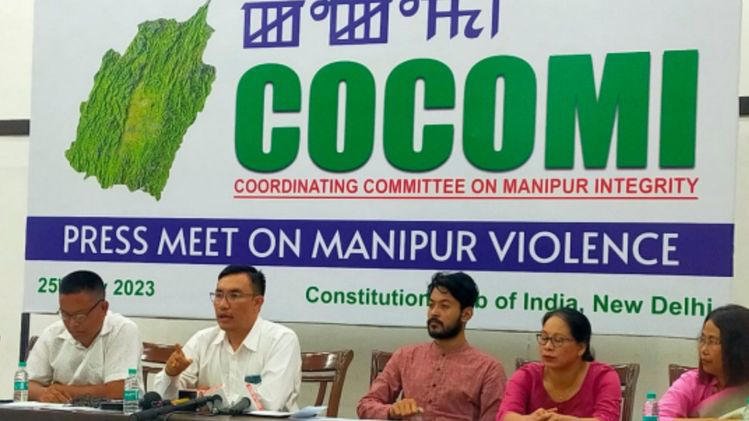
COCOMI IDP resettlement plan demand has intensified in Manipur as the Coordinating Committee on Manipur Integrity called for a written and time-bound roadmap for the rehabilitation of internally displaced persons. The civil society body urged the state government to initiate concrete action within December, warning that continued delays could worsen humanitarian distress.
The demand comes amid prolonged displacement caused by ethnic violence that erupted in Manipur last year. Thousands of families continue to live in relief camps or temporary shelters, facing uncertainty over their return and rehabilitation.
Read More: Tripura Assembly Speaker Biswabandhu Sen Dies in Bengaluru
COCOMI IDP Resettlement Plan Demand Explained
The COCOMI IDP resettlement plan demand focuses on clarity, accountability, and urgency. According to COCOMI, verbal assurances are no longer sufficient for displaced families who have waited months for a structured rehabilitation process.
The organisation said a written plan would ensure transparency and allow affected communities to understand timelines, safety arrangements, and livelihood support measures. Therefore, it urged the government to formally outline steps for resettlement, reconstruction, and compensation.
COCOMI also stressed that uncertainty fuels anxiety among IDPs. Consequently, a clear policy document could help restore confidence and prevent further social unrest.
Plight of Internally Displaced Persons in Manipur
Manipur continues to grapple with one of the largest internal displacement crises in the Northeast. Thousands of IDPs remain housed in relief camps across several districts, dependent on government aid and humanitarian assistance.
According to civil society groups, living conditions in many camps remain challenging. Issues related to sanitation, healthcare, education, and employment persist. Moreover, prolonged displacement has disrupted social networks and livelihoods.
COCOMI stated that while emergency relief was necessary in the initial phase, the situation now requires long-term rehabilitation planning. Therefore, resettlement has become a pressing priority.
Urging Action Within December
COCOMI urged the Manipur government to initiate resettlement measures within December, citing the urgency of restoring normalcy. According to the organisation, further delays could deepen mistrust and prolong suffering.
It said winter conditions and the academic calendar have added pressure on displaced families, especially children. Consequently, timely action is essential to prevent long-term social and psychological damage.
The group warned that without a clear timeline, displaced persons may lose faith in the administrative process. Hence, December has been identified as a critical window for visible progress.
Call for Safety and Confidence-Building Measures
Beyond physical resettlement, the COCOMI IDP resettlement plan demand emphasises security and trust-building. The organisation stated that displaced families would not return unless safety is guaranteed.
Accordingly, it called for adequate deployment of security forces, restoration of law and order, and confidence-building measures between communities. Moreover, COCOMI stressed that rehabilitation must not occur under coercion.
The group argued that voluntary and dignified return should be the guiding principle. Therefore, peace-building initiatives must accompany administrative action.
Demand for Government Accountability
COCOMI also called for greater accountability from the state administration. It urged the government to engage with stakeholders, including civil society groups and IDP representatives, while drafting the resettlement plan.
According to the organisation, inclusive consultation would help address ground realities more effectively. Furthermore, it would ensure that the resettlement process does not overlook vulnerable groups.
The organisation reiterated that a written plan would allow for public scrutiny and monitoring. Consequently, this could reduce misinformation and speculation.
Government Response and Administrative Challenges
While the Manipur government has stated its commitment to rehabilitation, officials have cited security and logistical challenges. Authorities have said that restoring peace remains a prerequisite for large-scale resettlement.
However, civil society groups argue that planning can proceed alongside security efforts. Therefore, they insist that the absence of a written roadmap reflects administrative inertia rather than insurmountable obstacles.
Observers note that coordination between the state government, central agencies, and security forces will be crucial for implementation.
Broader Implications for Manipur’s Stability
The COCOMI IDP resettlement plan demand carries broader implications for Manipur’s stability. Prolonged displacement risks entrenching divisions and undermining social cohesion.
Experts warn that unresolved humanitarian crises can fuel resentment and radicalisation. Consequently, timely and inclusive rehabilitation is essential for lasting peace.
COCOMI concluded that December should mark the beginning of a credible resettlement process. According to the organisation, only decisive action can restore dignity to displaced families and move Manipur toward reconciliation and recovery.
Read More: Orunodoi 3.0 Launched in BTR, CM Extends ₹1,250 Aid to 4.12 Lakh Families