





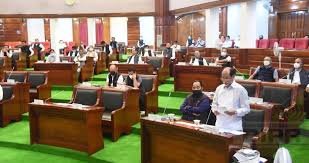
The 8th session of the 14th Nagaland Legislative Assembly concluded successfully after a seven-day sitting conducted across two phases. Lawmakers reviewed key bills, debated policy issues, and discussed developmental priorities for the state. This session reflected the Assembly’s commitment to governance, legislative reforms, and public welfare.
Meghalaya Joins Jal Jeevan Mission 2.0 to Boost Rural Water Supply
8th Session of the 14th Nagaland Assembly
The 8th session of the 14th Nagaland Legislative Assembly convened for seven days, spread over two distinct phases. Lawmakers addressed multiple issues, including state policies, developmental projects, and amendments to ongoing legislation. The session highlighted the Assembly’s focus on inclusive governance and proactive debate.
The phased approach allowed members to deliberate on key matters thoroughly while ensuring smooth coordination among various committees. Additionally, it provided time for detailed discussions on bills and motions, demonstrating the Assembly’s structured legislative process.
Tripura Elections 2026: CM Manik Saha Leads BJP Campaign
Key Highlights of the Session
- Legislative Debates: Several bills were discussed, with special attention on reforms impacting rural development and infrastructure.
- Policy Review: Ongoing government schemes were assessed for effectiveness and implementation strategies.
- Committee Reports: Committees presented their findings on issues ranging from finance to social welfare, ensuring transparency.
- Development Priorities: Lawmakers emphasized projects in healthcare, education, and transportation to enhance the state’s overall progress.
This session reinforced Nagaland’s commitment to responsive and accountable governance while addressing citizens’ concerns.
Importance of Two-Phase Sitting
Conducting the session in two phases allowed lawmakers to focus on specific policy areas without being rushed. It also ensured time for committees to gather data, review proposals, and provide informed recommendations.
Key advantages include:
- Structured debate with adequate time for every topic
- Efficient decision-making on crucial bills
- Enhanced participation of all members
- Better documentation of discussions and resolutions
This method has been praised as a model for balancing legislative efficiency and thorough deliberation.
Impact on Governance and Public Policy
The session’s discussions will influence key policy areas, including:
- Infrastructure Development: Approval and monitoring of state projects to improve connectivity.
- Healthcare and Education: Allocation of funds for rural hospitals and schools.
- Economic Growth: Strategies to boost employment and local entrepreneurship.
- Social Welfare Programs: Policies aimed at improving quality of life for marginalized communities.
By concluding the session effectively, the Assembly has paved the way for smoother governance and faster implementation of development plans.
FAQs About Nagaland Legislative Assembly Session
Q1: How long did the 8th session last?
A1: The session lasted seven days and was conducted in two phases for thorough deliberation.
Q2: What was discussed in the session?
A2: Lawmakers debated bills, reviewed ongoing schemes, discussed developmental priorities, and assessed committee reports.
Q3: Why was the session held in two phases?
A3: The phased approach allowed for detailed discussions, committee input, and structured legislative decision-making.
Q4: How does the session impact citizens?
A4: Decisions taken during the session affect state policies, infrastructure, education, healthcare, and social welfare programs.
Q5: What is the significance of the 14th Assembly?
A5: The 14th Nagaland Legislative Assembly represents the current elected government, responsible for policymaking, law-making, and governance in the state.
Conclusion
The 8th session of the 14th Nagaland Legislative Assembly marked an important milestone in state governance. During this session, structured debates, committee reports, and careful policy reviews not only reinforced transparency and accountability but also strengthened responsiveness. Furthermore, by successfully completing this seven-day, two-phase sitting, the Assembly set a strong precedent for future legislative sessions, ensuring that governance continues to be effective, inclusive, and citizen-focused.