





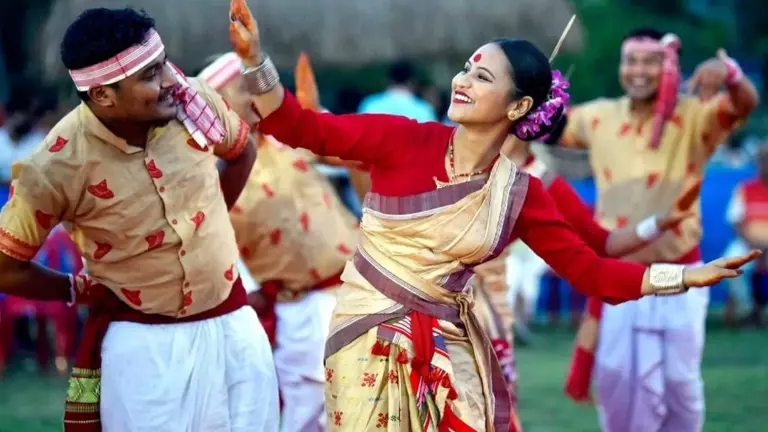
Magh Bihu 2026 in Assam marks one of the most important cultural and agricultural festivals of the state. Also known as Bhogali Bihu, it celebrates the end of the harvest season and the spirit of community, gratitude, and abundance. Observed with traditional rituals, grand feasts, Meji burning, and vibrant Bihu music, Magh Bihu holds deep cultural and social significance for the people of Assam.
Moreover, Magh Bihu 2026 in Assam reflects the close connection between agrarian life and festive traditions. The festival brings families, neighbours, and villages together to celebrate prosperity, unity, and renewal.
Read More: SHGs Strengthening Rural Economy in Tripura: Minister Ratan Lal Nath
Magh Bihu 2026 in Assam: Date and time
Magh Bihu 2026 in Assam will be celebrated on January 15, 2026. The festival coincides with Makar Sankranti, which marks the Sun’s transition into the zodiac sign of Capricorn.
The celebrations usually begin on the night of January 14 with Uruka, followed by the main Magh Bihu rituals on January 15. The timing symbolises the end of the agricultural cycle and the beginning of a new phase of hope and prosperity.
Significance of Magh Bihu 2026 in Assam
Magh Bihu 2026 in Assam is primarily a harvest festival. It represents gratitude to nature for a successful harvest and prayers for future abundance. Unlike Rongali Bihu, which focuses on new beginnings, Magh Bihu centres on enjoyment, sharing, and contentment.
The festival also highlights the importance of community living. People come together to cook, eat, and celebrate collectively, reinforcing social bonds and mutual harmony.
Uruka: The night before Magh Bihu
The celebrations of Magh Bihu 2026 in Assam begin with Uruka, observed on the eve of the festival. On this night, people gather near rivers, fields, or community spaces to prepare traditional feasts.
Families and villagers cook together in temporary huts known as Bhelaghar. The Uruka feast includes rice, fish, meat, vegetables, and traditional Assamese delicacies. The night is filled with laughter, storytelling, and music, creating a joyful atmosphere.
Meji burning ritual
One of the most iconic rituals of Magh Bihu 2026 in Assam is the Meji burning ceremony. Early in the morning, people gather to light the Meji, a tall structure made of bamboo, wood, and dried leaves.
As the Meji burns, offerings such as pithas, betel nuts, and rice are made to the sacred fire. People pray for prosperity, good health, and protection. The ashes of the Meji are later scattered in fields, symbolising fertility and agricultural prosperity.
Traditional rituals and customs
Magh Bihu 2026 in Assam includes several traditional rituals that vary slightly across regions. After the Meji burning, people take a holy bath and wear clean or traditional clothes.
Homes are cleaned and decorated, and elders bless younger family members. Offering food to guests and neighbours is considered a sacred duty, reflecting the festival’s spirit of sharing and generosity.
Festivities and community celebrations
Festivities during Magh Bihu 2026 in Assam extend beyond rituals. Traditional games, fairs, and cultural programmes are organised in many places. People participate in activities that strengthen community ties.
Rural areas often witness open-air gatherings, while urban centres host organised cultural events. Despite modern influences, the essence of Magh Bihu remains rooted in simplicity and togetherness.
Bihu music and dance
Bihu music plays an important role during Magh Bihu 2026 in Assam. Traditional instruments like the dhol, pepa, taal, and gagana fill the air with rhythmic beats.
Although Rongali Bihu is more closely associated with dance, folk songs and musical performances are common during Magh Bihu celebrations as well. These songs express joy, gratitude, and cultural pride.
Traditional food and delicacies
Food is central to Magh Bihu 2026 in Assam. Various types of pitha such as til pitha, narikol pitha, and tekeli pitha are prepared in almost every household.
Other delicacies include laru, doi-chira, sunga saul, and fresh rice products. These traditional foods reflect Assam’s agricultural richness and culinary heritage.
Cultural importance in modern times
Even in modern times, Magh Bihu 2026 in Assam continues to hold strong cultural relevance. While lifestyles have changed, the festival remains a reminder of collective identity and respect for nature.
Young generations actively participate in celebrations, ensuring that traditions are preserved. Thus, Magh Bihu continues to bridge the past and present.
Conclusion
Magh Bihu 2026 in Assam is more than a harvest festival. It is a celebration of abundance, unity, and gratitude rooted in Assamese culture. With its meaningful rituals, Meji burning, festive feasts, and soulful Bihu music, the festival brings people together in joy and harmony. As Assam welcomes Magh Bihu 2026, the spirit of sharing and togetherness continues to shine brightly across the state.
Read More: At 70th AKM meet, CM Rio flags Naga issue