





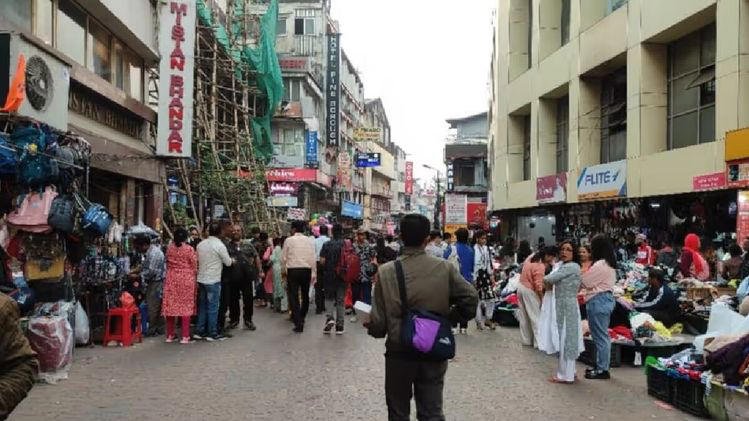
Shillong, as a leading hawkers’ body has raised objections to the state government’s move to relocate roadside vendors. The protest signals growing unrest among those who rely on street vending as their primary source of income.
The Meghalaya and Greater Shillong Progressive Hawkers and Street Vendors Association (MGSPHSVA) has voiced strong opposition to the state’s decision to shift hawkers from key commercial areas. The group fears the plan will directly affect the livelihood of hundreds of families without ensuring adequate alternative arrangements.
Read More: 6th Tripura Finance Commission begins state-wide tax review tour
Hawkers Say Plan Lacks Consultation and Transparency
According to MGSPHSVA leader Angela Rangad, the relocation policy has not involved proper consultation with hawkers or their representatives. She accused the state government of bypassing democratic processes and ignoring the rights of informal workers.
She stated that, “The move violates the Street Vendors (Protection of Livelihood and Regulation of Street Vending) Act, 2014, which clearly lays out procedures for identification and relocation through Town Vending Committees (TVCs).”
The TVC, as mandated by the Act, should consist of street vendors, municipal officials, NGOs, and civil society members to ensure fair decision-making. However, Rangad alleged that the state government has been taking unilateral action without involving TVCs in recent decisions.
Shillong Vendors Worry About Their Future
Vendors, especially those operating near Police Bazaar and Iewduh, expressed fears that relocation would push them into poverty. Most of them operate without formal licenses but have worked in the same spots for decades. They believe they are being targeted in the name of urban beautification and traffic management.
“We don’t want to block roads or make things hard for the public. But we also need to survive,” said Rina Syiem, a fruit vendor from Laitumkhrah. She said her daily earnings support her children’s education and household expenses.
Many hawkers claim that alternative sites offered by the government are far from high-footfall areas, making it difficult for them to earn a decent income.
Government Defends the Relocation Move
Urban Affairs Minister Sniawbhalang Dhar defended the government’s plan, stating it is meant to decongest busy city areas. He added that the administration is exploring all legal and humane options for relocating the hawkers without hurting their income opportunities.
“The objective is to restore order in urban spaces, ensure public safety, and improve infrastructure,” said Dhar during a press briefing. He assured that hawkers would not be removed forcefully and alternative vending zones would be developed with proper amenities.
However, critics argue that such promises remain vague and inconsistent. Past assurances to establish vending zones have yet to be fully realized.
Legal and Policy Framework Ignored?
Legal experts point out that the state is bound to follow the 2014 Act, which emphasizes inclusive decision-making through TVCs. The law also prohibits eviction or relocation of street vendors without proper surveys and identification processes.
The hawkers’ body has submitted memorandums to both the Urban Affairs Department and the Shillong Municipal Board, urging them to halt all evictions until the legal framework is followed.
Several rights groups and civil society organisations have also expressed solidarity with the hawkers, demanding that the state respect constitutional safeguards protecting livelihood and dignity.
Political Reactions and Public Opinion
Political leaders from opposition parties have started weighing in on the issue. Members of the Trinamool Congress and the Congress have called for a review of the relocation policy. They stressed that while urban development is important, it must not come at the cost of marginalised communities.
Meanwhile, residents of Shillong appear divided. While some support the government’s effort to ease traffic congestion, others sympathize with the hawkers’ plight and call for a more balanced approach.
Local shopkeepers have also raised concerns. Many claim hawkers attract customers and help increase footfall in the area. “If the hawkers are gone, business might drop for everyone,” said a shop owner in Police Bazaar.
What the Hawkers Demand
The MGSPHSVA has listed several demands in response to the state’s actions. These include:
- Immediate halt to any relocation until proper surveys are completed.
- Formation and reactivation of TVCs across urban centres.
- Transparent identification and registration of genuine hawkers.
- Development of vending zones close to commercial areas.
The group has also threatened to launch a state-wide protest if authorities do not respond positively within a stipulated time.
Way Forward
As the standoff intensifies, experts suggest that the government must adopt a more inclusive and rights-based approach. The issue of hawker relocation is not just about urban design, but also about social justice and equitable development.
A well-thought-out rehabilitation plan, created through consensus with hawkers and other stakeholders, could lead to a long-term solution. Until then, any forced eviction or unplanned relocation could spark more resistance and deepen the mistrust between authorities and the informal workforce.
Read More: Tripura District Council Must Form Panel to Spot Illegals: Pradyot