





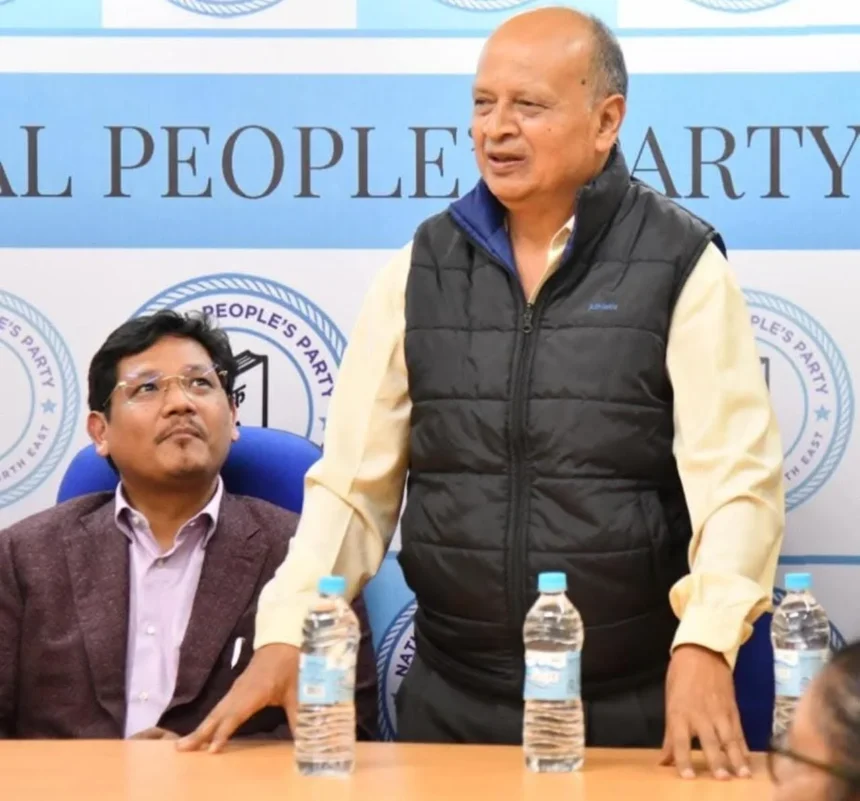
Meghalaya Rajya Sabha MP Dr Wanweiroy Kharlukhi on Thursday urged the Centre to expedite scientific coal mining in the state. He warned that the prolonged ban imposed by the National Green Tribunal (NGT) in 2014 has triggered serious socio-economic and security challenges, including a rise in drug smuggling in former coal mining areas.
Raising the issue during Zero Hour in the Rajya Sabha, the National People’s Party (NPP) MP said the ban severely affected thousands of families who depended on coal mining for their livelihoods. He stressed that the continued delay in implementing scientific mining has deprived many citizens of their basic right to earn.
“Coal caters to the needs of thousands of families in Meghalaya. The right to earn is a fundamental right of every citizen. Unfortunately, my people have been deprived of that right for years,” Dr Kharlukhi said.
Read More: Health Department Signs MoU to Launch AMRIT Pharmacy for Affordable Medicines
Economic Impact on Families and Institutions
The MP explained that the ban not only disrupted individual livelihoods but also weakened key local institutions. Autonomous District Councils (ADCs), which relied heavily on coal revenue, faced acute financial stress after mining activities stopped.
As a result, several councils struggled to pay salaries, leaving employees unpaid for months. Dr Kharlukhi said the situation created widespread hardship across mining-dependent regions.
He also highlighted the impact on the education sector. Before the 2014 ban, the Meghalaya government collected over ₹600 crore annually through coal cess. The state used this revenue to support educational institutions and pay teachers’ salaries.
However, coal cess collections dropped to zero after the ban. Consequently, teachers staged protests across the state over delayed and unpaid salaries, exposing the long-term fallout of the mining halt.
Support for Sixth Schedule Reforms
Dr Kharlukhi expressed support for Assam MPs who have demanded amendments to the Sixth Schedule of the Constitution. According to him, strengthening autonomous district councils across the Northeast would help protect local interests and improve governance in resource-rich regions.
He welcomed the Centre’s decision to allow scientific coal mining in Meghalaya. However, he stressed that authorities must move quickly to implement it on the ground. He said further delays could worsen economic distress and social instability.
Drug Smuggling a Growing Concern
The MP also raised concerns over a recent surge in drug smuggling in former coal mining zones. He warned that abandoned mining areas now risk becoming transit points for illegal activities.
According to Dr Kharlukhi, the absence of economic opportunities has made these regions vulnerable to criminal networks. He urged the Centre and enforcement agencies to take immediate steps to prevent Meghalaya from turning into a corridor for drug trafficking.
“Delays in restoring lawful mining activities have created a vacuum. Anti-social elements are taking advantage of this situation,” he cautioned.
Call for Immediate Action
Dr Kharlukhi urged the Centre to balance environmental protection with economic justice. He said scientific coal mining offers a regulated and sustainable solution that can revive livelihoods while protecting the environment.
He concluded by calling for swift policy execution, stronger border surveillance, and coordinated action between the Centre and the state. According to him, timely intervention would restore economic stability and prevent further security risks in the region.
Also Read: CM Manik Saha Praises Rapid Growth of Agartala Government Dental College