





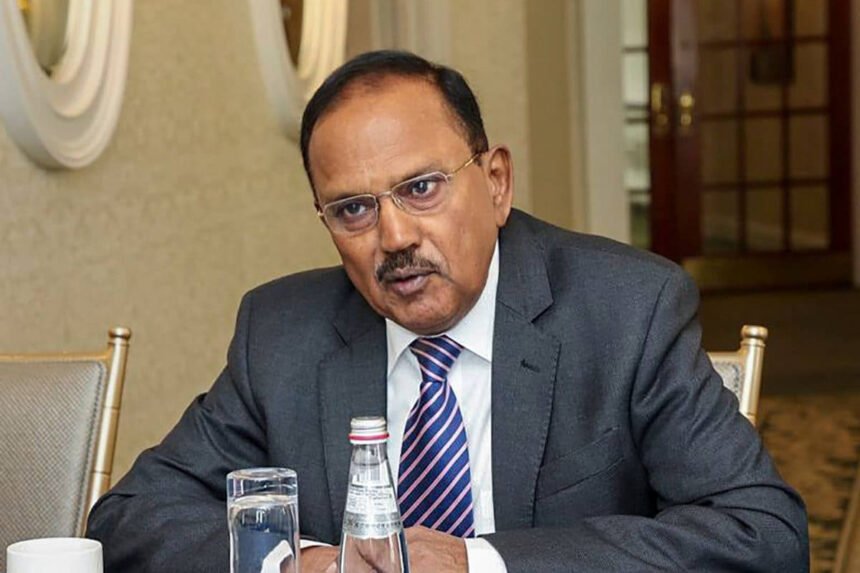
India is reportedly seeking a more prominent role in the Middle East, partnering with Saudi Arabia, the United Arab Emirates (UAE), and the US, while also monitoring China’s increasing influence in the region. According to sources, National Security Advisor Ajit Doval recently met with Saudi Prime Minister and Crown Prince Mohammed bin Salman, UAE National Security Advisor Sheikh Tahnoon bin Zayed Al Nahyan, and US NSA Jake Sullivan. This marks India’s second such attempt to engage more deeply in Middle Eastern affairs. While India, the US, Israel, and the UAE have been part of the I2U2 initiative since 2022, the new initiative aims to create a strategic or military alliance against Iran.
The Sunday meeting in Jeddah, driven by the Saudis and the Americans, aimed to create a “robust front” against Iran, despite Riyadh and Tehran’s “understanding” brokered by Beijing. The meeting was also intended to lay down the roadmap for the grouping, with a possible leaders’ meeting later in the year. The White House and Riyadh issued statements regarding the meeting, saying it aimed to strengthen relations between participating countries to “enhance growth and stability” in the region and “advance their shared vision of a more secure and prosperous Middle East region interconnected with India and the world.”
US Secretary of State Antony Blinken is expected to visit Saudi Arabia next month to assess the progress made on the Global Coalition against ISIS/ Daesh, formed in September 2014. Doval and Sullivan held a bilateral meeting on the sidelines of the Jeddah meeting and will meet again in Australia during the Quad Summit later this month. Sullivan and the Saudi Crown Prince reviewed significant progress in talks aimed at consolidating the now 15-month-long truce in Yemen, according to the White House.
However, some analysts view the US’s involvement as a desperate attempt to participate in West Asia now that China has brokered a peace deal between Iran and Saudi Arabia, thereby scuttling the US’s original plan to form a military alliance against Iran. Talmiz Ahmad, a former Indian envoy to Saudi Arabia, believes that India’s involvement is part of a multi-alignment strategy. Ahmad added that it was important for India to deal with China bilaterally and be cautious when dealing with the Middle East.
In early April, Saudi Arabia and Iran held official-level talks for the first time since 2016, facilitated by China under a deal brokered in March. Despite their acrimony, the two countries agreed to reopen their diplomatic missions in each other’s countries and resume flights.

