





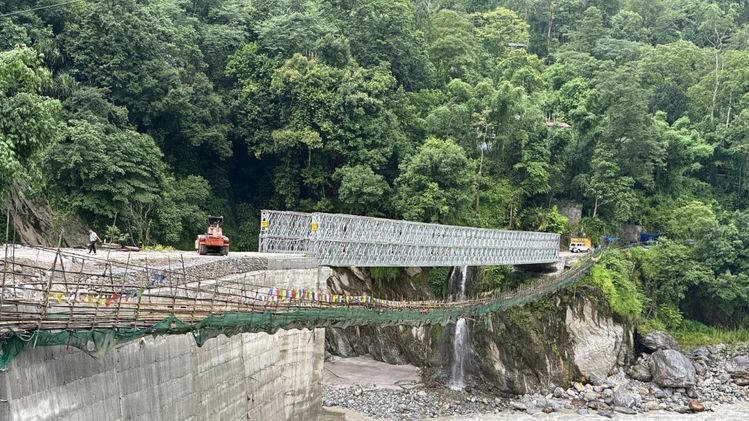
The Sanklang Bridge has officially reopened, re-establishing a vital connection to North Sikkim. The reopening marks the end of months of restricted access following the destruction of the previous bridge during severe floods in the Teesta River. Authorities, local businesses, and residents have welcomed the development, which is expected to revive economic activity and ease travel.
The Sanklang Bridge serves as a critical link between Mangan district and the rest of Sikkim. For months, the absence of this bridge had forced travelers and transporters to take long detours, significantly increasing travel time and costs. The restoration now brings a sense of normalcy to the region, which had been struggling with disrupted supplies and limited mobility.
Read More: Sikkim Pakyong Airport Revival on Agenda as Centre, Airlines Meet
Swift Action to Restore Connectivity
Following the flood damage, the Sikkim Public Works Department prioritized the reconstruction of the bridge. Engineers and workers braved challenging weather and terrain to complete the project within a tight timeline. Their efforts have ensured that vehicles, goods, and passengers can now move freely along the route once again.
The state government recognized the urgency of restoring the connection due to its importance for trade, tourism, and emergency services. Without the bridge, even basic deliveries like medical supplies and food had faced delays. The reopening is being seen as both a logistical and symbolic victory for the people of North Sikkim.
Boost to Local Economy
The reopening of the Sanklang Bridge is expected to deliver a major boost to the local economy. Businesses in Mangan and surrounding areas can now resume normal operations without the added costs of long detours. Farmers and traders, who depend on the route to transport their produce, anticipate quicker deliveries and reduced spoilage.
Tourism, one of North Sikkim’s key economic drivers, is also set to benefit. Popular destinations such as Lachung, Lachen, and Gurudongmar Lake are now more accessible. Tour operators expect a rise in bookings, especially with the upcoming festive season and winter tourism window.
Residents Welcome the Change
Local residents have expressed relief and gratitude for the reopening. For months, they had endured long travel times for even basic errands. Schoolchildren, office-goers, and patients in need of specialized medical care were among those most affected by the disruption.
One resident from Mangan noted that the bridge’s reopening would save them hours of travel each week. Another shop owner shared that the cost of transporting goods had nearly doubled during the closure, affecting their profit margins.
Engineering Challenges Overcome
Rebuilding the Sanklang Bridge was not without challenges. The site’s remote location, combined with monsoon rains and river currents, made construction work risky and demanding. Engineers designed the new structure to be more resilient against natural disasters, incorporating stronger materials and improved drainage systems.
The Public Works Department also introduced measures to ensure that the bridge remains functional even during heavy rains. Regular maintenance checks have been planned to detect and address any structural issues early.
Preparing for the Future
The reopening has also prompted discussions on disaster preparedness and infrastructure resilience in Sikkim. Officials are exploring ways to strengthen critical road links to prevent future disruptions. These include building alternate routes and reinforcing other bridges across the state.
Environmental experts stress the importance of integrating climate change considerations into infrastructure planning. The Teesta River’s flooding last year was a stark reminder of the growing risks posed by extreme weather events.
Tourism Sector Readies for Growth
With the Sanklang Bridge reopens, tourism stakeholders are optimistic about a rebound in visitor numbers. Hotels, homestays, and travel agencies are preparing to meet increased demand. Adventure tourism operators, who offer treks and expeditions in North Sikkim, are also expecting more clients.
Authorities have urged tourists to follow safety protocols while traveling, especially during the winter months when weather conditions can change rapidly. Efforts are underway to improve road signage, set up rest areas, and ensure emergency services are available along popular routes.
Political Leaders Praise the Effort
State leaders have lauded the quick completion of the bridge, crediting the teamwork between engineers, laborers, and government departments. The reopening ceremony saw participation from local officials, community leaders, and residents, highlighting the bridge’s significance to the region.
The government has also pledged continued investments in road and bridge infrastructure to support Sikkim’s growth. Officials reiterated their commitment to building stronger, disaster-resistant structures across the state.
A Symbol of Recovery
The reopening of the Sanklang Bridge is more than just an infrastructure milestone; it symbolizes resilience and community spirit. For months, the people of North Sikkim navigated hardships with determination. Now, with their lifeline restored, they can look ahead to renewed growth and stability.
As vehicles roll across the new bridge, they carry not just goods and passengers but also the hope of a stronger, more connected future for the region. The Sanklang Bridge stands as a testament to what can be achieved when urgency meets collective effort.
Read More: IMD Issues Heavy Rain Alert for Guwahati