





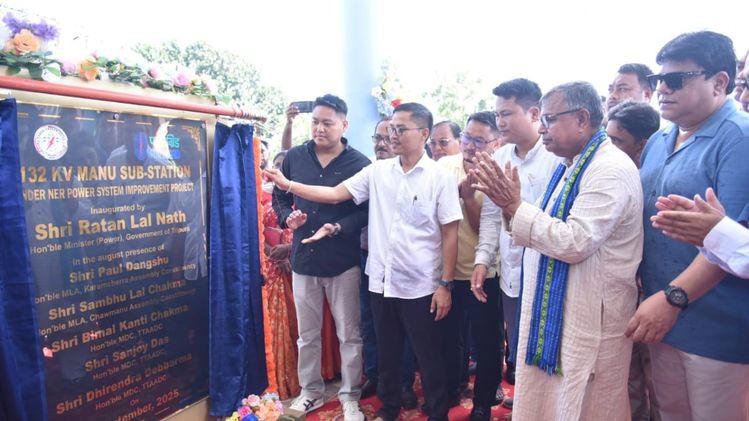
Tripura is intensifying its renewable energy mission with a new plan to generate 150 MW solar power in the next two years. The initiative highlights the state’s commitment to building a sustainable energy future while reducing reliance on conventional sources. By setting this ambitious target, Tripura aims to position itself as a leader in clean energy growth in Northeast India.
Read More: Nagaland CM Rio Promotes Handloom to Tackle Unemployment
Government push for Tripura solar power
The Tripura government has taken several steps to promote renewable energy projects across the state. With growing electricity demand and pressure to reduce carbon emissions, solar power has emerged as the most viable solution. Officials confirmed that multiple solar parks, rooftop projects, and decentralized mini-grids will be rolled out under this plan.
According to the state’s power department, partnerships with both public and private players will speed up implementation. Funding support is expected from central schemes as well as international agencies focusing on climate-friendly projects. By expanding Tripura solar power capacity, the government also hopes to strengthen energy security for rural and urban households.
Key projects and implementation roadmap
To achieve the 150 MW target, Tripura has identified land parcels suitable for solar parks and grid-connected projects. The state plans to develop both ground-mounted and rooftop installations to balance large-scale and decentralized generation. Schools, hospitals, and government buildings will also benefit from rooftop solar systems that reduce costs while ensuring clean electricity.
The Tripura Renewable Energy Development Agency (TREDA) is expected to play a leading role in coordinating these initiatives. Alongside large parks, the government will encourage small-scale entrepreneurs to adopt solar technologies. This dual approach will widen participation and create new business opportunities in the renewable energy sector.
Socio-economic impact of Tripura solar power projects
The benefits of expanding solar power go beyond environmental gains. Job creation is a major factor, as construction and maintenance of solar plants require skilled and semi-skilled workers. Training programs are being planned to equip local youth with technical knowledge, enhancing employment opportunities in renewable energy.
Additionally, Tripura solar power projects will help bring electricity to remote areas where grid access is limited. By relying on decentralized solar units, rural communities will receive reliable power for lighting, education, and small-scale businesses. This will directly contribute to economic growth and improve living standards across the state.
Addressing challenges in renewable energy growth
Despite the progress, Tripura faces certain challenges in scaling up renewable energy. Land availability for large projects, high upfront costs, and integration with existing grids remain hurdles. The government is working on policy reforms to attract investors by offering incentives, subsidies, and faster project clearances.
Experts believe that adopting hybrid models, such as solar-plus-storage systems, can overcome reliability concerns. Investments in battery technology and modern infrastructure will ensure consistent supply even during non-sunny hours. These measures are crucial for achieving long-term success in Tripura solar power development.
Aligning with national clean energy goals
Tripura’s target of 150 MW solar power expansion also aligns with India’s broader renewable energy vision. The country aims to achieve 500 GW of clean energy capacity by 2030, and northeastern states have been identified as vital contributors. By focusing on solar, Tripura is not only supporting national commitments but also setting an example for sustainable development in the region.
With continuous government support and active participation from citizens, Tripura solar power projects are likely to achieve the desired targets within the stipulated time. This will mark a significant step in balancing development with environmental responsibility.
Future outlook for Tripura solar power
In the coming years, the state’s focus will be on integrating advanced technologies like floating solar plants and smart grids. Such innovations will enhance efficiency and optimize resource use. Public awareness campaigns will also be launched to encourage households to adopt rooftop solar systems.
If the momentum continues, Tripura can emerge as a model for renewable energy-driven growth in the Northeast. By achieving its 150 MW goal, the state will not only reduce carbon emissions but also empower communities with clean and affordable energy solutions.
Read More: 5 Foods That Slow Metabolism