





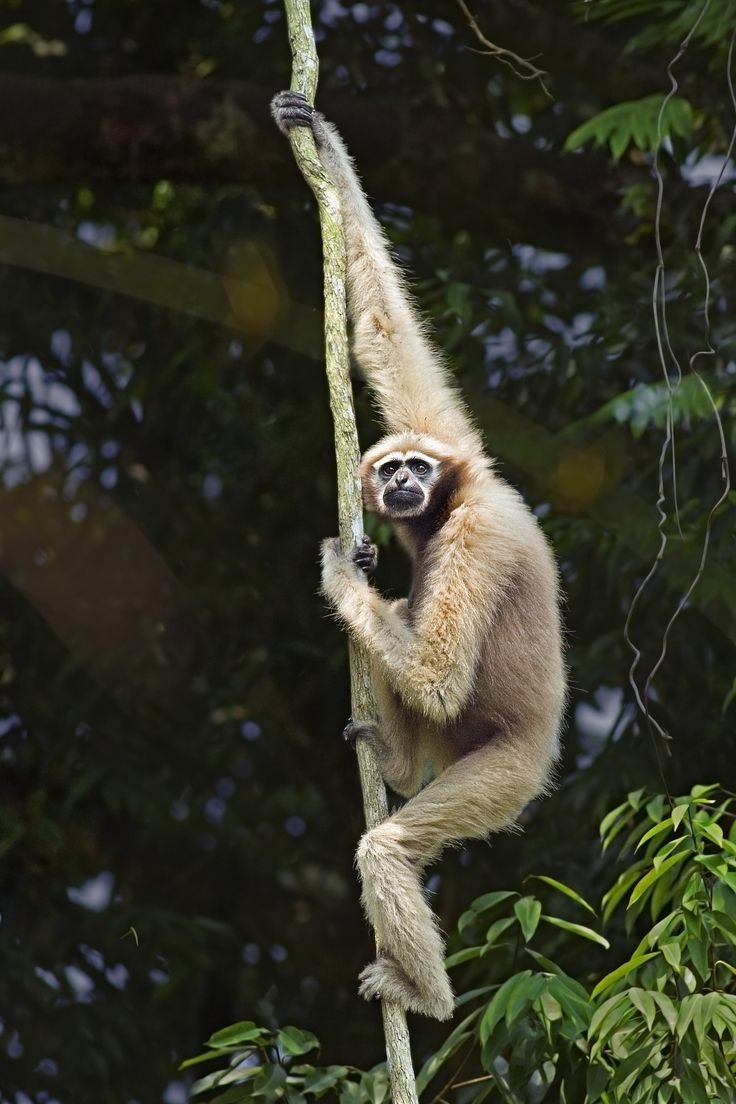
India’s only ape, the Western Hoolock Gibbon, has been officially named among the World’s 25 Most Endangered Primates (2025–27) by the IUCN SSC Primate Specialist Group. The news has sparked a renewed sense of urgency among conservationists, many of whom are now calling for a national initiative titled Project Gibbon.
This alarming designation places the gibbon alongside the world’s most threatened primates, highlighting the need for immediate, coordinated conservation efforts in India’s northeast.
Why the Western Hoolock Gibbon Is in Danger
The Western Hoolock Gibbon endangered status reflects decades of environmental pressure. These gibbons are found in Assam, Arunachal Pradesh, Meghalaya, and parts of Bangladesh and Myanmar. Although protected by law, their numbers have dropped to below 3,000 individuals in India.
Several interconnected factors threaten their survival:
- Deforestation caused by shifting cultivation and logging
- Fragmented forest canopies, which disrupt movement and mating
- Infrastructure development, such as roads and power lines
- Poaching and the illegal pet trade
“Without trees, gibbons cannot survive. They are true brachiators, relying entirely on forest canopies,” explains Dr. Arup Kalita, a primate ecologist based in Assam.
Project Gibbon: A Long-Overdue Conservation Mission
Inspired by the success of Project Tiger and Project Elephant, experts argue that a dedicated ‘Project Gibbon’ could rescue this species from extinction. So far, no such flagship program exists for India’s only ape.
What Should Project Gibbon Include?
To be effective, Project Gibbon should focus on:
- Restoring canopy corridors between fragmented forests
- Community-based conservation models
- Ban on infrastructure in gibbon habitats
- Research and long-term monitoring
- Awareness campaigns in nearby villages
Clearly, a coordinated policy backed by adequate funding is essential. Involving local stakeholders will make the project more sustainable.
“If we don’t act now, we could lose this species forever,” warns Dr. Aparna Singh of the Wildlife Trust of India.
Northeast India: A Fragile Ecosystem at Risk
It’s important to note that the Western Hoolock Gibbon endangered status reflects broader issues in Northeast India’s ecosystems. As part of the Indo-Burma Biodiversity Hotspot, the region houses nearly 15 primate species, making it a conservation priority.
However, rapid urbanization and poorly planned development projects have disrupted many of these biodiverse zones. Forest fragmentation continues to isolate gibbon populations, reducing their chance of survival.
Fortunately, some community reserves in Meghalaya and Assam have become shining examples of coexistence, where local people protect forests out of cultural reverence and economic interest.
Empowering Communities Is Key to Conservation
Conservationists emphasize that without the involvement of indigenous and tribal communities, no long-term strategy will succeed. These communities often share a deep connection with forests and wildlife.
By involving locals in monitoring, ecotourism, and forest protection, Project Gibbon could generate both conservation results and sustainable livelihoods.
“When the forest thrives, our culture survives,” says Nabina Marak, a community forest leader from Garo Hills.
In this context, the success of programs like the Hornbill Nest Adoption Programme shows that community-led conservation works.
Global Recognition Can Attract Global Support
The inclusion of the Western Hoolock Gibbon in the World’s 25 Most Endangered Primates list can also open doors to international funding and collaboration. Organizations such as Conservation International and the Wildlife Conservation Society often use this list to prioritize funding and field support.
India must now leverage this global attention to build momentum around gibbon conservation.
“The world is watching. We must not let this opportunity slip,” urges Dr. Kalita.
Support Project Gibbon Today
The Western Hoolock Gibbon endangered status is not just a list entry—it’s a call to action. If India wants to preserve its ecological heritage, it must act now.
Here’s how you can help:
- Donate to conservation groups like Wildlife Trust of India
- Raise awareness through schools and social media
- Write to policymakers to fund and launch Project Gibbon
- Support responsible ecotourism in the Northeast
A Race Against Time
The haunting morning calls of the Western Hoolock Gibbon echo through the treetops of Northeast India. But unless urgent steps are taken, those calls may fall silent forever. Conservationists, communities, and policymakers must now come together to secure a future for India’s only ape.
READ MORE: Maritime Skills Centre Northeast Approved by Centre