







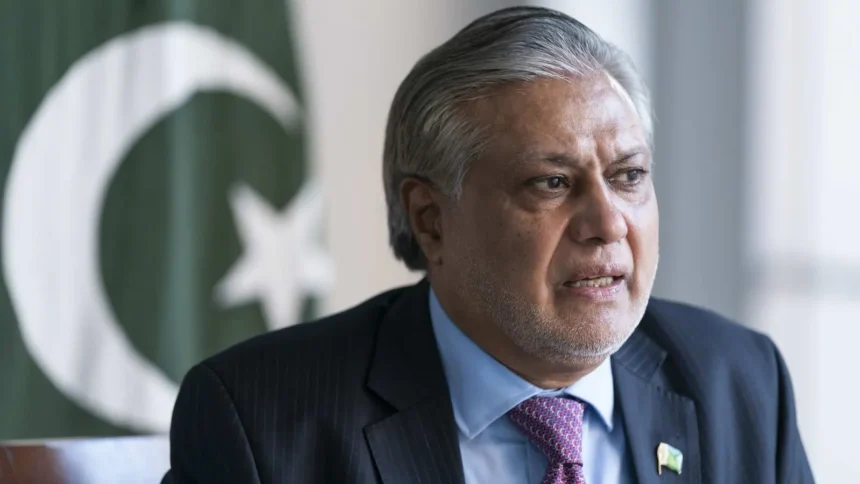
In a significant announcement, Pakistan’s Finance Minister, Ishaq Dar, declared that the country has emerged from its economic vulnerability phase. Speaking at a post-budget press conference in Islamabad, Dar assured that the government would make timely payments to multilateral lenders while also pursuing bilateral debt restructuring. The minister emphasized that there were no plans to approach multilateral or development institutions for debt rescheduling, indicating a renewed commitment to honor financial obligations.
The declaration came a day after the unveiling of Pakistan’s budget for the 2023-24 fiscal year, amounting to Rs 14.46 trillion, with the fiscal year commencing on July 1. Dar’s statement aimed to instill confidence in the international community and showcase Pakistan’s determination to address its economic challenges head-on.
Addressing concerns about debt repayment, Dar stated that Pakistan would not seek rescheduling of multilateral debt through institutions such as the Paris Club. He emphasized the government’s commitment to making payments on time, asserting that it would not be appropriate or dignified to approach lenders and express an inability to fulfill financial obligations.
The finance minister’s remarks reflect Pakistan’s efforts to stabilize its economy and regain financial credibility. By affirming the country’s commitment to meeting its debt obligations, Pakistan aims to foster trust among international lenders and investors. This proactive stance intends to reinforce the government’s economic reform agenda and its determination to implement necessary measures to achieve stability and growth.
Pakistan has faced economic challenges in recent years, including a high debt burden and fiscal deficits. However, the government has implemented various reforms to address these issues. Through measures such as increased tax collection, enhanced revenue generation, and improved governance, Pakistan has been gradually working towards economic recovery.
The budget for the upcoming fiscal year reflects the government’s commitment to fiscal discipline and growth-oriented policies. It emphasizes key sectors such as education, health, and infrastructure development while aiming to create a conducive environment for investment and job creation. The budget’s focus on revenue mobilization, reduction of non-development expenditure, and targeted subsidies demonstrates the government’s determination to improve fiscal management and reduce dependency on external sources of funding.
Dar’s announcement of Pakistan’s exit from the economic vulnerability phase and its commitment to debt repayment is an important step in rebuilding confidence in the country’s economy. It signals a shift towards a more sustainable and responsible approach to fiscal management. By prioritizing timely debt payments, Pakistan aims to strengthen its standing among international lenders and create an environment conducive to attracting foreign direct investment.
The government’s decision not to pursue multilateral debt rescheduling through the Paris Club reflects its belief in the country’s ability to meet its financial obligations independently. It underlines Pakistan’s commitment to maintaining its financial integrity and fostering trust in its economic policies. The decision also serves to encourage other countries to engage with Pakistan on mutually beneficial terms, promoting stronger bilateral economic partnerships.
As Pakistan moves forward with its economic agenda, it is crucial for the government to sustain its reform efforts, enhance revenue mobilization, and prioritize development initiatives. By maintaining fiscal discipline, strengthening governance, and promoting inclusive growth, Pakistan can further solidify its position as a stable and attractive destination for investment and economic cooperation.
Pakistan’s Finance Minister Ishaq Dar’s declaration of the country’s exit from the economic vulnerability phase and commitment to timely debt payments demonstrates the government’s determination to overcome economic challenges. By prioritizing financial responsibility and ruling out multilateral debt rescheduling, Pakistan aims to restore confidence in its economy, attract investment, and pave the way for sustained growth and stability.

