





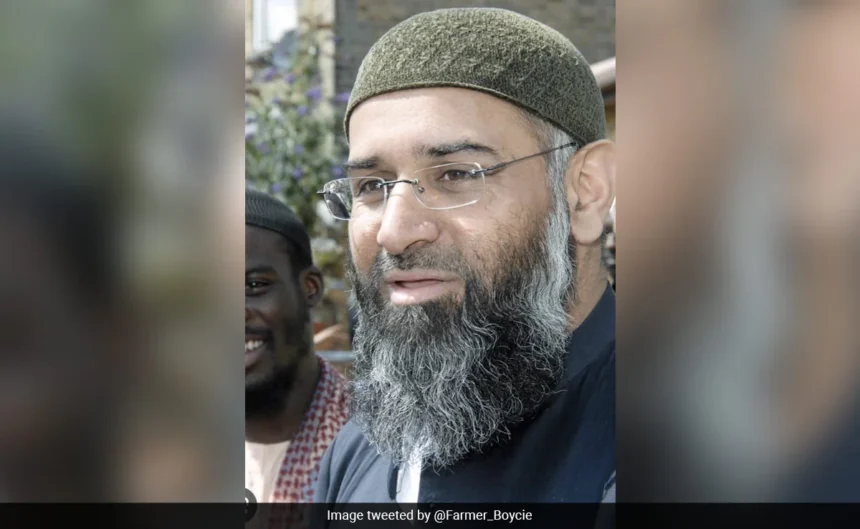
In a significant development concerning national security, Anjem Choudary, a prominent radical Islamist preacher with dual British and Pakistani nationality, has been charged with three terrorism-related offences in London. Choudary, 56, was released from prison several years ago and has been a subject of concern for authorities due to his extremist ideologies and connections with banned organizations.
On Sunday, the Metropolitan Police formally charged Choudary with membership of a proscribed (banned) organization, addressing meetings to encourage support for a proscribed organization, and directing a terrorist organization, all under different sections of the UK’s Terrorism Act 2000. The charges are the result of a comprehensive investigation into his activities and alleged involvement in activities promoting terrorism.
Choudary’s radical views and fiery speeches have been under scrutiny for years, attracting followers who share his extremist beliefs. His ability to inspire and mobilize individuals towards violent acts has raised alarm bells in the security establishment. The charges brought against him are a significant step towards holding him accountable for his actions and limiting his influence over potential extremists.
In a related counter-terrorism inquiry, a 28-year-old Canadian national named Khaled Hussein has also been arrested on charges of membership of a proscribed organization. The authorities are likely to explore any potential links between Hussein and Choudary’s network to determine the extent of their involvement in promoting terrorism.
The charges against Choudary highlight the UK’s commitment to combatting radicalization and terrorism within its borders. The Terrorism Act 2000 provides authorities with the necessary legal tools to identify and prosecute individuals involved in terrorist activities, ensuring that those who threaten national security are brought to justice.
Anjem Choudary first gained notoriety as the co-founder of the extremist group Al-Muhajiroun, which was banned in the UK in 2005. Despite its proscription, the group’s ideology continued to persist through various offshoots and individuals influenced by Choudary’s teachings.
In 2016, Choudary was sentenced to five and a half years in prison after being found guilty of inviting support for the Islamic State (ISIL), a designated terrorist organization. His release in subsequent years has been closely monitored by security agencies, as there were concerns that he might resume his activities and attempt to radicalize others.
The recent charges indicate that authorities have been actively monitoring Choudary’s movements and gathering evidence to support their case against him. The focus on addressing his alleged involvement in directing a terrorist organization is a testament to the seriousness of the threat posed by individuals who exploit their influence to promote violent extremism.
The arrest of Khaled Hussein, a Canadian national, in connection with the investigation underscores the global nature of the terrorist threat and the need for international cooperation in counter-terrorism efforts. The collaboration between UK and Canadian authorities signifies their commitment to dismantling transnational extremist networks.
The court appearance of Anjem Choudary in London on Monday is expected to draw significant attention from the media, the public, and the international community. As the legal proceedings unfold, it will be essential to ensure a fair trial while safeguarding sensitive information related to national security.
This development serves as a stark reminder of the challenges posed by radicalization and extremism, urging authorities to remain vigilant in their efforts to protect citizens from potential harm. The charges against Choudary and the arrest of Khaled Hussein reflect the ongoing dedication of security agencies in countering terrorism and upholding the rule of law.
As the case progresses, authorities will continue to investigate any potential links between Choudary, Hussein, and other individuals or groups to prevent further acts of terrorism. The fight against extremism is an ongoing battle that requires constant adaptability, cooperation, and determination to safeguard societies from the devastating consequences of terrorism.