




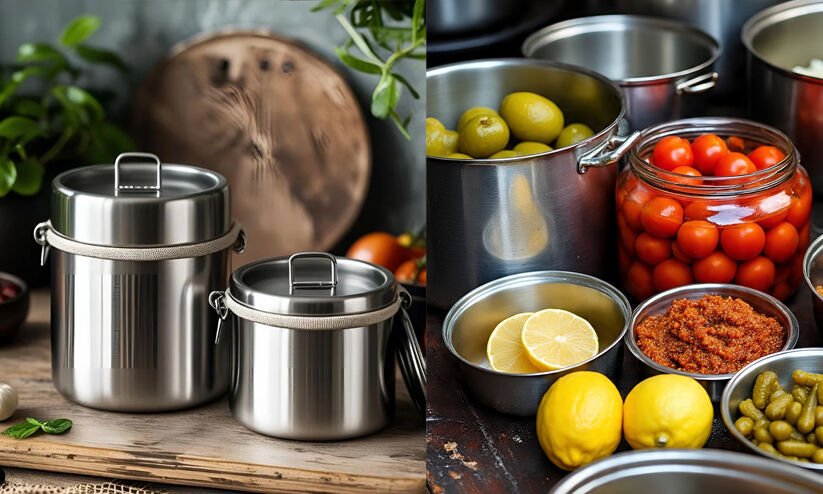
Stainless steel is a kitchen favorite, but there are certain items you must avoid storing in it. In this article, we’ll explore the top avoid steel foods that can react with metal, spoil faster, or lose nutritional value when stored improperly.
Read More: Blueberry vs Amla for Skin: Which One is Better?
1. Salted Pickles
Pickles, especially those made with salt and vinegar, are highly acidic. When stored in steel containers, they can react with the metal, leading to discoloration, off-flavors, and in some cases, metal leaching.
This reaction compromises the quality of the pickle and may affect your digestion over time. It’s always better to store pickles in glass jars, ceramic pots, or food-grade plastic containers to preserve their taste and longevity.
In the list of foods you should never store in steel containers, pickles top the chart due to their high acidity.
2. Curd (Yogurt)
Curd is another everyday food item that doesn’t belong in a steel container. Its natural fermentation makes it acidic. When curd comes in contact with steel over time, a chemical reaction may occur, making it taste metallic and sour.
Not only does this ruin the flavor, but it also destroys beneficial probiotics present in the curd. Always store curd in clay pots or glass bowls to retain its texture and health benefits.
This is one of the most commonly mishandled items in Indian kitchens, making curd a key entry on the list of foods you should never store in steel containers.
3. Tomato-Based Dishes
Tomatoes are packed with natural acids, particularly citric and malic acid. Curries, sauces, or chutneys made with tomatoes should never be stored in stainless steel, especially for long durations.
The acid from tomatoes can corrode the surface of the container and even cause harmful substances to leach into your food. Moreover, it affects the taste, often giving the dish a metallic tinge.
Use porcelain, enamel-coated, or borosilicate glass containers for storing tomato-based dishes safely.
4. Lemon Juice or Lemon-Based Foods
Lemons, much like tomatoes, are highly acidic and can quickly react with stainless steel. Storing lemon juice, lemonade, or any lemon-infused food in steel containers not only alters the flavor but may also reduce the vitamin C content.
Additionally, the tangy freshness of lemon is easily lost when stored improperly. For storing lemon-based items, always choose glass bottles or BPA-free plastic containers.
Given its common use in detox drinks and salad dressings, lemon juice is a key item among the foods you should never store in steel containers.
5. Tamarind Preparations
Tamarind is widely used in Indian cooking, from rasam and sambar to chutneys and sauces. However, it contains tartaric acid, which reacts strongly with steel, leading to both taste alteration and potential chemical contamination.
Storing tamarind pastes or tamarind-rich curries in steel can even discolor the container over time. Always use ceramic bowls or food-safe plastic when handling tamarind preparations.
Among all the foods you should avoid storing in metal containers, tamarind poses one of the most serious risks due to its high acid levels.
Why Does Steel React with Certain Foods?
While stainless steel is relatively non-reactive compared to other metals, prolonged contact with acids can cause chemical interactions. These reactions:
- Alter the taste and aroma of the food
- Break down nutrients like vitamin C
- Increase the risk of metal ions leaching into the food
This is why it’s important to know the foods you should never store in steel containers, especially if you regularly use leftovers or meal prep.
Better Storage Alternatives
To safely store acidic or fermented foods, consider these options:
- Glass containers: Best for visibility and safety
- Ceramic jars: Excellent for pickles and curd
- BPA-free plastic: Lightweight and affordable
- Silicone containers: Non-reactive and freezer safe
Using the right container not only keeps your food fresh but also protects your health.
Steel may be durable, but it’s not suited for everything. Understanding the foods you should never store in steel containers can save you from ruined dishes and health issues. Pickles, curd, tomato-based meals, lemon juice, and tamarind are all highly acidic and best kept in non-metal alternatives. By choosing the right storage solutions, you preserve flavor, nutrition, and safety—all in one step.
Read More: Himanta Slams TMC, Clarifies Stand on Infiltrators