




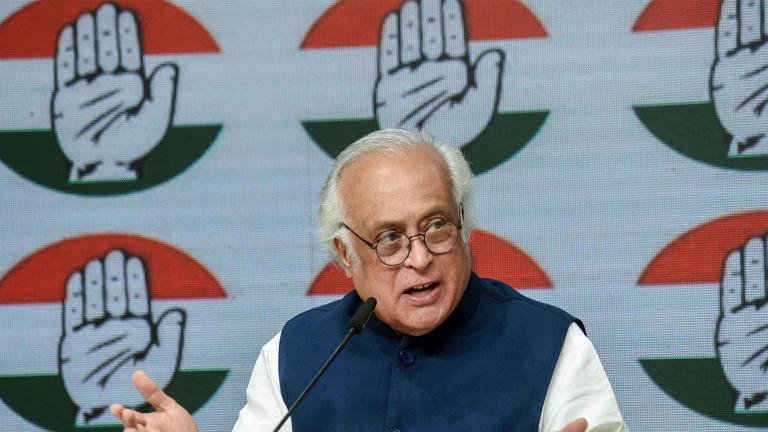
Jairam Ramesh ECI protest has come into focus after Jairam Ramesh clarified that his party’s actions were directed at the Election Commission of India and not at any political party. His statement comes amid controversy surrounding demands for the removal of the Chief Election Commissioner (CEC).
Speaking on the issue, he emphasized that the protest was aimed at safeguarding democratic processes. Therefore, it should not be interpreted as a political attack on rival parties.
Moreover, his remarks sought to address concerns about the nature of the protest. By clarifying the intent, he aimed to shift the focus back to institutional accountability.
Read More: Justice Surya Kant Arrives in Sikkim for National Conclave
Context of the CEC removal demand
The Jairam Ramesh ECI protest is linked to calls for the removal of the Chief Election Commissioner. Jairam Ramesh stated that the demand arises from concerns over the functioning of the Election Commission of India.
He argued that maintaining the integrity of electoral processes is essential for democracy. Therefore, any perceived lapses must be addressed.
In addition, he highlighted that the demand for accountability is not unprecedented. Institutions must be subject to scrutiny to ensure transparency. As a result, the issue has sparked wider debate.
Furthermore, he noted that the protest was based on specific grievances. These include concerns about fairness and impartiality in electoral processes.
Emphasis on institutional accountability
The Jairam Ramesh ECI protest underscores the importance of institutional accountability. Jairam Ramesh stressed that democratic institutions must function independently and transparently.
He pointed out that the Election Commission of India plays a crucial role in ensuring free and fair elections. Therefore, its credibility must be maintained.
In addition, he argued that raising concerns is part of a healthy democracy. Constructive criticism can help improve institutional functioning. As a result, accountability becomes a shared responsibility.
Moreover, he emphasized that the protest was not intended to undermine the institution. Instead, it aimed to strengthen it by addressing issues.
Political reactions and debate
The Jairam Ramesh ECI protest has triggered reactions from various political parties. Supporters of Jairam Ramesh have defended his stance, stating that accountability is necessary.
On the other hand, critics have questioned the timing and intent of the protest. They argue that such actions may create unnecessary controversy. Therefore, the issue has become a subject of political debate.
In addition, some leaders have called for a balanced approach. They emphasize the need to respect institutions while addressing concerns. As a result, discussions have focused on maintaining equilibrium.
Moreover, the debate reflects broader political dynamics. Different perspectives highlight the complexity of the issue.
Role of the Election Commission
The Jairam Ramesh ECI protest has brought attention to the role of the Election Commission of India in the democratic process. The Commission is responsible for conducting elections and ensuring fairness.
Officials have reiterated their commitment to impartiality. They have emphasized that all actions are guided by established rules and procedures. Therefore, maintaining trust remains a priority.
In addition, the Commission has highlighted its track record in conducting elections across the country. This includes managing large-scale electoral processes efficiently.
Moreover, the institution has mechanisms for addressing grievances. Stakeholders can raise concerns through formal channels. As a result, issues can be resolved systematically.
Importance of free and fair elections
The Jairam Ramesh ECI protest highlights the significance of free and fair elections in a democracy. Jairam Ramesh emphasized that electoral integrity is fundamental to public trust.
Free elections ensure that citizens can choose their representatives without influence. Therefore, maintaining transparency and fairness is essential.
In addition, fair elections contribute to political stability. When processes are credible, outcomes are widely accepted. As a result, governance becomes more effective.
Moreover, safeguarding electoral integrity requires continuous vigilance. Institutions and stakeholders must work together. Consequently, accountability becomes a collective effort.
Public perception and media coverage
The Jairam Ramesh ECI protest has received significant media attention. News platforms and social media have amplified the debate, shaping public perception.
Some sections of the public support the call for accountability. Others believe that institutions should be allowed to function without undue pressure. Therefore, opinions remain divided.
In addition, media coverage has highlighted different viewpoints. This has contributed to a broader understanding of the issue. As a result, the debate continues to evolve.
Moreover, experts have called for informed discussions. They emphasize the importance of focusing on facts and evidence. Consequently, responsible communication becomes crucial.
Conclusion
The Jairam Ramesh ECI protest reflects ongoing discussions about institutional accountability and electoral integrity. Jairam Ramesh’s clarification that the protest targeted the Election Commission of India, not political parties, adds a new dimension to the debate.
While opinions differ, the issue underscores the importance of maintaining trust in democratic institutions. By addressing concerns transparently, stakeholders can strengthen the system.
In conclusion, the controversy highlights the need for balance between accountability and respect for institutions. Through constructive dialogue, India can continue to uphold its democratic values.
Read More: Manipur University Launches MARC to Preserve Audiovisual Heritage