



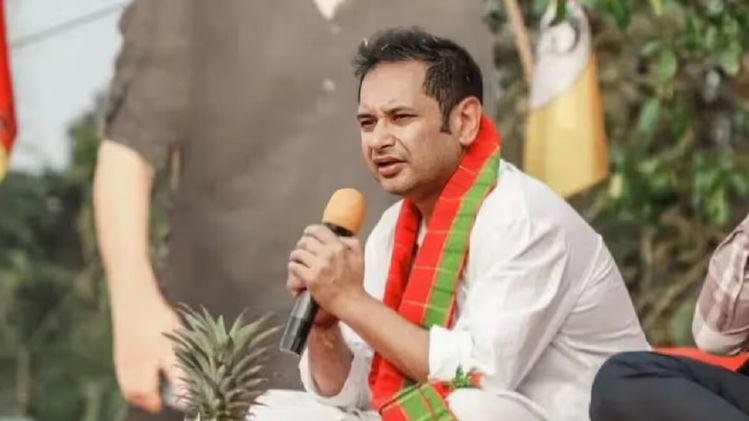
Agartala, July 23: Former royal scion and Tipra Motha chief Pradyot Kishore Debbarma has urged the Tripura Tribal Areas Autonomous District Council (TTAADC) to form a special panel to detect illegal immigrants within its jurisdiction. His demand follows rising concerns over demographic shifts in the state’s tribal regions and growing fear of unlawful settlements from outside the state and international borders.
Pradyot made the appeal on Monday while addressing a gathering of Tipra Motha supporters in Khumulwng, the headquarters of the autonomous council. He emphasized the urgency of identifying and addressing illegal immigration, which he believes threatens the demographic balance and rights of indigenous people.
Read More: Riew Village Supports Siang Upper Dam Project in Arunachal
Demand comes amid growing local anxiety
Tripura shares an international border with Bangladesh, making it a sensitive zone for migration-related issues. Over the decades, locals have expressed anxiety over the perceived influx of undocumented persons, especially in areas under the TTAADC. While the state and central governments maintain that monitoring mechanisms are in place, regional parties and leaders continue to raise concerns.
Pradyot claimed that the Tripura district council has the constitutional right and administrative authority to launch an internal inquiry through a panel. According to him, the aim should be to identify undocumented settlers and ensure that legal provisions protect the lands and rights of native groups.
“People who have no roots in our land are gradually altering the fabric of our communities. If we do not act now, we may lose our identity,” Pradyot warned during his speech.
Panel proposed to work with local bodies
The Tipra Motha leader proposed that the panel should consist of experts in land records, demography, and local governance. He added that village councils and traditional heads must work with the proposed committee to identify undocumented settlers based on historical records and legal land ownership documents.
“Village heads know who belongs and who doesn’t. The Tripura district council can empower them to cooperate with an official committee and protect indigenous territories,” he said. Pradyot also suggested using old land records, electoral rolls, and ration card data to track any anomalies.
TTAADC yet to respond officially
The TTAADC, currently governed by a Tipra Motha-led council, has not made any official comment on Pradyot’s proposal so far. However, some council members present at the event indicated their support for such an initiative. A senior official, speaking anonymously, said the council could consider the idea during its next session, depending on legal advice and procedural clarity.
Constitutionally, autonomous councils like the TTAADC are empowered to manage land rights, local customs, and governance of scheduled areas. However, identifying illegal immigration involves coordination with the state and union governments. That makes the demand both politically and administratively complex.
Opposition calls demand politically motivated
Leaders from the ruling BJP in Tripura have called Pradyot’s demand a political strategy aimed at reasserting Tipra Motha’s influence in the hills. A BJP MLA from the West Tripura district said the state already has adequate mechanisms to handle border surveillance and population tracking.
“This is not the ADC’s responsibility. Immigration and citizenship are subjects handled by the Centre. Mixing political aspirations with national issues could mislead the public,” the BJP leader added.
However, Pradyot dismissed such criticism and reiterated that his demand is rooted in the need to preserve tribal identity and safeguard constitutional rights under the Sixth Schedule.
Grassroots support rising
The proposal appears to be gaining support among grassroots leaders and civil society groups. Several village council heads in the ADC area have backed the idea, saying such a panel would help clarify long-standing concerns about undocumented settlers occupying tribal lands.
“People in our area have long spoken about new settlers coming in without any proof of origin. If the Tripura district council can set up a mechanism to check it, we will support it fully,” said a village head from North Tripura.
Students’ groups and youth organizations affiliated with Tipra Motha have also announced plans to campaign in support of the panel. Many believe that the move will strengthen community-level participation in protecting land and identity.
Panel proposal seen as step toward larger goal
For Pradyot, the proposed panel is part of a larger movement to secure indigenous rights and autonomy in Tripura. Earlier, he had demanded the implementation of a separate constitutional solution for Tiprasa people under the Greater Tipraland vision. Although no progress has been made on that front, his influence in the hills remains strong.
“This is not just a political issue. It’s a question of existence for the Tiprasa people,” he stated. “The Tripura district council must take the first step.”
Whether the council will act on the suggestion remains to be seen. But the demand has once again brought immigration, identity, and autonomy into Tripura’s mainstream political discourse.
Read More: 6th Tripura Finance Commission begins state-wide tax review tour