

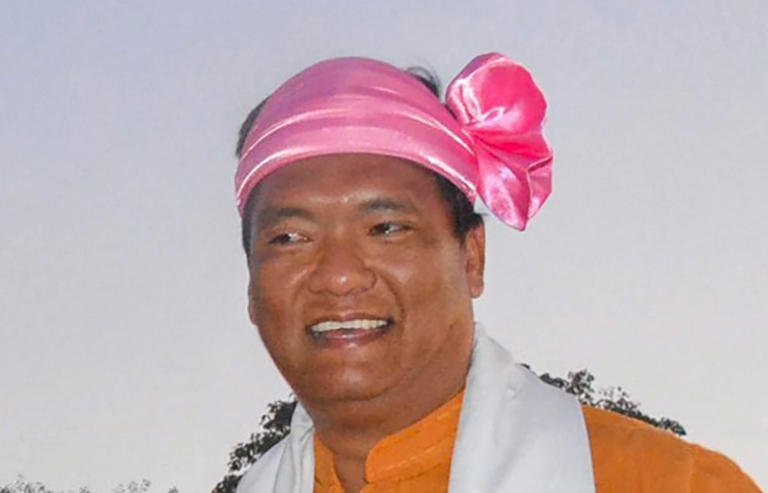
Arunachal Pradesh Chief Minister Pema Khandu has strongly voiced concerns over the growing trend of money culture in elections. He urged the people of the state to join hands with the government and political leadership to eliminate this menace, which threatens the democratic values of Arunachal. His statement came during a public gathering where he stressed that fair elections form the backbone of democracy, and unchecked money power can undermine governance and development.
Khandu highlighted that the misuse of money during elections not only weakens the democratic process but also hampers equal opportunities for aspiring candidates. According to him, the unhealthy trend has been creating an uneven playing field, favoring only those who can spend lavishly. He emphasized that political integrity and people’s participation in rejecting such practices are vital to secure Arunachal’s future.
Read More: Sikkim Governor welcomes national integration tour at Raj Bhavan
Rising concerns over money power
The Chief Minister noted that money culture in elections is not just a political concern but a social issue. He explained that once money dominates elections, corruption naturally seeps into governance. Public representatives who spend large sums of money during campaigns often prioritize recovering expenses over genuine development. This pattern erodes trust between leaders and citizens, making it harder for people-centric policies to flourish.
Khandu pointed out that this culture discourages educated youth and honest leaders from joining politics. When elections become excessively expensive, talented individuals often refrain from contesting, fearing financial challenges. The Chief Minister remarked that such a scenario robs democracy of diversity and healthy competition, leaving governance in the hands of a few wealthy individuals.
Call for people’s participation
The Chief Minister underlined that eliminating money culture cannot be achieved by the government alone. People must actively participate by rejecting monetary inducements during polls. He urged voters to value candidates’ vision, character, and commitment instead of immediate cash or material benefits. By exercising their right to vote responsibly, citizens can send a strong message that Arunachal will not tolerate corruption.
Khandu also called upon civil society organizations, student bodies, and community leaders to raise awareness about the consequences of money-driven elections. He suggested that grassroots campaigns, workshops, and public discussions can help spread the message. These efforts, according to him, will inspire voters to prioritize long-term development goals over short-term gains.
Strengthening democratic values
During his address, the Chief Minister stressed that Arunachal has a rich tradition of community-driven decision-making and collective responsibility. He said that these cultural values must be preserved and applied to electoral practices as well. A strong democracy, he added, is built when voters and leaders uphold honesty, transparency, and accountability.
Khandu stated that safeguarding democracy requires continuous efforts. People must remain vigilant against those who try to use financial power to manipulate outcomes. He noted that the Election Commission has taken steps to curb malpractice, but the will of the people remains the most powerful weapon against money politics.
Promoting clean politics
To counter the spread of money culture, Khandu emphasized the need for clean politics rooted in values and ethics. He called on political parties to ensure that tickets are distributed based on merit, dedication, and the ability to serve people, not financial strength. Parties, he added, must stand firm against candidates who promote money-driven practices.
He also urged young leaders to take up the cause of electoral reforms. According to Khandu, the energy and honesty of youth can inspire a cultural shift in politics. He assured that his government would support initiatives aimed at empowering young leaders and promoting ethical campaigns.
The role of governance and policy
The Chief Minister acknowledged that tackling money culture also requires robust governance and policy measures. He said that effective monitoring of election spending, strict enforcement of rules, and transparency in campaign financing are crucial. The government, he added, will work in close coordination with the Election Commission to ensure that violations are dealt with firmly.
Khandu further mentioned the importance of addressing root causes such as unemployment and lack of opportunities, which often make voters vulnerable to monetary inducements. By improving livelihoods and expanding economic opportunities, the government can reduce dependence on short-term election incentives.
Building a better future
In his concluding remarks, the Chief Minister reminded citizens that the fight against money culture is not just about elections but about building a better future. Transparent politics will pave the way for effective governance, development, and social harmony. He called on every citizen to take pride in their vote and contribute to a culture of fairness and honesty.
Khandu expressed optimism that Arunachal Pradesh can set an example for the rest of the country by demonstrating collective determination. He said that if people, leaders, and institutions work together, the state can overcome money culture and strengthen its democratic values.
A vision for Arunachal’s democracy
The Chief Minister’s speech reflects his larger vision for a vibrant and inclusive democracy in Arunachal Pradesh. He believes that the state’s progress depends on the active involvement of people in shaping policies and rejecting corruption. By addressing money culture, he hopes to create an environment where leaders are chosen for their dedication, not their wealth.
Khandu’s call serves as a reminder that democracy thrives only when citizens value principles over incentives. His message encourages Arunachal’s people to preserve their democratic traditions and work together for a corruption-free political landscape. The appeal to collective responsibility marks a crucial step in reshaping electoral practices and ensuring that Arunachal’s future remains rooted in integrity and equality.
Read More: Vincent Pala Demands NH Status for Meghalaya Road, CM Sangma Responds