




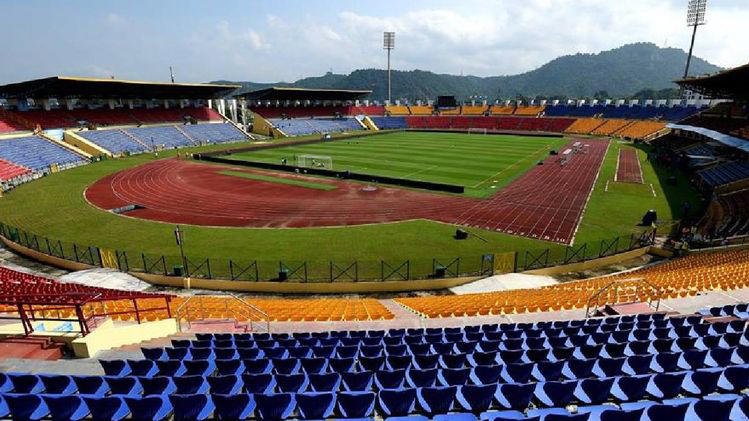
The Assam government has renamed Sarusajai Stadium in Guwahati after legendary athlete Bhogeswar Baruah. This decision celebrates the state’s first Asian Games gold medalist and highlights his contribution to athletics. With this renaming, Assam hopes to inspire new generations of athletes while honoring a figure who brought international recognition to the state.
Read More: PM Modi to Inaugurate Bairabi-Sairang Rail Project
Why Assam chose to rename the stadium
Bhogeswar Baruah made history in 1966 by winning the gold medal in the 800-meter race at the Asian Games in Bangkok. His victory placed Assam firmly on the sporting map of India. By naming its largest sports complex as Bhogeswar Baruah stadium, Assam pays tribute to a man whose achievements continue to inspire.
Chief Minister Himanta Biswa Sarma announced the renaming during a special ceremony. Athletes, sports officials, and citizens attended the event and welcomed the decision with great enthusiasm. According to Sarma, the state must recognize its heroes to keep their legacy alive. The stadium now symbolizes Assam’s pride in Baruah’s accomplishments and the hope for future success in athletics.
Bhogeswar Baruah’s remarkable journey
Born in Sivasagar district, Bhogeswar Baruah grew up in a modest background. Despite limited resources, he displayed unmatched determination to pursue athletics. His training required long hours of effort, but his perseverance led him to victory at the Asian Games. That achievement made him the first Assamese athlete to bring home an international gold medal.
Even after retiring, Baruah continued to work for the development of sports. He trained young athletes and promoted athletics across rural Assam. His lifelong dedication ensures that the new Bhogeswar Baruah stadium reflects more than just his personal victory—it represents his vision of encouraging youth to dream big.
Symbolism of Bhogeswar Baruah stadium
Renaming Sarusajai Stadium carries deep cultural meaning. For decades, the stadium has hosted national and international events, including football tournaments, athletics competitions, and the National Games. Now, as Bhogeswar Baruah stadium, it stands as a reminder of Assam’s sporting spirit.
The government also plans to install a statue of Baruah inside the complex and create a small museum on Assam’s sporting history. These steps will make the stadium a landmark of pride, reminding visitors of Assam’s past achievements while pointing toward future aspirations.
Assam’s wider investment in sports
The renaming comes at a time when Assam is investing heavily in sports infrastructure. Over the last few years, the government has expanded stadiums, improved training centers, and upgraded athletic facilities. With the Bhogeswar Baruah stadium as its centerpiece, Assam aims to host more national and international tournaments.
Chief Minister Sarma announced that additional funds will be used for modernization. Plans include advanced running tracks, better seating arrangements, and upgraded training spaces. These changes will help athletes train at world-class standards and prepare for competitions across India and abroad.
Reaction from athletes and citizens
The decision has drawn emotional responses from the sports community. Former athletes stated that the move finally gives Baruah the recognition he deserved. Many recalled how his victory in the 1960s inspired them to take up athletics despite limited opportunities.
Current athletes believe that training in Bhogeswar Baruah stadium will boost their motivation. Local sports associations also praised the government, saying that such gestures strengthen community spirit. Citizens of Assam welcomed the renaming as a way to keep alive the story of a man who overcame challenges and made history.
Bhogeswar Baruah as a symbol of identity
For the people of Assam, Bhogeswar Baruah is more than a sportsman. He represents resilience, discipline, and determination. His life story mirrors the struggles of many Assamese youth who aspire to succeed despite limited resources. The Bhogeswar Baruah stadium, therefore, becomes a cultural symbol as well as a sports venue.
By honoring a local hero, Assam strengthens its sense of identity. People now feel greater ownership of the stadium, as it carries the name of someone who emerged from their own soil and made them proud on the international stage.
Future outlook of Bhogeswar Baruah stadium
Looking ahead, the stadium is expected to host prestigious events, from national athletics meets to international football tournaments. With modernization efforts underway, officials hope to make it one of the finest sports complexes in the Northeast.
The government also intends to use the venue for community programs that encourage young people to participate in sports. This approach will ensure that the Bhogeswar Baruah stadium remains a hub for talent development. If managed well, it will serve not only as a reminder of past glory but also as a launchpad for future champions.
A tribute that will last for generations
Renaming Sarusajai Stadium as Bhogeswar Baruah stadium marks a turning point in Assam’s sporting history. It ensures that Baruah’s name will echo through the cheers of every competition held there. For young athletes stepping onto the field, the stadium’s name will serve as a reminder of what dedication can achieve.
This tribute will remain meaningful for generations. It links Assam’s rich sporting heritage with its aspirations for the future. By honoring Bhogeswar Baruah in such a significant way, Assam not only preserves his memory but also sends a strong message: the state values its heroes, and it believes in nurturing the dreams of tomorrow.
Read More: Deepika Padukone to Judge LVMH Prize 2025