




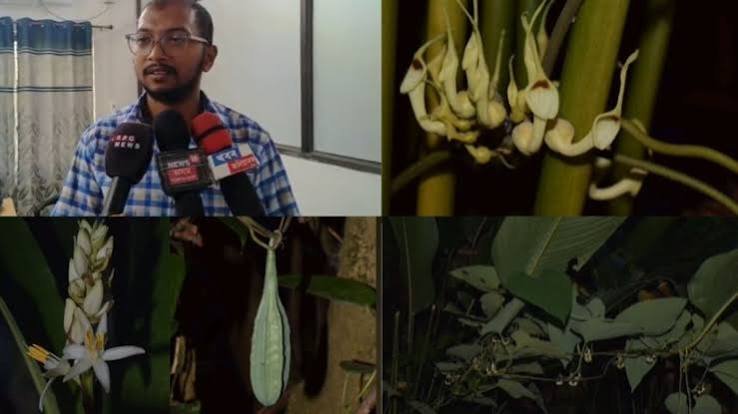
Northeast plant species are receiving stronger scientific documentation through the work of Assam-born botanist Rajib Gogoi, a specialist in plant taxonomy, ethnobotany and conservation. His research has focused especially on balsams and wild bananas across the Eastern Himalaya.
Gogoi’s work has helped describe new taxa, verify plant identities and add previously unrecorded species to India’s flora. His research also highlights the botanical richness of Arunachal Pradesh and other parts of Northeast India, where difficult terrain and high biodiversity continue to offer opportunities for discovery.
Northeast plant species documented through taxonomy
A major part of Gogoi’s contribution is linked to the genus Impatiens, commonly known as balsams or jewelweeds. His research, carried out with other botanists, has resulted in the description of several new species from Arunachal Pradesh and Assam.
The Botanical Survey of India lists numerous new taxa associated with Gogoi’s work. These include Impatiens kamrupana, I. albopetala, I. dibangensis, I. rugosipetala and I. tatoensis, among others. The list also includes new species of Musa and Colocasia.
His research has therefore gone beyond simply recording plants. Taxonomic studies establish whether a specimen represents a known species, a new species or a previously overlooked taxon. That process is important because accurate identification forms the basis for conservation and further ecological research.
A detailed record of Arunachal’s balsams
One of the clearest examples is the book Balsams of Eastern Himalaya: A Regional Revision, co-authored by Gogoi and Souravjyoti Borah with other contributors. The work provides a detailed taxonomic account of 84 taxa, including 43 species from Arunachal Pradesh and 24 species from Sikkim.
The study is significant because the Eastern Himalaya is considered an important centre of diversification for Impatiens. The genus contains more than 1,000 species globally, while India has around 249 species, with many concentrated in the Eastern Himalaya and Western Ghats.
Moreover, documenting these plants in a systematic manner helps researchers compare their distribution, morphology and ecological characteristics. It also creates a reliable reference for future botanical surveys.
From field collections to scientific names
Fieldwork is central to this process. Researchers examine plants in their natural habitats, record physical features and collect specimens for herbarium study. They then compare the material with existing descriptions and preserved specimens before establishing its taxonomic identity.
Gogoi’s published work reflects this approach. For example, Impatiens pseudolaevigata was described from West Kameng district in Arunachal Pradesh after field studies and detailed examination of the plant’s characteristics.
Similarly, Musa argentii, a banana species from Arunachal Pradesh, was described after extensive field studies in eastern Arunachal Pradesh. The specimens were deposited in recognised herbaria for scientific reference.
Why Northeast plant species matter
The importance of this work extends beyond botanical naming. Northeast India is one of India’s major biodiversity-rich regions, and its forests support a large variety of endemic and rare plants. Scientific documentation can help establish which species occur in particular habitats and where conservation attention may be needed.
New records can also correct older assumptions about plant distribution. In some cases, taxonomic research can reveal that a plant previously treated as another species is distinct. In others, researchers may rediscover plants that have not been recorded for many years.
Consequently, reliable botanical records are valuable for forest management, biodiversity assessments and academic research. They can also support studies into medicinal, food and other traditional uses of plants.
A continuing botanical legacy
The growing record of Northeast plant species shows why sustained field research remains important in the region. Gogoi’s work, particularly on Impatiens and Musa, has added new scientific knowledge while strengthening documentation of plants from difficult-to-explore landscapes.
His research is also part of a wider effort involving botanists, universities and the Botanical Survey of India. Together, such studies help turn local plant discoveries into verified scientific records.
Overall, the documentation of Northeast plant species provides more than names on a checklist. It builds a scientific foundation for understanding the region’s flora and protecting its botanical diversity for future research and conservation.