





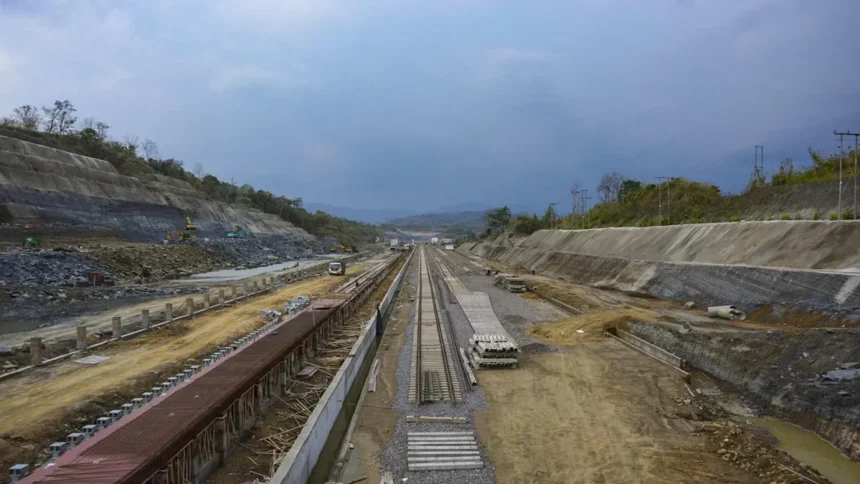
A leading civil society group in Mizoram has raised serious concerns over the ongoing Sairang–Hmawngbuchhuah rail extension project, warning that the construction work could intensify the state’s already fragile water situation. The Mizoram Rail Extension Water Concerns surfaced after the NGO observed large-scale clearing of forest cover, rapid land disturbance and uncontrolled soil dumping along the project route. According to the group, these changes threaten natural springs and water catchment zones that supply water to several villages and towns.
Read More: Assam Rifles Post Attack Manipur
The NGO said communities living near the construction corridor have reported early signs of reduced water flow in streams. They added that the long-term impact could be severe if the project continues without strong safeguards. Mizoram, known for its hilly terrain and dependence on spring-fed water systems, remains vulnerable to water shortages whenever land use changes occur. The group urged authorities to review the project’s environmental safeguards before the situation worsens.
Concerns over forest clearing and soil disruption
The organisation highlighted that the construction stretches through ecologically sensitive areas. They said workers have been clearing large tracts of forest to build tunnels, bridges and embankments. This clearing may expose soil to erosion and reduce the natural absorption of rainwater. The Mizoram Rail Extension Water Concerns grew stronger after villagers from Aizawl district reported heavy sediments in their local streams during the monsoon season, likely caused by soil disturbed during construction.
The NGO also pointed out that the hills along the Sairang–Hmawngbuchhuah corridor contain several informal catchment points that feed drinking water pipelines. When heavy machines dig or blast through these slopes, the water channels lose stability. As a result, springs may dry up or shift, creating unpredictable changes in water availability.
Water scarcity already rising in several districts
The warning comes at a time when Mizoram faces periodic water shortages across multiple districts. Towns like Aizawl, Kolasib and Serchhip depend heavily on spring-fed supply systems. These systems lose capacity when natural catchments shrink or fill with debris. The NGO said the rail project could accelerate this decline if authorities ignore hydrological concerns.
Residents in parts of Sairang and nearby villages have reported longer queues at community water points. Some communities now rely more on water tankers and private suppliers than before. These shifts show what can happen when local water sources weaken. The Mizoram Rail Extension Water Concerns therefore focus on protecting existing streams before irreversible damage occurs.
NGO calls for immediate environmental review
The organisation urged the state government and railway authorities to conduct a fresh environmental impact assessment. They said the earlier assessment did not fully consider the water dependency of the affected villages. According to them, engineers must map springs, streams and catchment zones before continuing major excavation work.
The group recommended a set of urgent measures. These include strengthening drainage channels, enforcing soil dumping rules and restoring vegetation on exposed slopes. They also asked authorities to halt work briefly in the most sensitive zones until proper hydrological checks are completed. The Mizoram Rail Extension Water Concerns, they said, should be seen as a warning rather than opposition to development.
Balancing development with ecological safety
Local leaders who support the rail project acknowledged the NGO’s concerns. They said the railway extension holds immense economic value for Mizoram. The Sairang–Hmawngbuchhuah route will improve connectivity to southern districts and create faster access to the Indo-Myanmar border. Many believe the project will boost trade, tourism and employment.
Even so, they agreed that ecological risks must be addressed. They said development projects should not force communities into deeper water scarcity. Several local leaders have asked railway engineers to adopt mitigation measures so the project can move forward responsibly.
Voices from the affected communities
Villagers living close to the construction sites said they want clear communication from authorities. They worry that drying springs will affect agriculture and daily life. Some residents said they once had reliable spring water throughout the year but now notice reduced flow, especially during the dry months. Others reported that mud from construction sites often enters their water sources after rainfall.
Community members said the Mizoram Rail Extension Water Concerns reflect their lived reality. They want the government to take their experiences seriously and ensure long-term security of drinking water.
A call for sustainable planning
The rail extension remains one of Mizoram’s most ambitious infrastructure projects. However, the NGO’s warning shows that large-scale construction in fragile hill ecosystems demands careful planning. Officials now face the task of balancing progress with protection of natural resources.
The Mizoram Rail Extension Water Concerns highlight an urgent truth: development cannot come at the cost of essential water sources. As the project continues, the decisions taken in the coming months will determine whether Mizoram strengthens both its connectivity and ecological security, or faces deeper challenges ahead.
Read More: Bengal Voter Roll Mismatch Issue