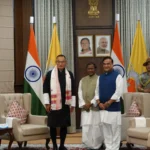






Retired architect and cultural activist Techi Gubin from Arunachal Pradesh will receive the prestigious Padma Shri award from President Droupadi Murmu at Rashtrapati Bhavan on Monday. The Government of India selected him for his contribution to architecture, tribal welfare, border outreach, and indigenous cultural preservation. Gubin served the Arunachal Pradesh Public Works Department for 35 years and later retired as Chief Architect.
Alongside public service, he actively promoted tribal heritage and rural development across Northeast India. People across Arunachal Pradesh have welcomed the recognition as a proud moment for the state’s indigenous communities.
Read More: Assam CM Welcomes Bhutan PM in Guwahati
Key Facts
- Award: Padma Shri 2026
- Awardee: Techi Gubin
- State: Arunachal Pradesh
- Award Ceremony Venue: Rashtrapati Bhavan
- Presented By: Droupadi Murmu
- Main Contributions: Architecture, tribal welfare, indigenous culture, border outreach
- Former Position: Chief Architect, Arunachal Pradesh Public Works Department
Techi Gubin’s Career in Public Service
Techi Gubin was born on November 1, 1964. He completed his architecture studies at Chandigarh College of Architecture in 1988.
He started his professional journey as an assistant teacher before joining the Arunachal Pradesh Public Works Department in 1990. During his 35-year career, he worked in several important positions, including Director of Housing and HUDCO Development Officer from 2000 to 2005.
Later, he became the Chief Architect of the Arunachal Pradesh Public Works Department before retirement. His colleagues often praised his dedication to public infrastructure and community-focused development.
Contribution to Tribal Welfare and Culture
Apart from architecture, Gubin devoted his life to social service and cultural preservation. Since 2000, he has worked with Arunachal Vikas Parishad in different leadership roles, including assistant general secretary and president.
He currently serves as vice president of Akhil Bharatiya Vanvasi Kalyan Ashram and continues to support tribal welfare and rural development activities.
Gubin also led the Nyishi Indigenous Faith and Cultural Society as president. Through the organisation, he promoted the Donyi-Polo faith and encouraged younger generations to preserve indigenous traditions and heritage.
Border Outreach and Regional Development
Gubin gained national attention for organising the Seemant Darshan Yatras in 2010 and 2021. During these outreach programmes, he travelled to remote villages located near the borders with China, Myanmar, and Bhutan.
He met local residents and studied issues related to roads, communication, infrastructure, and security. Later, delegations under his leadership submitted development recommendations to national leaders for improving border areas.
Many people in Arunachal Pradesh consider his efforts important for connecting remote tribal communities with the national development process.
Contribution to Cinema and Awards
Gubin also contributed to the cultural field through regional cinema. He worked with the film Oyaa, which won the Best Regional Film award in 2009.
Over the years, he received several honours for his service and leadership. These include the O.N.E India Award in 2022 and the India Leader Award in 2023.
The Padma Shri now brings national recognition to his decades-long contribution to architecture, tribal welfare, and indigenous culture.
Question and Answer Section
Who is Techi Gubin?
Techi Gubin is a retired architect, cultural activist, and social worker from Arunachal Pradesh.
Why will he receive the Padma Shri?
The Government of India selected him for his contribution to architecture, tribal welfare, border outreach, and indigenous cultural preservation.
Where will the Padma Shri ceremony take place?
The ceremony will take place at Rashtrapati Bhavan.
What is the Seemant Darshan Yatra?
It is a border outreach programme that focused on remote villages near India’s borders with China, Myanmar, and Bhutan.
Importance of Arunachal Pradesh
Arunachal Pradesh shares international borders with China, Myanmar, and Bhutan, making it strategically important for India. The state also has rich tribal traditions and diverse indigenous cultures, making cultural preservation efforts highly significant for Northeast India.