





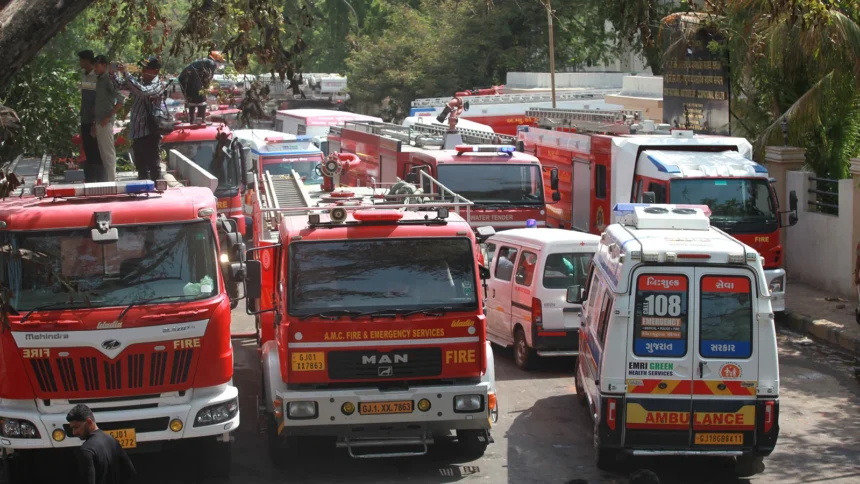
The Jorhat Rescue Operations were launched immediately after the Indian Air Force AN-32 aircraft crash at Rowriah Air Force Station in Assam’s Jorhat district. Emergency response personnel and firefighting teams swiftly sealed off the accident site to contain the post-crash blaze and carry out recovery efforts. Moreover, the coordinated operation aimed to secure the area, prevent further hazards, and facilitate the retrieval of victims.
IAF Constitutes Court of Inquiry Into Fatal AN-32 Crash in Assam
Fake Social Worker Arrested in Tripura Over Alleged Robbery Schemes
Jorhat Rescue Operations Initiated After Crash
The Jorhat Rescue Operations commenced shortly after the AN-32 transport aircraft accident at Rowriah Air Force Station.
Moreover, emergency responders acted swiftly to secure the site and manage the situation.
Firefighting Teams Deployed
Specialized firefighting units were mobilized to tackle the flames that erupted following the crash.
Consequently, efforts focused on preventing the fire from spreading and ensuring the safety of rescue personnel.
Additionally, rapid response played a critical role in controlling the aftermath of the accident.
Area Sealed Off for Safety
The Jorhat Rescue Operations involved sealing the crash site to restrict unauthorized access.
Furthermore, authorities implemented safety measures to facilitate emergency activities and preserve the area for investigation.
Therefore, securing the location became a priority during the response.
Recovery Efforts Conducted
Emergency teams carried out operations aimed at recovering the victims from the crash site.
Consequently, personnel worked under difficult conditions while coordinating with relevant authorities.
Moreover, recovery efforts formed an essential component of the overall response.
Coordination Among Emergency Agencies
The Jorhat Rescue Operations highlighted the importance of cooperation among different emergency and defence units.
Additionally, coordinated action helped ensure that firefighting and recovery tasks were conducted effectively.
Furthermore, inter-agency collaboration is crucial during aviation emergencies.
Focus on Safety and Hazard Control
Containing the post-crash fire remained a major objective of the rescue operation.
Therefore, emergency personnel prioritized hazard management to minimize additional risks.
Moreover, swift containment efforts are essential in dealing with aviation accidents.
Support for Investigation Process
The Jorhat Rescue Operations also helped preserve the site for the subsequent inquiry into the crash.
Consequently, securing evidence and maintaining the integrity of the accident scene remain important considerations.
Additionally, investigators rely on properly managed sites to reconstruct events accurately.
Tribute to Emergency Responders
The response underscored the dedication and professionalism of emergency and firefighting teams.
Meanwhile, their prompt actions helped manage the aftermath of the tragedy.
Furthermore, emergency personnel continue to play a vital role in disaster response and public safety.
Conclusion
The Jorhat Rescue Operations demonstrated the rapid and coordinated response mounted following the fatal AN-32 aircraft crash at Rowriah Air Force Station. Emergency and firefighting teams acted quickly to contain the post-crash blaze, secure the accident site, and conduct recovery efforts. Their actions were essential in managing the immediate aftermath and ensuring the safety of personnel involved in the operation.
Moreover, effective coordination among emergency services and defence authorities played a key role in addressing the challenges posed by the incident. Sealing the area and controlling hazards not only facilitated rescue efforts but also supported the subsequent investigation into the crash. Such measures are critical for maintaining safety and preserving evidence.
Furthermore, the Jorhat Rescue Operations highlight the importance of preparedness, professionalism, and inter-agency cooperation during emergencies. As investigations continue, the contributions of rescue and firefighting personnel remain an important aspect of the response to this tragic event. Overall, the operation reflects the dedication of those tasked with managing crises and safeguarding lives.
FAQs
Q1. What are the Jorhat Rescue Operations?
The Jorhat Rescue Operations refer to the emergency response efforts launched after the AN-32 aircraft crash in Assam.
Q2. Who participated in the rescue efforts?
Emergency response teams and firefighting personnel were involved in the operation.
Q3. Why was the crash site sealed?
Authorities secured the area to ensure safety and facilitate recovery and investigation activities.
Q4. What was the priority of the response teams?
Their primary objectives were controlling the fire, securing the site, and recovering victims.
Q5. Why are the Jorhat Rescue Operations significant?
The Jorhat Rescue Operations are significant because they demonstrate the importance of swift emergency response and coordinated action during aviation disasters.