

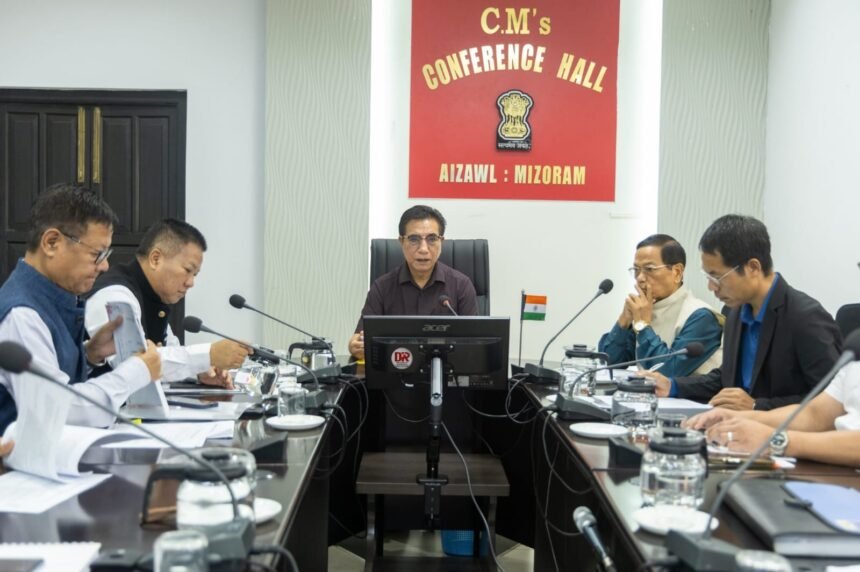
The Mizoram Resource Mobilization Committee (MRMC), chaired by Chief Minister Lalduhoma, held a key meeting to discuss administrative reforms, fiscal discipline, and governance improvements in the state. Among the major proposals reviewed was the establishment of a separate High Court for Mizoram, a move that could strengthen judicial access and support the objectives of the 1986 Mizoram Peace Accord.
The committee also examined measures to reduce government expenditure, improve district administration, enhance public service delivery, and increase state revenue. Furthermore, members emphasized efficient resource utilization and institutional reforms to ensure better governance across Mizoram.
Read More: Assam Man Missing After Traveling to Arunachal for Work
Key Facts
- Meeting: Mizoram Resource Mobilization Committee (MRMC)
- Chairperson: Chief Minister Lalduhoma
- Location: Chief Minister’s Conference Hall, Aizawl
- Major Proposal: Establishment of a separate High Court for Mizoram
- Other Focus Areas: Fiscal reforms, expenditure rationalization, district administration, public service delivery
- Relevant Agreement: 1986 Mizoram Peace Accord
- Public Services Covered: 197 notified services under the Right to Public Services Act, 2015
- Revenue Sources Discussed: Industrial estates, sand extraction, stone extraction, administrative reforms
MRMC Discusses Governance and Fiscal Reforms
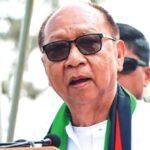
The Mizoram Resource Mobilization Committee (MRMC) convened a high-level meeting under the leadership of Chief Minister Lalduhoma to review strategies aimed at strengthening governance and improving fiscal management across the state.
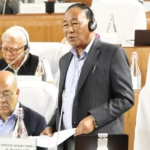
The meeting took place at the Chief Minister’s Conference Hall and brought together senior government officials, ministers, and committee members. Vice Chairman Haukhuma Hauzel, IAS (Retd.), along with Ministers Lalrinpuii, F. Rodingliana, and B. Lalchhanzova, participated in the discussions.
Furthermore, the committee examined several policy measures designed to enhance administrative efficiency, optimize public spending, and improve service delivery.
Separate High Court Proposal Receives Attention
One of the most significant issues discussed during the meeting was the proposal to establish a separate High Court for Mizoram.
The committee noted that the MRMC Sub-Committee on Administrative Reforms had recommended the proposal in May 2025. According to members, a dedicated High Court could improve access to justice for citizens while reducing long-term administrative and legal expenses.
Moreover, the committee observed that establishing a separate High Court would represent an important step toward fulfilling commitments linked to the 1986 Mizoram Peace Accord. As a result, the proposal continues to receive serious consideration from policymakers.
Committee Reviews Government Expenditure
In addition to judicial reforms, the MRMC reviewed several measures aimed at rationalizing government expenditure.
The committee discussed reducing the number of Household MRs attached to senior government officials. Similarly, members recommended reviewing and reducing the deployment of orderly personnel assigned to police officers.
Officials believe that such measures could help improve resource allocation and reduce recurring administrative costs without affecting essential public services.
Furthermore, the committee stressed the importance of maintaining fiscal discipline while implementing reforms.
Strengthening District Administration
The MRMC identified stronger district administration as a key requirement for effective governance.
To achieve this objective, the committee suggested transforming District Rural Development Offices into Planning and Development Wings operating under Deputy Commissioners. Members believe this restructuring could improve coordination and accelerate development planning at the district level.
Additionally, the proposal aims to streamline administrative processes and support more efficient implementation of government schemes.
Focus on Staffing Requirements
During the discussions, committee members acknowledged manpower shortages in several Deputy Commissioners’ Offices.
Consequently, the MRMC recommended a detailed review of staffing requirements to identify gaps and improve administrative capacity. However, members also emphasized that any future recruitment or restructuring should align with the state’s fiscal prudence goals.
Therefore, authorities may conduct further studies before implementing any staffing-related decisions.
Review of Non-Practicing Allowance for Doctors
The committee also reviewed the Non-Practicing Allowance (NPA) provided to government doctors.
Members emphasized the need for a transparent monitoring mechanism to ensure that only eligible doctors receive the allowance. Furthermore, they stressed that stronger oversight would help improve accountability and prevent misuse of government resources.
The discussion reflects the government’s broader effort to enhance efficiency in public expenditure management.
Improving Public Service Delivery
Another important topic on the agenda was the implementation of the Right to Public Services Act, 2015.
The committee highlighted the importance of ensuring effective delivery of all 197 notified services covered under the Act. Officials stated that timely and transparent public service delivery remains essential for building trust between citizens and government institutions.
Moreover, the MRMC encouraged departments to strengthen monitoring systems and improve responsiveness to public needs.
Revenue Generation Opportunities Explored
The committee also explored new avenues for increasing state revenue.
Members discussed the need to ensure proper utilization of industrial plots at the Zuangtui Industrial Estate. They noted that effective management of industrial infrastructure could boost economic activity and generate additional revenue.
Furthermore, the committee reviewed opportunities related to sand and stone extraction. Officials believe that better regulation and resource management in these sectors could contribute significantly to state revenue mobilization.
Additionally, members examined government procedures that could improve resource collection and administrative efficiency.
Government Reaffirms Commitment to Reforms
The meeting concluded with a strong emphasis on administrative modernization, fiscal responsibility, and institutional strengthening.
Chief Minister Lalduhoma and committee members reiterated their commitment to implementing reforms that improve governance while ensuring sustainable financial management.
Furthermore, the committee agreed that long-term development requires efficient institutions, transparent administration, and prudent use of public resources.
Importance of Mizoram and Northeast India
Mizoram plays a strategic role in Northeast India due to its international borders and growing economic potential. Therefore, reforms aimed at strengthening governance, improving public service delivery, and enhancing fiscal management can contribute significantly to the state’s development and regional progress.
Questions and Answers
What was the main purpose of the MRMC meeting?
The meeting focused on governance reforms, fiscal discipline, administrative efficiency, and resource mobilization in Mizoram.
What major judicial proposal was discussed?
The committee reviewed the proposal to establish a separate High Court for Mizoram.
Why is a separate High Court important?
It could improve access to justice, reduce long-term costs, and support the objectives of the 1986 Mizoram Peace Accord.
What expenditure reforms were discussed?
The committee reviewed reducing Household MRs, cutting orderly personnel assignments, and improving resource allocation.
What did the committee say about public services?
Members stressed effective implementation of the Right to Public Services Act, 2015, which covers 197 notified services.
How does the government plan to increase revenue?
The committee discussed better utilization of industrial plots, improved resource management, and revenue generation from sand and stone extraction.