




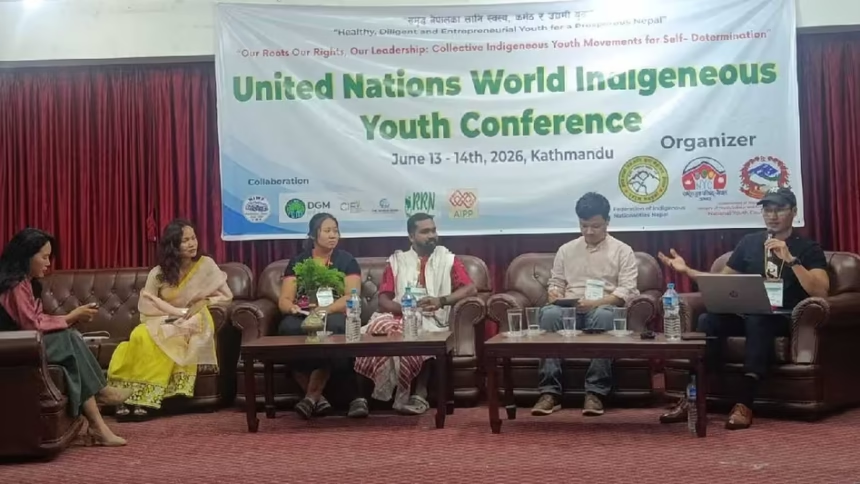
A research scholar from Nagaland University represented India at the United Nations World Indigenous Youth Conference 2026 held in Kathmandu, Nepal. Repakaba Tzudir, a doctoral scholar from the Department of Sociology, participated as an International Delegate and Indigenous Scholar during the two-day event held on June 13–14. He highlighted the challenges faced by Naga youth, including unemployment and limited opportunities, while joining discussions on Indigenous identity, leadership, cultural preservation, and regional cooperation. The conference brought together nearly 150 Indigenous youth leaders, academics, activists, and community representatives from across Asia.
Key Facts
- Event: United Nations World Indigenous Youth Conference 2026
- Dates: June 13–14, 2026
- Venue: Kathmandu, Nepal
- Representative from India: Repakaba Tzudir
- Institution: Department of Sociology, Nagaland University, Lumami
- Theme: Our Roots, Our Rights, Our Leadership: Collective Indigenous Movement for Self-Determination
- Organisers: Youth Federation of Indigenous Nationalities (YFIN), Nepal and National Youth Council (NYC), Nepal
- Participants: Nearly 150 Indigenous youth leaders, academics, activists, and community representatives from across Asia
- Support: Indigenous Peoples of Asia Solidarity Fund (IPAS Fund) and YFIN Nepal
Nagaland Scholar Represents India
Nagaland University research scholar Repakaba Tzudir represented India at the United Nations World Indigenous Youth Conference 2026 in Kathmandu. During the two-day conference, he participated as an International Delegate and Indigenous Scholar, contributing to discussions on Indigenous rights, youth leadership, and sustainable development.
The conference provided a platform for Indigenous youth from across Asia to exchange ideas, share experiences, and explore solutions to common social, economic, and cultural challenges.
International Conference Focused on Indigenous Leadership
The conference was jointly organised by the Youth Federation of Indigenous Nationalities (YFIN), Nepal and the National Youth Council (NYC), Nepal. This year’s theme, “Our Roots, Our Rights, Our Leadership: Collective Indigenous Movement for Self-Determination,” highlighted the importance of preserving Indigenous identity while strengthening youth leadership.
Nearly 150 delegates from Nepal, India, Bangladesh, Myanmar, and other Asian countries attended the event, representing Indigenous communities, academic institutions, and civil society organisations.
Addressing Challenges Faced by Naga Youth
Tzudir also served as a panel speaker during the session titled “Indigenous Youth Movement in Asia.” During the discussion, he highlighted the realities faced by young people in Nagaland, particularly unemployment and limited livelihood opportunities.
He explained that immediate economic concerns often become the top priority for many Naga youth, leaving less time and resources to engage with broader issues related to Indigenous identity, cultural preservation, and community leadership.
Shared Concerns Across Indigenous Communities
According to Tzudir, delegates from different countries shared many common concerns despite their diverse cultures and geographical backgrounds. For example, discussions frequently focused on protecting Indigenous identity, preserving ancestral land, safeguarding traditional knowledge, and promoting cultural heritage.
Moreover, participants stressed the importance of creating meaningful educational and employment opportunities for Indigenous youth while ensuring that development does not weaken traditional values.
Balancing Tradition and Development
One of the key themes discussed at the conference was how Indigenous communities can balance economic development with the preservation of cultural traditions.
Tzudir noted that Indigenous youth across Asia are working to adapt to changing social and economic conditions without losing their languages, customs, and community values. At the same time, he emphasised that economic growth and Indigenous identity should complement each other rather than compete.
He also pointed out that unemployment, migration, limited access to higher education, and the gradual loss of Indigenous languages continue to affect many Indigenous communities throughout the region.
Importance of Regional Cooperation
The conference also highlighted the growing role of Indigenous youth organisations in promoting leadership, advocacy, cultural revitalisation, and community participation.
Furthermore, Tzudir said that stronger regional collaboration would allow Indigenous communities to learn from one another and address shared challenges more effectively. He encouraged greater investment in youth leadership programmes and community-based initiatives to empower future generations.
According to him, the conference strengthened networks among Indigenous youth leaders and reinforced the value of cooperation across borders.
Commitment to Research and Community Engagement
Reflecting on his participation, Tzudir said the experience deepened his understanding of the shared struggles and aspirations of Indigenous communities across Asia.
He added that the conference strengthened his commitment to research, advocacy, and community engagement while encouraging greater dialogue on Indigenous rights, education, and sustainable development.
His participation was supported by the Indigenous Peoples of Asia Solidarity Fund (IPAS Fund) and the Youth Federation of Indigenous Nationalities (YFIN), Nepal, which provided travel and hospitality assistance.
Question & Answer
Q1. Who represented India at the UN World Indigenous Youth Conference 2026?
Repakaba Tzudir, a research scholar from the Department of Sociology at Nagaland University, represented India.
Q2. Where was the conference held?
The conference took place in Kathmandu, Nepal, on June 13–14, 2026.
Q3. What was the main theme of the conference?
The theme was “Our Roots, Our Rights, Our Leadership: Collective Indigenous Movement for Self-Determination.”
Q4. What issues did Tzudir highlight?
He discussed unemployment among Naga youth, Indigenous identity, cultural preservation, education, and livelihood opportunities.
Q5. Why was the conference significant?
The event promoted regional cooperation among Indigenous youth, encouraged leadership, and created a platform to discuss shared challenges and sustainable development.
Location Context
Nagaland, located in Northeast India, is home to several Indigenous Naga tribes with rich cultural traditions and diverse languages. The region plays an important role in discussions on Indigenous rights, cultural preservation, and community-led development, making international platforms like the UN World Indigenous Youth Conference valuable for amplifying the voices of Indigenous youth from Northeast India.