





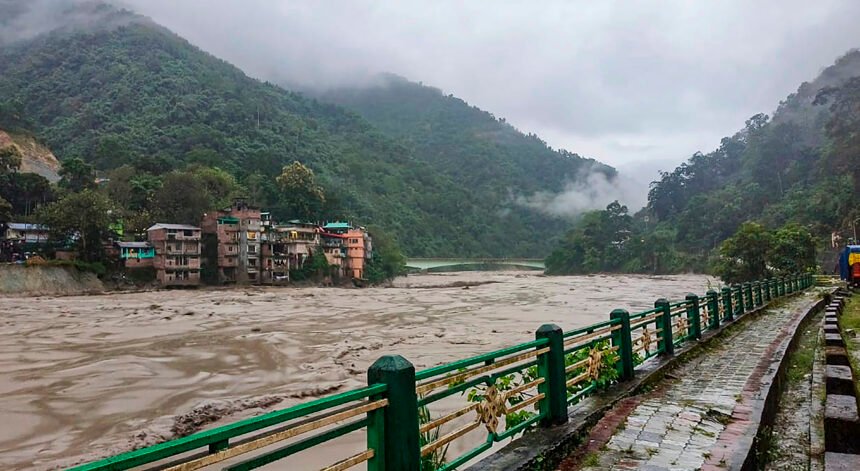
The Teesta River Water Levels have prompted the Sikkim Disaster Management Authorities to place low-lying areas on alert following a rapid rise in the river caused by heavy rainfall in the upper catchment. Moreover, officials have urged residents living near vulnerable locations to remain vigilant and follow advisories issued by the authorities. Consequently, disaster management teams are closely monitoring the river’s flow while coordinating preparedness measures to minimize potential risks.
Dalai Lama Birthday Events Celebrated With Prayers and Cultural Programmes in Gangtok
Teesta River Water Levels Rise After Heavy Upper-Catchment Rainfall
The Teesta River Water Levels increased rapidly after intense rainfall was recorded in the upper catchment areas. Furthermore, the continuous inflow led disaster management authorities to closely monitor the river and assess conditions downstream.
Heavy rainfall in upstream regions often causes river levels to rise within a short period. Consequently, officials activated precautionary monitoring measures for vulnerable locations.
Moreover, authorities continue tracking weather conditions and river flow through established monitoring systems. Therefore, residents have been advised to remain informed through official updates.
Additionally, emergency teams remain on standby to respond if conditions change. Thus, preparedness remains a key priority.
Disaster Management Authorities Issue Precautionary Alert
The Teesta River Water Levels prompted the Sikkim Disaster Management Authorities to place low-lying areas on alert as a precautionary measure. Furthermore, officials advised residents living near riverbanks and flood-prone areas to remain cautious.
Early warning systems play a critical role in reducing the impact of potential flooding. Consequently, timely alerts help communities prepare for changing weather and river conditions.
Moreover, local authorities continue coordinating with district administrations and emergency response agencies. Therefore, precautionary measures remain in place while monitoring continues.
Similarly, disaster response teams are reviewing preparedness plans across vulnerable locations. Additionally, public cooperation is essential for effective emergency management.
Authorities Continue Monitoring River Conditions
The Teesta River Water Levels are being monitored continuously through coordinated efforts involving disaster management officials and other government agencies. Furthermore, river data and weather forecasts are being reviewed regularly to assess any potential changes.
Continuous monitoring enables authorities to respond promptly if water levels rise further. Consequently, officials remain prepared to issue additional advisories whenever necessary.
Moreover, communication channels have been strengthened to ensure timely dissemination of official information. Therefore, residents are encouraged to rely only on verified updates issued by government agencies.
Similarly, coordinated monitoring supports efficient emergency planning. Additionally, regular assessments help authorities make informed operational decisions.
Preparedness Measures Aim to Reduce Flood Risks
The Teesta River Water Levels alert highlights the importance of disaster preparedness during periods of heavy rainfall. Furthermore, government agencies continue implementing precautionary measures to protect communities living in vulnerable areas.
Flood preparedness includes monitoring river conditions, maintaining emergency response systems, and raising public awareness. Consequently, proactive planning helps reduce risks associated with rising water levels.
Moreover, cooperation between local administrations and emergency services strengthens disaster response capabilities. Therefore, authorities remain focused on safeguarding lives and property.
Similarly, community awareness plays a vital role in improving emergency preparedness. Additionally, continued vigilance remains essential until weather conditions stabilize.
Conclusion
The Teesta River Water Levels have led the Sikkim Disaster Management Authorities to issue precautionary alerts for low-lying areas following heavy rainfall in the upper catchment. Moreover, continuous monitoring and coordinated preparedness measures are helping authorities assess the evolving situation.
Furthermore, residents have been advised to stay informed through official advisories and remain vigilant as river conditions continue to be monitored. Consequently, timely public cooperation and effective emergency planning will remain crucial in reducing potential flood risks.
Looking ahead, sustained weather monitoring, rapid communication, and coordinated disaster management efforts will continue to play a key role in ensuring public safety during periods of intense rainfall across Sikkim.
FAQs
1. Why have the Teesta River Water Levels increased?
Heavy rainfall in the upper catchment areas caused the river to rise rapidly.
2. Which authority issued the alert?
The Sikkim Disaster Management Authorities issued the precautionary alert for low-lying areas.
3. Which areas are affected?
Low-lying and flood-prone areas near the Teesta River have been placed on alert as a precaution.
4. What should residents do during the alert?
Residents should remain vigilant, follow official advisories, and rely on verified updates from government authorities.
5. Why are the Teesta River Water Levels significant?
They indicate changing flood conditions, prompting disaster preparedness measures to protect vulnerable communities.