





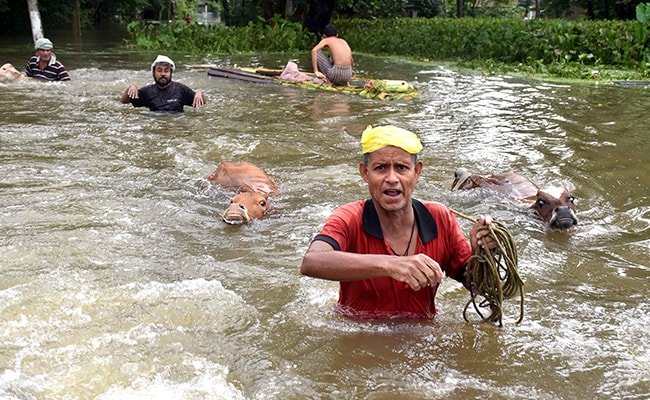
The flood situation in Assam remains critical as the death toll has increased to 47 after six more people lost their lives in the past 24 hours. The Assam State Disaster Management Authority (ASDMA) reported that more than 7.21 lakh people across 11 districts are facing the impact of the floods.
Meanwhile, continuous heavy rainfall has pushed several major rivers above the danger mark, raising concerns about further flooding. Rescue teams and government agencies are working around the clock to assist affected residents, while authorities continue to monitor the evolving situation.
Read More: Assam Floods Affect 5.65 Lakh People, 21 More Die
Key Facts
- State: Assam
- Death Toll: 47
- New Deaths Reported: 6 in the last 24 hours
- People Affected: Over 7.21 lakh
- Districts Affected: 11
- Authority: Assam State Disaster Management Authority (ASDMA)
- Current Situation: Several rivers remain above the danger mark
- Response: Rescue and relief operations are underway
Heavy Rain Continues to Worsen Assam Flood Crisis
Heavy rainfall continues to worsen the flood situation across Assam. As a result, several major rivers remain above the danger mark, increasing the risk of fresh flooding in many low-lying areas. The latest ASDMA bulletin confirmed six additional deaths, bringing the total flood-related death toll to 47.
Furthermore, the floods have affected more than 7.21 lakh people across 11 districts. Rising water levels have submerged villages, forcing thousands of families to leave their homes and move to safer locations or government relief camps.
Rescue Teams Expand Relief Operations
Meanwhile, state authorities, disaster response forces, and local volunteers have intensified rescue and relief operations in the worst-hit districts. They continue to distribute food, drinking water, medicines, and other essential supplies to displaced families.
In addition, officials are monitoring river levels and weather conditions around the clock. They have also urged residents living in vulnerable areas to remain alert and follow official safety advisories.
Floods Disrupt Infrastructure and Daily Life
The floods have disrupted transportation, damaged roads and embankments, and affected public infrastructure across several districts. Consequently, relief teams face challenges in reaching some remote villages.
Moreover, farmers have suffered significant crop losses, while local businesses have experienced interruptions due to waterlogging and damaged transport routes. Therefore, many families now depend on government assistance for their daily needs.
Authorities Remain on High Alert
The Assam State Disaster Management Authority continues to coordinate with district administrations and emergency agencies. At the same time, officials are assessing the flood situation and preparing additional relief measures if rainfall continues.
Although rescue operations have helped many affected residents, authorities expect challenges to continue until river levels begin to fall. Therefore, the administration has appealed to citizens to stay informed through official updates.
Questions and Answers
What happened in Assam?
Continuous heavy rainfall has caused severe flooding across Assam, affecting more than 7.21 lakh people in 11 districts.
How many people have died?
The flood-related death toll has risen to 47, including six deaths reported in the last 24 hours.
Why is the flood situation becoming more serious?
Heavy rainfall has pushed several major rivers above the danger mark, causing water levels to rise across many areas.
What are authorities doing?
Government agencies and disaster response teams are carrying out rescue operations, providing relief materials, and monitoring river conditions.
Who released the latest flood update?
The Assam State Disaster Management Authority (ASDMA) issued the latest flood bulletin.
Location Context
Assam is one of Northeast India’s most flood-prone states because the Brahmaputra River and its tributaries receive heavy monsoon rainfall every year. Consequently, seasonal floods often affect thousands of families, damage infrastructure, and disrupt transportation and agriculture. Therefore, effective disaster management and timely relief operations remain essential for the region.