





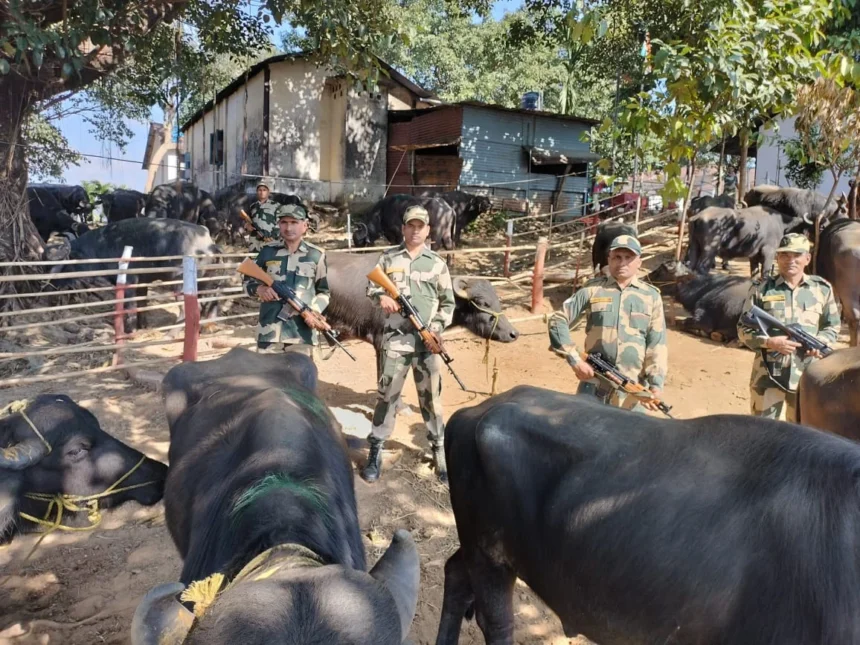
The Border Anti-Smuggling effort has gained momentum after the Meghalaya state cabinet approved stricter deployment measures aimed at preventing cross-border cattle smuggling into Bangladesh. The decision signals a stronger focus on securing vulnerable border routes and improving enforcement against illegal movement of livestock.
Act East Shift: Amit Shah Calls for Shift From Law and Order Focus to Economic Development
The Border Anti-Smuggling measures come amid concerns about unauthorized cross-border activity. Moreover, stronger deployment and enforcement can help authorities monitor sensitive routes and respond more effectively to suspected smuggling attempts.
Cattle movement across international borders involves legal, regulatory, and security considerations. Therefore, enforcement agencies must ensure that livestock transportation complies with applicable laws and border regulations.
The cabinet decision also highlights the importance of coordination among state authorities and border-security agencies. Additionally, improved intelligence sharing and monitoring could strengthen efforts to prevent illegal crossings.
Border Anti-Smuggling Measures Strengthen Cattle Monitoring
The Border Anti-Smuggling initiative follows the state cabinet’s approval of stricter deployment measures to prevent cattle smuggling into Bangladesh. According to the available information, the decision seeks to strengthen enforcement along vulnerable border areas.
Moreover, increased deployment can provide authorities with greater capacity to monitor movement near sensitive routes. Consequently, enforcement personnel can respond more quickly when they identify suspected illegal activity.
Border districts often require coordinated monitoring because of their proximity to international boundaries. Furthermore, cooperation among state agencies and border-security personnel can improve the effectiveness of anti-smuggling operations.
The available information does not specify the exact deployment strength, number of personnel involved, or the specific border locations covered by the cabinet decision.
Border Anti-Smuggling Push Targets Illegal Cross-Border Movement
The Border Anti-Smuggling strategy focuses on preventing unauthorized movement of cattle across the international border. Authorities can use stronger monitoring to identify suspicious transportation and investigate potential violations.
Additionally, stricter enforcement can help distinguish lawful livestock trade from unauthorized cross-border movement. This distinction remains important for protecting legitimate businesses while addressing illegal activity.
Border enforcement requires both personnel and supporting infrastructure. Meanwhile, authorities may rely on checkpoints, patrols, intelligence inputs, and coordination with other agencies to monitor vulnerable areas.
The available information does not provide details about penalties, new legal provisions, or enforcement timelines. Therefore, the current development focuses on the cabinet’s decision to strengthen deployment measures.
Border Anti-Smuggling Strategy Highlights Border Security
The Border Anti-Smuggling decision links livestock enforcement with broader border-security priorities. Preventing unauthorized crossings can help authorities maintain better control over movement along international boundaries.
Moreover, stronger enforcement can support efforts against organized smuggling networks. Consequently, sustained monitoring and intelligence-led action can play an important role in addressing repeated attempts to move livestock illegally.
Effective border management also requires attention to local communities and legitimate economic activity. Similarly, authorities can ensure that enforcement measures remain consistent with applicable laws and established procedures.
The cabinet’s decision represents a policy step toward strengthening enforcement. Therefore, implementation and coordination among relevant agencies will determine its practical impact.
Conclusion
The Border Anti-Smuggling initiative has advanced after the Meghalaya state cabinet approved stricter deployment measures to prevent cross-border cattle smuggling into Bangladesh.
Furthermore, stronger monitoring and coordination can help authorities secure vulnerable routes while protecting legitimate cross-border and local economic activity. The effectiveness of the policy will depend on its implementation and enforcement.
Overall, the Border Anti-Smuggling decision highlights Meghalaya’s focus on preventing illegal livestock movement and strengthening security along its international border.
FAQs
1. What is the latest Border Anti-Smuggling update?
The Border Anti-Smuggling update states that the Meghalaya cabinet approved stricter deployment measures to prevent cattle smuggling into Bangladesh.
2. What is the main objective of the decision?
The objective is to strengthen enforcement and prevent unauthorized cross-border movement of cattle.
3. Where will the stricter measures apply?
The measures are intended for vulnerable areas along Meghalaya’s international border, although specific locations were not provided.
4. Does the decision target legitimate cattle trade?
The stated objective concerns smuggling, while lawful livestock movement remains subject to applicable regulations and procedures.
5. What will determine the effectiveness of the measures?
Effective deployment, intelligence sharing, inter-agency coordination, and consistent enforcement will influence the results.