





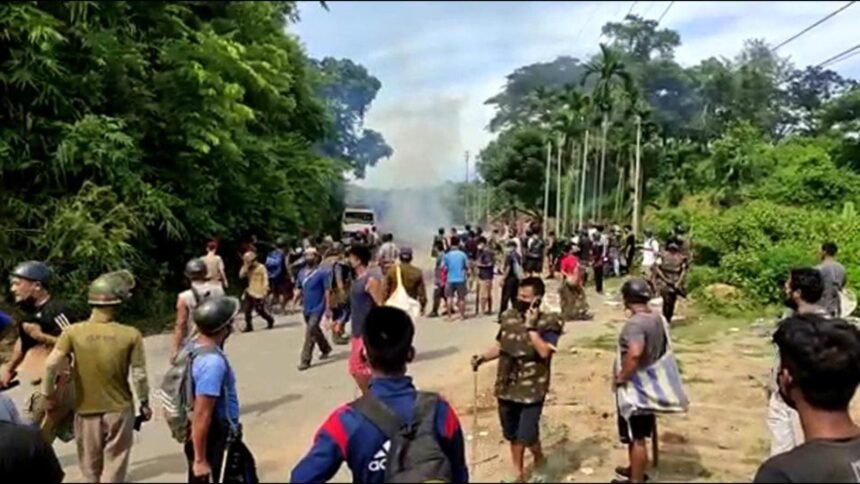
The Mizoram Boundary Demarcation process has gained momentum as high-level ministerial teams from Mizoram and Assam met along the inter-state border to discuss and formalize parameters surrounding land claims. The meeting highlights continued efforts by both states to address boundary-related issues through dialogue.
Khasi Students’ Union Renews Protests
The Mizoram Boundary Demarcation issue has remained an important inter-state governance matter in the Northeast. Moreover, direct engagement between senior representatives can provide a structured platform for reviewing disputed areas and establishing mutually understood parameters.
Boundary discussions require careful examination of historical records, administrative maps, and ground-level realities. Therefore, any formal demarcation process needs sustained coordination between the two governments and relevant administrative authorities.
The meeting also reflects an effort to manage the boundary issue through institutional dialogue. Additionally, clearer parameters could help reduce uncertainty and support more predictable administration in border areas.
Mizoram Boundary Demarcation Talks Focus on Land Claims
The Mizoram Boundary Demarcation process advanced with high-level ministerial teams from Mizoram and Assam meeting at the border.
Moreover, ministerial-level discussions can help maintain political momentum on complicated inter-state matters. Consequently, the latest engagement could contribute to efforts aimed at clarifying areas of disagreement.
Land claims along inter-state boundaries can involve historical administrative arrangements and competing interpretations of territorial limits. Furthermore, authorities must examine relevant records and consult appropriate stakeholders before reaching binding conclusions.
The available information does not specify the exact border locations discussed, the land area involved, or whether the teams reached a final agreement.
Mizoram Boundary Demarcation Requires Detailed Coordination
The Mizoram Boundary Demarcation process requires coordination among political leaders, district administrations, survey officials, and other relevant authorities.
Additionally, technical surveys and historical documentation can help establish a clearer understanding of existing boundary positions. This information can support future discussions between the two states.
Border communities also have a direct interest in how boundary issues develop. Meanwhile, authorities can help reduce uncertainty by communicating clearly about decisions and ensuring that local concerns receive appropriate attention.
The available information does not confirm whether officials have completed a joint survey or established final boundary coordinates.
Mizoram Boundary Demarcation Could Strengthen Border Management
The Mizoram Boundary Demarcation process could have implications for administration and development in border areas if the two states establish mutually accepted parameters.
Moreover, greater clarity can help authorities plan infrastructure, public services, and administrative activities with fewer uncertainties. Consequently, a structured settlement could contribute to more stable inter-state relations.
However, boundary matters can require prolonged negotiations because historical claims and local interests may differ. Similarly, both governments may need additional meetings before they can reach a comprehensive settlement.
The latest ministerial meeting represents continued engagement rather than confirmation of a final settlement. Therefore, further technical and political discussions will likely remain important.
Conclusion
The Mizoram Boundary Demarcation process has gained fresh momentum after high-level ministerial teams from Mizoram and Assam met at the border to discuss parameters surrounding land claims.
Furthermore, continued political dialogue and technical coordination could help both states work toward greater clarity over disputed areas. Any lasting settlement will require careful examination of records, ground realities, and the interests of border communities.
Overall, the Mizoram Boundary Demarcation effort highlights the importance of sustained institutional dialogue in addressing complex inter-state boundary questions in the Northeast.
FAQs
1. What is the latest Mizoram Boundary Demarcation development?
The Mizoram Boundary Demarcation process has advanced with high-level ministerial teams from Mizoram and Assam meeting along the border to discuss land-claim parameters.
2. Why are the two states holding these discussions?
The discussions aim to address boundary-related concerns and establish clearer parameters around competing land claims.
3. Has the boundary dispute been permanently settled?
The available information does not confirm a final settlement between Mizoram and Assam.
4. What could help resolve the boundary issue?
Historical records, administrative maps, technical surveys, political dialogue, and engagement with affected communities can contribute to a durable resolution.
5. What could clearer boundary parameters achieve?
They could reduce administrative uncertainty and support more predictable governance and development planning in border areas.