





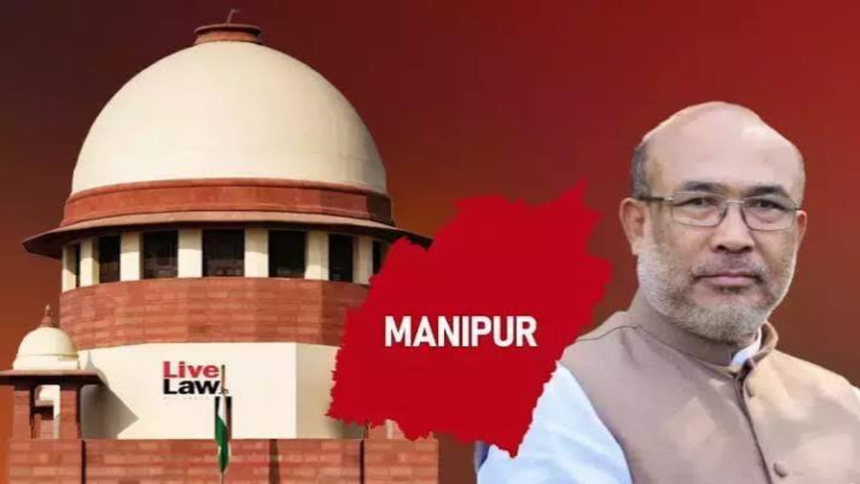
Manipur violence has taken a fresh turn after the Centre told the Supreme Court that a forensic report found signs of manipulation in audio recordings allegedly linked to former chief minister N Biren Singh. The finding has raised fresh questions over the authenticity of the recordings.
The recordings have been part of a legal dispute over allegations linked to the 2023 conflict. However, the Supreme Court has continued to seek reliable forensic evidence before drawing conclusions about the material.
Manipur violence audio row faces fresh scrutiny
The Manipur violence case involving the recordings began after a Kuki organisation sought an independent investigation into audio clips allegedly featuring Biren Singh. The petition claimed that the recordings could provide evidence about his alleged role during the conflict.
The Centre has disputed the reliability of the recordings. Meanwhile, the Supreme Court directed forensic agencies to examine the material and establish whether it could be authenticated.
A National Forensic Science Laboratory report later found signs of modification in four exhibits. The report stated that the clips showed indications of editing and tampering, making them unsuitable for a reliable forensic voice comparison.
Border Mining Blame: Displaced Residents Link Unregulated Mining
Manipur violence recordings show signs of tampering
The forensic finding became significant because the recordings had been presented as potential evidence in the wider Manipur violence dispute. If the source material has been altered, investigators cannot simply rely on the clips to establish what was originally said.
The laboratory also could not provide an opinion on whether the voice heard in the disputed recordings belonged to Biren Singh. Therefore, the forensic finding did not establish the identity of the speaker.
Earlier voice analysis gave a different result
The case became more complicated because an earlier assessment by private forensic agency Truth Labs reportedly reached a different finding.
That assessment examined a longer recording and reportedly found a high probability of a voice match with Singh’s admitted voice sample. However, the later government forensic examination raised concerns about the integrity of the material itself.
As a result, the two findings created a sharp dispute over whether the recordings could be treated as reliable evidence.
Manipur violence case moves toward fresh forensic testing
The Supreme Court subsequently sought a more dependable examination of the recordings. In January 2026, the court directed the National Forensic Sciences University in Gandhinagar to examine the complete recording along with admitted voice samples from Singh.
The move was important because the court wanted experts to examine fuller material rather than relying only on disputed extracts. Moreover, the fresh process could help determine whether a credible voice comparison was possible.
The court later expressed concern after the forensic process failed to provide a clear answer. It also considered whether Singh should provide a fresh voice sample for further examination.
Manipur violence probe focuses on original evidence
The Supreme Court has since stressed the importance of obtaining original or first-generation material. This approach could help experts determine whether the recording had been altered before it was circulated or submitted as evidence.
For the Manipur violence case, the distinction is important. A manipulated recording may not accurately represent the original conversation, even if the voice itself belongs to the person being identified.
Therefore, the authenticity of the source material remains a key issue alongside the question of voice identification.
Why the forensic report matters
The Centre’s position gives greater weight to the forensic finding that the disputed recordings were manipulated. However, the Supreme Court’s continuing directions show that the broader issue has not ended with that report.
The court is still seeking material that can produce a scientifically reliable answer. That means the latest development should not be treated as a final judicial finding about the allegations contained in the recordings.
Manipur violence controversy remains unresolved
The Manipur violence began in May 2023 and led to prolonged clashes between the Meitei and Kuki communities. Hundreds of people were killed, while large numbers were forced to leave their homes during the conflict.
The audio controversy has remained politically sensitive because of the allegations attached to the recordings. However, disputed material cannot by itself establish those allegations unless investigators and courts first determine that the evidence is genuine and reliable.
The latest forensic findings have therefore shifted attention toward the integrity of the recordings. At the same time, the Supreme Court’s further orders indicate that the legal process remains active.
What happens next in Manipur violence case
The next stage will depend on the fresh forensic examination and the availability of original recordings and reliable voice samples. If experts can authenticate the material, the court will have a stronger basis to assess its evidentiary value.
Overall, the forensic report has dealt a significant blow to the disputed recordings, but it has not ended the legal dispute. The Manipur violence case will continue to draw scrutiny as the Supreme Court seeks clearer evidence and a scientifically sound assessment.