



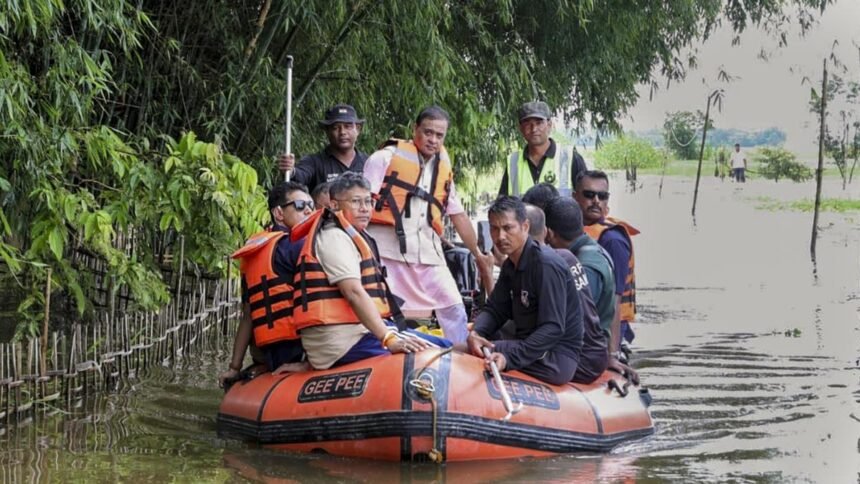
Displaced residents have raised a Border Mining Blame allegation, claiming that unregulated mining along the Assam-Nagaland border has altered natural river siltation pathways. The claim has emerged amid wider concerns over flooding and displacement, although the available information does not independently establish mining as the cause of the reported river changes.
Hostel Foundation: Manipur Deputy CM Lays Foundation Stone
Border Mining Blame Emerges Amid Flood Concerns
The Border Mining Blame has come from displaced residents who have linked unregulated mining along the Assam-Nagaland border with changes in natural river siltation pathways.
According to the claim, mining activity may have altered how sediment moves through local river systems. Residents argue that such changes could affect the natural movement and accumulation of silt in waterways.
However, the available information does not provide independent engineering or environmental assessments confirming this connection. Therefore, the allegation should remain clearly distinguished from an established finding.
River systems naturally transport and deposit sediment over time. Moreover, changes in river channels, sediment loads, rainfall, and surrounding land conditions can influence how waterways behave.
The residents’ concerns nevertheless add another dimension to the broader discussion surrounding flooding and displacement in the region.
Border Mining Blame Focuses on River Siltation
The Border Mining Blame specifically concerns alleged changes to natural river siltation pathways. Silt consists of fine sediment that rivers transport and deposit as water moves through different parts of a river system.
Mining can alter land surfaces and, depending on the location and method involved, potentially affect sediment movement. However, establishing a direct relationship requires detailed environmental and hydrological assessment.
Furthermore, river behavior depends on multiple factors. Rainfall intensity, river discharge, erosion, vegetation, channel shape, and upstream conditions can all influence sediment movement.
The displaced residents have attributed the reported changes to unregulated mining. Nevertheless, the available information does not identify specific mining operations, provide measurements of sediment movement, or cite a formal environmental investigation.
Consequently, it would be inappropriate to present the residents’ allegation as a confirmed cause of flooding or displacement.
Further scientific assessment would be necessary to determine whether mining has materially changed river pathways or sediment patterns.
Displaced Residents Raise Border Mining Blame Concerns
The Border Mining Blame has gained attention because displaced residents directly connect environmental changes with their experiences during the current crisis.
Moreover, people living near affected river systems can provide important observations about changes they have witnessed over time. Their accounts can help identify issues that authorities and environmental agencies may need to investigate.
However, personal observations alone cannot establish the precise environmental cause of changes in river behavior. Scientific studies can provide additional evidence by examining river channels, sediment deposits, mining activity, rainfall patterns, and historical changes.
Similarly, authorities may need to determine whether mining operations complied with applicable environmental and regulatory requirements.
The available information does not confirm whether officials have launched an investigation into the allegations along the Assam-Nagaland border.
Therefore, the claim currently remains a concern raised by displaced residents rather than a verified official conclusion.
Border Mining Blame Highlights Environmental Monitoring Needs
The Border Mining Blame also highlights the importance of environmental monitoring in areas where mining and river systems exist close to one another.
Furthermore, regular monitoring can help authorities track changes in river channels and sediment patterns over time. Such information can provide a stronger basis for identifying environmental risks and determining whether human activity has contributed to changes.
Unregulated mining, if confirmed, could raise questions about compliance with environmental safeguards and land-use regulations. However, the current information does not establish the scale of mining activity or whether particular operators violated applicable rules.
Additionally, the border location may require coordination between authorities from both Assam and Nagaland when environmental impacts cross administrative boundaries.
A detailed assessment could therefore examine both the reported mining activity and other factors influencing river behavior.
Without such evidence, the precise role of mining in changing siltation pathways remains uncertain.
Conclusion
The Border Mining Blame has emerged after displaced residents accused unregulated mining along the Assam-Nagaland border of altering natural river siltation pathways. Their claims highlight concerns about the relationship between human activity, river behavior, and the wider effects of flooding.
Furthermore, river systems respond to multiple environmental factors, including rainfall, erosion, sediment movement, and changes in river channels. Therefore, establishing whether mining contributed to the reported changes requires detailed scientific and environmental assessment.
Overall, the Border Mining Blame remains an allegation raised by displaced residents rather than a confirmed finding based on the information available. Further investigation and verified environmental data could clarify whether mining activity has altered local river systems and contributed to the reported conditions.
FAQs
1. What is the Border Mining Blame allegation?
The Border Mining Blame refers to claims by displaced residents that unregulated mining along the Assam-Nagaland border altered natural river siltation pathways.
2. What are natural river siltation pathways?
They describe the natural movement and deposition of sediment carried by rivers as water flows through river channels and surrounding areas.
3. Has mining been confirmed as the cause of the river changes?
No. The available information only confirms the allegation from displaced residents. It does not provide an independent environmental or hydrological assessment confirming the claim.
4. What other factors can affect river siltation?
Rainfall, river discharge, erosion, sediment availability, vegetation, channel changes, and upstream conditions can all influence sediment movement.
5. Why could an investigation be important?
A scientific investigation could determine whether mining activity altered river channels or sediment pathways and could distinguish its potential effects from natural environmental factors.