




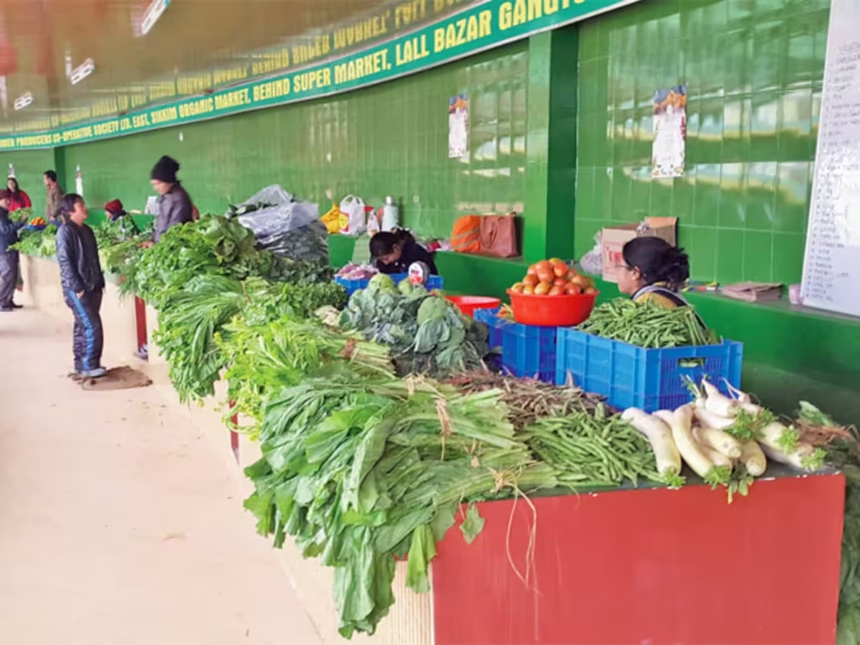
Sikkim’s Organic Food Mission has expanded digital market access for small-scale farmers by integrating 1,200 new farming clusters into national digital retail spaces. The initiative aims to connect organic producers with wider consumer markets while strengthening the state’s reputation as a major hub for organic agriculture.
The expansion represents an important step in bringing small producers closer to consumers beyond Sikkim. Moreover, digital retail platforms can help farmers access markets that were previously difficult to reach because of the state’s mountainous geography and logistical challenges.
The initiative could also support better visibility for Sikkim’s organic products and encourage value-added agricultural businesses. However, sustained benefits will depend on reliable logistics, digital skills, product quality, packaging, and fair returns for farmers.
Phumdis Weapons Sweeps: Security Forces Expand Loktak Lake Sanitization Operations
1,200 Farming Clusters Join Digital Retail
The Sikkim Organic Food Mission has brought 1,200 additional small-scale farming clusters into national digital retail channels.
The move gives participating producers an opportunity to showcase their agricultural products to consumers outside the state. Furthermore, digital platforms can reduce some of the geographical barriers that traditionally limit market access for farmers in remote mountain communities.
The expansion could therefore increase the commercial reach of Sikkim’s organic agriculture.
However, digital access alone cannot guarantee higher farmer incomes. Producers also need efficient supply chains and consistent demand.
Sikkim Strengthens Organic Agriculture
Sikkim has built a distinctive identity around organic farming.
The state’s agricultural model has encouraged farmers to focus on cultivation practices that reduce reliance on synthetic agricultural inputs. Additionally, the organic identity has helped Sikkim differentiate its agricultural products in domestic markets.
The latest digital expansion can strengthen that positioning.
Moreover, connecting more producers with national consumers could increase awareness of Sikkim’s organic offerings.
Digital Retail Opens Wider Markets
Online retail can provide small producers with access to customers across India.
Instead of depending exclusively on local markets or intermediaries, farming clusters can potentially reach consumers through digital storefronts. Furthermore, online visibility can help niche agricultural products find customers who actively seek organic and regionally sourced goods.
This can be particularly valuable for specialised products produced in smaller quantities.
However, online sales require dependable inventory management, packaging, payment systems, and delivery networks.
Mountain Geography Creates Logistics Challenges
Sikkim’s terrain creates unique challenges for agricultural marketing.
Mountain roads, weather conditions, transportation distances, and limited storage infrastructure can affect how quickly products reach consumers. Additionally, perishable organic products require careful handling throughout the supply chain.
Digital retail can increase demand, but logistics must keep pace with that demand.
Therefore, improvements in storage, transportation, and distribution will remain essential to the mission’s success.
Farmers Gain Greater Market Visibility
The integration of 1,200 farming clusters can increase the visibility of small producers.
Digital platforms can provide information about products, their origin, production methods, and availability. Moreover, better visibility can help consumers identify products from specific regions or producer groups.
This can strengthen the connection between farmers and buyers.
However, producers need training to manage digital listings, customer communication, pricing, and order fulfilment effectively.
Organic Branding Strengthens Sikkim’s Identity
Sikkim’s organic reputation provides an important foundation for digital expansion.
Consumers increasingly look for products associated with natural production methods and clear origins. Furthermore, a strong regional identity can help differentiate Sikkim’s agricultural products from competing goods.
The digital marketplace can therefore become an extension of the state’s organic branding strategy.
However, maintaining consumer trust requires consistent quality and transparent product information.
Small Producers Could Benefit
Small-scale farmers often face difficulties when attempting to reach large markets independently.
Collective farming clusters can help producers coordinate supply and improve their ability to meet larger orders. Additionally, shared marketing and distribution systems can reduce some of the operational challenges faced by individual farmers.
Digital integration can strengthen these collective advantages.
However, the distribution of revenue within farming clusters should remain transparent and fair.
Value-Added Products Create Opportunities
Digital retail can support more than sales of raw agricultural produce.
Farmers and local enterprises can potentially develop processed products such as packaged foods, spices, beverages, and other organic goods. Moreover, value addition can increase the economic value retained within the state.
This approach can also create employment in packaging, processing, logistics, and marketing.
However, businesses must meet applicable food-safety, labelling, and quality requirements.
Youth Can Support Digital Agriculture
The shift toward digital retail creates opportunities for younger people in rural communities.
Young entrepreneurs can help farming groups with online listings, branding, photography, customer service, inventory management, and digital marketing. Furthermore, these activities can create new forms of rural employment beyond traditional farming.
This can help connect agriculture with the digital economy.
However, training programmes will remain important to ensure that farmers and producer groups can use digital platforms effectively.
National Consumers Gain More Choice
Consumers outside Sikkim can benefit from greater access to products originating from the state.
Digital platforms can make regional organic products easier to discover and purchase. Additionally, information about farming communities and production regions can help consumers understand the origins of their purchases.
This can create a stronger relationship between regional producers and national consumers.
However, consumer demand will depend on competitive pricing, product quality, availability, and reliable delivery.
Digital Access Could Reduce Intermediary Dependence
Traditional agricultural supply chains often involve multiple intermediaries between farmers and consumers.
Digital retail can create additional routes to market and potentially reduce dependence on some intermediary channels. Moreover, direct or semi-direct sales can provide producers with greater visibility into consumer demand.
This information can help farming clusters plan production more effectively.
However, intermediaries still perform important functions such as transportation, storage, aggregation, and distribution.
Quality Control Remains Critical
Organic branding depends heavily on consumer trust.
Products marketed as organic need to meet the applicable standards and certification requirements. Furthermore, consistent quality can encourage repeat purchases and strengthen the reputation of Sikkim’s organic sector.
Digital marketplaces can amplify both positive and negative consumer experiences.
Therefore, quality assurance and accurate product information will remain central to long-term success.
Sikkim’s Organic Mission Enters a New Phase
The integration of 1,200 farming clusters represents a shift from simply promoting organic production toward expanding market connectivity.
Farmers can potentially reach consumers across a much wider geographical area. Moreover, the initiative can help build stronger links between agricultural production, digital commerce, logistics, and rural entrepreneurship.
This broader ecosystem could make organic farming more commercially sustainable.
However, continued investment will be necessary to maintain digital and physical infrastructure.
Potential Economic Impact
Greater market access can create wider economic benefits for rural communities.
Higher demand can increase farm revenues while supporting related businesses in processing, packaging, transportation, and retail. Additionally, stronger markets can encourage farmers to maintain agricultural production rather than shifting away from farming.
This could support rural livelihoods across Sikkim.
However, the actual economic impact will depend on sales volumes, pricing, operating costs, and how much value reaches producers.
What Happens Next?
The next challenge will involve ensuring that the newly integrated farming clusters can successfully use national digital retail channels.
Authorities and supporting organisations can provide training, branding assistance, packaging support, logistics coordination, and digital marketing guidance. Furthermore, monitoring sales and farmer outcomes can help identify areas requiring additional support.
The initiative could eventually serve as a model for connecting small mountain farmers with national markets.
However, long-term success will depend on consistent implementation and measurable benefits for participating producers.
Conclusion
The Sikkim Organic Upgrades initiative, which integrates 1,200 new small-scale farming clusters into national digital retail spaces, marks an important development for the state’s organic agriculture sector. The programme can help rural producers overcome geographical barriers and connect their products with consumers across India.
Moreover, digital market access can encourage value addition, strengthen organic branding, create rural employment, and support new opportunities for young entrepreneurs. At the same time, reliable logistics, quality control, digital training, and fair returns will remain essential.
Overall, expanding digital retail access can help Sikkim move from being recognised primarily for organic production toward building a stronger, market-oriented organic agricultural economy.
FAQs
1. What is the Sikkim Organic Food Mission?
It is an initiative focused on strengthening Sikkim’s organic agricultural sector and improving opportunities for organic producers.
2. How many farming clusters were integrated?
The initiative reportedly integrated 1,200 new small-scale farming clusters into national digital retail spaces.
3. How can digital retail help Sikkim’s farmers?
It can provide wider market access, improve product visibility, connect producers with consumers, and create additional routes to market.
4. What challenges could farmers face?
Key challenges include logistics, packaging, digital skills, storage, quality control, delivery costs, and maintaining consistent supply.
5. Could the initiative create rural jobs?
Yes. Expanded digital agriculture can support employment in farming, processing, packaging, logistics, marketing, customer service, and other related activities.