




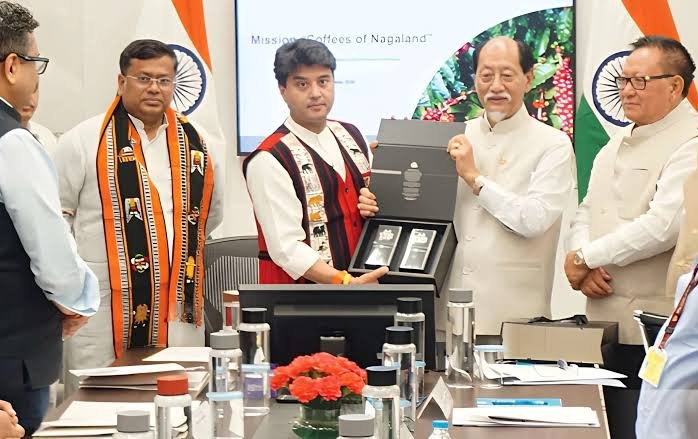
Nagaland is expanding the international reach of its indigenous coffee sector through the Naga Coffee Mission, which has opened three new export pathways aimed at European markets. The initiative seeks to strengthen the commercial value of locally grown coffee while connecting producers with international buyers.
The expansion could provide new opportunities for coffee growers, cooperatives, processors, and exporters across Nagaland. Moreover, international branding can help position Naga coffee as a distinctive origin-based product rather than competing solely on volume and price.
The move also reflects growing efforts to diversify Nagaland’s agricultural economy through high-value crops. However, building a sustainable European export market will require consistent quality, reliable supply chains, international certifications, effective branding, and strong relationships with overseas buyers.
Phumdis Weapons Sweeps: Security Forces Expand Loktak Lake Sanitization Operations
Naga Coffee Targets European Consumers
The Naga Coffee Mission is seeking to expand the crop’s presence beyond India’s domestic market.
Three new export pathways are reportedly being developed to connect Naga coffee with European markets. Furthermore, access to international buyers could provide producers with opportunities to develop premium market segments based on origin and quality.
This could strengthen the commercial prospects of coffee cultivation in Nagaland.
However, entering European markets requires exporters to understand specific food-safety, labelling, traceability, and import requirements.
Indigenous Crop Gains Global Branding
Naga coffee has the potential to develop a distinctive regional identity.
Coffee grown in Nagaland benefits from the state’s unique mountain environment and local agricultural traditions. Additionally, origin-based branding can help consumers understand where the coffee comes from and how producers cultivate and process it.
A strong regional identity can therefore become an important marketing tool.
However, branding must accurately represent the product and maintain consistent quality across different batches.
Three Export Pathways Open New Opportunities
The creation of three export routes can diversify the ways Naga coffee reaches overseas buyers.
Multiple pathways can potentially reduce dependence on a single market or distributor. Moreover, different European markets may provide opportunities for roasted coffee, specialty beans, or other value-added products.
This can encourage producers to explore different segments of the international market.
However, each pathway will require dependable logistics and commercial partnerships.
Farmers Could Gain Better Market Access
International demand can create additional opportunities for coffee growers.
Export-oriented supply chains can encourage producers to improve cultivation, harvesting, processing, and quality control. Furthermore, stronger demand may provide incentives for farmers to invest in better plantation management.
This can strengthen rural livelihoods.
However, international market prices can fluctuate, so farmers need stable purchasing arrangements and transparent pricing systems.
Specialty Coffee Offers Premium Potential
European consumers include a large market for specialty and origin-focused coffee.
Naga coffee can potentially compete in this segment by emphasising its geographical origin, cultivation practices, flavour profile, and producer stories. Additionally, smaller-batch production can appeal to buyers looking for distinctive coffees.
This approach can allow Naga producers to compete through quality rather than scale.
However, premium positioning requires rigorous quality control and reliable supply.
Processing Determines Coffee Quality
Coffee quality depends heavily on what happens after harvesting.
Proper sorting, fermentation, drying, storage, roasting, and packaging can significantly affect the final product. Moreover, consistent processing allows exporters to maintain a recognisable quality standard.
Investment in local processing infrastructure can therefore strengthen the export programme.
However, producers need technical training and access to appropriate equipment.
Export Certification Will Matter
European markets generally require exporters to comply with strict regulatory standards.
Coffee businesses may need to address food-safety rules, traceability, packaging requirements, labelling standards, and other import conditions. Furthermore, buyers can impose additional quality specifications before accepting shipments.
Meeting these requirements will be essential for long-term market access.
However, training and institutional support can help small producers navigate complex export procedures.
Cooperatives Can Strengthen the Supply Chain
Small-scale coffee growers may struggle to meet international orders individually.
Producer groups and cooperatives can aggregate beans from multiple farms while coordinating quality standards and logistics. Additionally, collective marketing can improve negotiating power when dealing with international buyers.
This can make export operations more efficient.
However, cooperatives need transparent systems for grading, procurement, payment, and quality management.
Rural Employment Could Expand
A growing coffee export sector can create jobs throughout the value chain.
Farm workers, processors, quality specialists, packers, transport operators, marketers, and exporters can all benefit from increased activity. Moreover, coffee-related enterprises can provide young people with opportunities in agriculture and food businesses.
This can contribute to rural economic diversification.
However, employment growth will depend on sustained production and export demand.
Young Entrepreneurs Can Enter Coffee
The expansion of international markets can create opportunities for agricultural entrepreneurs.
Young businesses can develop coffee brands, specialty roasting companies, packaging solutions, logistics services, digital marketing agencies, and tourism experiences. Furthermore, entrepreneurship can connect traditional farming with modern consumer markets.
This can create a broader coffee ecosystem in Nagaland.
However, new businesses will require access to finance, technical expertise, and reliable supplies.
Coffee Tourism Could Complement Exports
Nagaland’s coffee industry could also benefit from agricultural tourism.
Visitors can experience coffee plantations, processing facilities, local food, and indigenous cultural traditions. Additionally, farm-based tourism can provide producers with another source of income while promoting the regional identity of Naga coffee.
Export branding and tourism can therefore reinforce each other.
However, tourism development should respect local communities and agricultural practices.
Branding Nagaland Through Agriculture
Agricultural exports can contribute to the wider branding of Nagaland.
A distinctive coffee product can introduce international consumers to the state’s landscapes, communities, and agricultural traditions. Moreover, successful exports can increase awareness of other Naga products and encourage wider interest in the region.
This can create opportunities beyond coffee itself.
However, effective branding requires consistent storytelling, professional packaging, and dependable product quality.
Logistics Remain a Major Challenge
Moving coffee from Nagaland to European markets involves multiple stages.
Beans must travel from farms to processing facilities and then through domestic and international logistics networks. Furthermore, exporters must coordinate customs procedures, documentation, shipping schedules, and delivery to overseas buyers.
Reliable logistics will therefore be essential.
However, improving logistics can benefit other agricultural exporters in the region as well.
Value Addition Can Increase Returns
Nagaland can capture more value by expanding beyond raw coffee beans.
Local roasting, packaging, specialty blends, and branded products can generate additional revenue within the state. Additionally, value-added coffee products can create jobs and encourage investment in local processing.
This approach can strengthen the economic impact of exports.
However, businesses must maintain quality while scaling production.
Sustainable Production Matters
International consumers increasingly pay attention to how agricultural products reach the market.
Sustainable farming practices, responsible land management, and transparent supply chains can strengthen the reputation of Naga coffee. Moreover, environmentally responsible production can protect the long-term productivity of coffee-growing areas.
This can support both farmers and exporters.
However, sustainability claims should remain measurable and transparent.
Building Long-Term European Demand
Opening export pathways represents only the beginning of international expansion.
Naga coffee exporters will need to develop long-term relationships with European importers, specialty roasters, retailers, and consumers. Furthermore, consistent shipments can help establish trust and encourage repeat orders.
Strong commercial partnerships can therefore determine whether initial exports become a sustainable business.
However, exporters must balance international demand with the production capacity of local farmers.
What Happens Next?
The next stage will involve strengthening the supply chain around the three new export pathways.
Authorities, cooperatives, processors, and exporters can focus on quality standards, farmer training, certification, packaging, logistics, and international marketing. Additionally, participation in international coffee exhibitions and specialty markets could help introduce Naga coffee to new buyers.
Successful shipments could provide a foundation for broader expansion.
However, long-term growth will depend on consistent quality, dependable supply, and fair returns for producers.
Conclusion
The Naga Coffee Expansion initiative marks an important step in Nagaland’s efforts to connect its indigenous coffee crop with international consumers. By opening three new export pathways toward European markets, the Naga Coffee Mission can create opportunities for farmers, processors, cooperatives, and agricultural entrepreneurs.
Moreover, strong origin-based branding can help Naga coffee compete in specialty markets while supporting rural employment and value-added production. At the same time, certification, quality control, logistics, sustainable cultivation, and reliable international partnerships will remain critical.
Overall, the expansion could help transform Naga coffee from a regional agricultural product into a recognised international brand, provided the new export channels develop into stable and sustainable markets.
FAQs
1. What is the Naga Coffee Mission?
The Naga Coffee Mission is an initiative focused on developing Nagaland’s coffee sector and expanding opportunities for local coffee producers.
2. How many new export pathways were opened?
The initiative reportedly opened three new international export pathways targeting European markets.
3. Why are European markets important?
European countries have established specialty coffee markets where distinctive origin-based products can potentially command premium consumer interest.
4. How can coffee exports benefit farmers?
Exports can create additional demand, encourage quality improvements, strengthen market access, and potentially provide better commercial opportunities for producers.
5. What challenges could affect Naga coffee exports?
Key challenges include international certification, quality consistency, processing infrastructure, logistics, supply reliability, pricing, and competition in the global coffee market.