





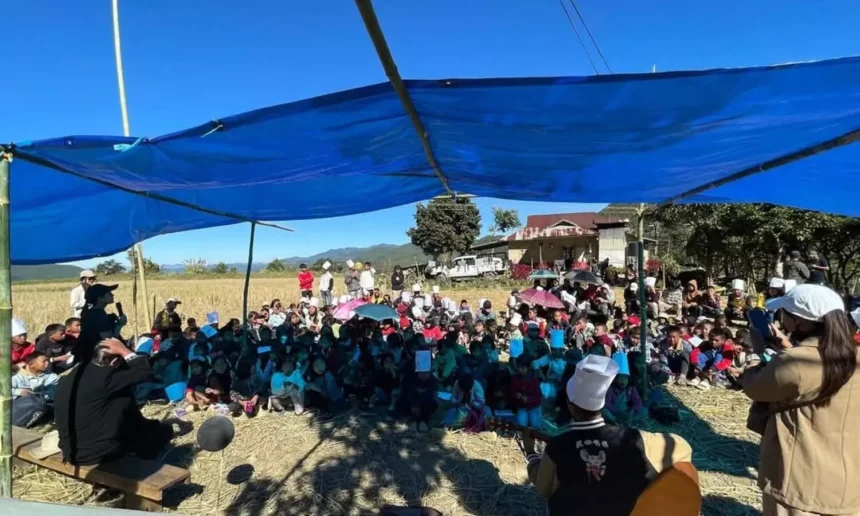
Mizoram’s State Home Department has reported that biometric enrollment of Myanmar refugees has reached 98.89% completion, marking a major milestone in the state’s documentation exercise. The initiative aims to establish more comprehensive records of displaced people from Myanmar who have entered Mizoram amid continuing instability across the border.
The near-complete enrollment rate reflects an extensive administrative effort involving identification and biometric documentation. Moreover, the database can help authorities maintain more accurate records and coordinate administrative and security-related responsibilities.
The development also highlights Mizoram’s position as a key state for managing displacement from neighbouring Myanmar. However, biometric enrollment itself does not determine a person’s citizenship, refugee status, or legal entitlement to remain in India.
Arunachal Kiwi Mission: Ziro Agro-Startups Receive Grants
Mizoram Reports 98.89% Enrollment
The Mizoram State Home Department has confirmed that biometric enrollment has reached 98.89%, according to the information provided.
The figure indicates that officials have completed biometric registration for nearly all individuals covered by the ongoing exercise. Furthermore, such a high completion rate can give authorities a more detailed record of the displaced population within the state’s administrative framework.
The remaining cases may require additional verification or administrative follow-up.
However, authorities would need to provide further details to explain the exact number of individuals still awaiting enrollment.
Biometric Records Strengthen Documentation
Biometric enrollment can help authorities maintain more reliable individual records.
Unlike basic paper-based registration, biometric systems can help officials verify identities and reduce the possibility of duplicate records. Additionally, accurate documentation can improve coordination between authorised government agencies.
This becomes particularly relevant when large populations cross borders during periods of instability.
However, biometric data requires strong safeguards because it contains sensitive personal information.
Myanmar Conflict Drives Displacement
Mizoram shares a long international border with Myanmar and has received displaced people during periods of conflict and instability.
Communities in Mizoram have also maintained close ethnic and cultural connections with people across the border. Moreover, these social links can influence how communities respond when people seek safety in neighbouring areas.
The biometric exercise reflects the administrative challenges created by this continuing displacement.
However, the circumstances of individual displaced people can differ considerably.
Registration Does Not Establish Legal Status
Biometric enrollment should not automatically be interpreted as recognition of refugee status.
Authorities can collect biometric information for identification and administrative purposes without determining an individual’s citizenship or final legal position. Furthermore, separate legal and administrative processes may govern questions relating to immigration and protection.
This distinction remains important when interpreting the 98.89% figure.
However, the precise legal purpose of Mizoram’s biometric database depends on the state’s applicable policies and official procedures.
State Agencies Coordinate the Exercise
Large-scale biometric enrollment requires coordination between multiple administrative units.
Officials must identify individuals, collect information, verify records, and maintain databases. Additionally, coordination between the Home Department, district authorities, and field-level officials can help complete enrollment efficiently.
The reported 98.89% figure suggests that the exercise has progressed substantially.
However, maintaining accurate records requires continued updates and verification.
Data Protection Becomes Important
Biometric information represents highly sensitive personal data.
Government agencies handling such records need appropriate controls over collection, storage, access, and use. Moreover, restricting access to authorised personnel can reduce the risk of misuse or unauthorised disclosure.
Data protection becomes particularly important when records concern displaced populations.
However, the specific safeguards governing Mizoram’s biometric database have not been detailed in the information provided.
Remaining Cases Need Attention
A completion rate of 98.89% still leaves a small proportion of people outside the biometric database.
Officials may need to identify the reasons behind incomplete enrollment. Furthermore, some individuals may face difficulties involving documentation, mobility, health, location, or access to registration facilities.
Addressing these cases could help authorities achieve more comprehensive coverage.
However, the reasons for incomplete enrollment require confirmation from the relevant authorities.
Documentation Can Support Planning
Accurate population records can assist state authorities in planning administrative responses.
Officials can use verified information to understand population distribution and coordinate services where required. Additionally, reliable data can help authorities assess changes in the displaced population over time.
This can improve administrative planning.
However, biometric records alone cannot provide a complete picture of humanitarian needs.
Humanitarian Concerns Remain Relevant
Displaced populations can face challenges involving shelter, education, healthcare, food, employment, and security.
While biometric documentation primarily serves identification and administrative purposes, authorities may also use reliable population information when planning responses. Moreover, coordination between security and humanitarian agencies can help address different aspects of displacement.
The two responsibilities should remain clearly distinguished.
However, the availability of assistance depends on government policy and applicable legal provisions.
Mizoram Faces Border Management Challenges
Mizoram’s geographical location makes border management particularly complex.
The state has remote border areas and communities with longstanding social connections across the international boundary. Furthermore, changing conditions in Myanmar can create sudden movements of people and increase pressure on local administrative systems.
Comprehensive documentation can help officials understand these movements.
However, border management requires more than biometric registration and involves broader administrative and security measures.
Near-Complete Enrollment Marks Milestone
Reaching 98.89% enrollment represents a significant administrative milestone if the figure covers the full population targeted by the exercise.
The high completion rate can provide authorities with a stronger information base for future verification and planning. Additionally, completing the remaining registrations could further improve the coverage of the database.
The exercise therefore appears to have reached an advanced stage.
However, officials should clarify the methodology and population covered by the reported percentage to ensure accurate interpretation.
What Happens Next?
Authorities can focus on resolving the remaining biometric enrollment cases and maintaining the existing database.
Regular verification and updates may become important as displaced individuals move, return, or experience changes in their circumstances. Moreover, authorities may continue coordinating with district administrations to keep records current.
The next stage will likely focus on maintaining the accuracy and usefulness of the collected information.
However, further developments will depend on official announcements from Mizoram authorities.
Conclusion
The 98.89% biometric enrollment of Myanmar refugees in Mizoram, as reported by the State Home Department, marks a significant milestone in the state’s ongoing documentation exercise. The near-complete coverage can help authorities maintain more organised records and improve administrative coordination.
Moreover, comprehensive biometric documentation can support identification and population management along a challenging international border. At the same time, authorities must protect sensitive biometric information and clearly distinguish administrative registration from determinations of citizenship or legal status.
Overall, the reported 98.89% biometric enrollment demonstrates substantial progress in Mizoram’s documentation efforts while highlighting the continuing administrative challenges created by displacement from Myanmar.
FAQs
1. What is Mizoram’s reported biometric enrollment rate?
The State Home Department has reported a 98.89% completion rate for the biometric enrollment exercise covering Myanmar refugees.
2. Why is biometric enrollment being conducted?
Biometric enrollment can help authorities create more accurate identification records and improve administrative coordination.
3. Does biometric enrollment grant refugee status?
No. Biometric registration itself does not automatically establish citizenship, refugee status, or another legal status.
4. What happens to the remaining cases?
Authorities may need to identify and resolve cases that remain incomplete through additional verification or registration efforts.
5. Why is data protection important?
Biometric information is sensitive personal data, so authorities need appropriate safeguards governing its collection, storage, access, and use.