




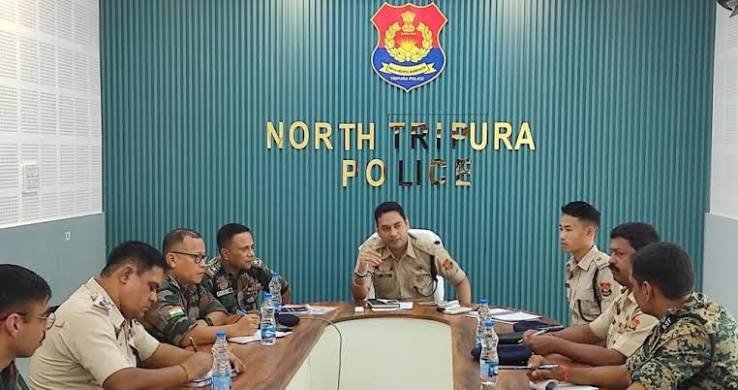
The District Magistrate and Superintendent of Police of North Tripura have implemented joint police patrolling as authorities seek to prevent potential law-and-order disruptions during ongoing border talks. The coordinated security arrangement aims to strengthen surveillance and maintain public order in areas considered sensitive during the discussions.
The initiative brings civil and police administration together to monitor developments and respond quickly to emerging concerns. Moreover, coordinated patrols can improve communication between administrative and law-enforcement officials during periods of heightened sensitivity.
The move highlights the importance of maintaining stability while border-related discussions continue. However, authorities have not indicated that any specific disturbance has occurred, and the patrols should be viewed as a preventive measure.
Arunachal Kiwi Mission: Ziro Agro-Startups Receive Grants
North Tripura Strengthens Joint Patrols
The District Magistrate and Superintendent of Police have coordinated police patrolling across North Tripura.
The arrangement allows administrative and police authorities to work together while monitoring areas where tensions could potentially emerge. Furthermore, joint patrols can improve coordination between field personnel and senior officials.
The initiative forms part of a preventive law-and-order strategy.
However, the exact locations and deployment strength may depend on operational requirements.
Border Talks Prompt Preventive Measures
Authorities have introduced the patrol arrangement during a period of border-related discussions.
Sensitive negotiations can sometimes generate heightened public attention and political activity. Additionally, authorities may increase preventive monitoring to ensure that disagreements do not develop into local law-and-order problems.
The North Tripura administration has therefore adopted a precautionary approach.
However, preventive patrolling does not indicate that authorities have confirmed an imminent threat.
DM and SP Coordinate Security
The District Magistrate and Superintendent of Police play complementary roles in maintaining district-level administration and public order.
Their coordination can help ensure that administrative information reaches police teams quickly. Moreover, joint planning can allow authorities to identify potentially sensitive locations and allocate personnel accordingly.
This approach can strengthen local preparedness.
However, effective coordination requires clear communication and regular field assessments.
Patrolling Aims to Prevent Law-and-Order Issues
The primary objective involves preventing possible disruptions rather than responding to an established incident.
Police patrols can increase visibility in sensitive areas and allow officers to identify developing situations early. Furthermore, regular interaction with local communities can help authorities understand emerging concerns.
A visible preventive presence can also reassure residents.
However, patrols must operate within established legal and administrative procedures.
Border Areas Require Close Monitoring
North Tripura’s location makes border management an important administrative concern.
Border areas can involve movement of people, trade, local communities, and security personnel. Moreover, political developments associated with border discussions can attract additional attention from residents and stakeholders.
Authorities can therefore use patrols to maintain awareness of local developments.
However, border security involves multiple agencies and cannot depend solely on district-level police patrols.
Police Presence Can Improve Response Time
Regular patrols can help officers respond more quickly when incidents occur.
Personnel already operating in the field can communicate developments to police stations and senior officials. Additionally, coordinated patrol routes can improve coverage across areas requiring additional attention.
This can strengthen preventive policing.
However, response measures must remain proportionate to the nature of any actual incident.
Community Communication Remains Important
Law-and-order management involves more than visible police deployment.
Officials can communicate with local residents, community representatives, and other stakeholders to identify concerns before they escalate. Furthermore, community engagement can help prevent rumours and misunderstandings during sensitive political discussions.
Clear communication can therefore complement patrolling.
However, authorities should rely on verified information when addressing public concerns.
Preventive Policing During Sensitive Discussions
Authorities often increase preparedness during politically sensitive periods.
Preventive measures can include patrols, communication between departments, monitoring of sensitive locations, and coordination with local officials. Moreover, these measures can help authorities respond to developments without unnecessarily disrupting normal community life.
North Tripura’s joint patrol initiative reflects this preventive approach.
However, the scale of any security deployment should remain appropriate to the situation.
Border Talks Can Affect Local Sentiment
Negotiations involving border issues can attract strong public interest.
Residents may closely follow developments that could affect movement, administration, or relations between communities. Additionally, political groups and local organisations may express different views during discussions.
Authorities therefore need to monitor public sentiment while protecting lawful civic participation.
However, peaceful expression and legitimate public activity should not automatically be treated as security threats.
Coordination Can Reduce Administrative Gaps
Joint operations between civil and police authorities can reduce communication gaps.
The District Magistrate’s office can provide administrative direction while police leadership manages operational deployment. Furthermore, regular coordination can help officials adjust patrol patterns when local conditions change.
This can make preventive security arrangements more flexible.
However, officials must maintain clear institutional responsibilities throughout the operation.
Technology Can Support Monitoring
Modern communication and surveillance tools can complement physical patrols.
Authorised personnel can use communication networks and other operational resources to share information quickly. Moreover, timely information can help officers identify locations that require greater attention.
Technology can therefore strengthen traditional policing methods.
However, authorities should use such tools according to applicable laws and established procedures.
Security Measures Should Remain Proportionate
Preventive policing must balance security with normal public activity.
Excessive restrictions can inconvenience residents and affect legitimate movement. Furthermore, proportionate security measures can help maintain public confidence while addressing genuine law-and-order concerns.
The objective should remain prevention rather than unnecessary disruption.
However, authorities may adjust security arrangements if verified circumstances change.
What Happens Next?
Joint patrolling is expected to continue while the border talks and related discussions remain sensitive.
The DM and SP can review field conditions and modify patrol arrangements based on local assessments. Additionally, police teams can maintain communication with district authorities and community representatives.
The administration can therefore adapt its security approach as developments unfold.
However, further changes will depend on the progress of the talks and the local law-and-order situation.
Conclusion
The North Tripura joint patrolling initiative represents a preventive security measure introduced by the District Magistrate and Superintendent of Police during ongoing border talks. By coordinating civil administration and police resources, authorities aim to strengthen monitoring and prevent potential law-and-order disruptions.
Moreover, joint patrols can improve communication, increase police visibility, and support faster responses to emerging concerns. At the same time, authorities must maintain proportionality and ensure that legitimate public activity continues without unnecessary restrictions.
Overall, the North Tripura security layout highlights the importance of coordinated preventive policing during sensitive border discussions while keeping public safety and administrative stability at the centre of the response.
FAQs
1. Who implemented the joint patrols in North Tripura?
The District Magistrate and Superintendent of Police of North Tripura coordinated the joint police patrolling initiative.
2. Why were joint patrols introduced?
Authorities introduced the patrols as a preventive measure to reduce the risk of law-and-order disruptions during border talks.
3. Does the patrolling indicate an existing disturbance?
Not necessarily. The available information describes the deployment as a preventive measure rather than a response to a confirmed incident.
4. What role does the District Magistrate play?
The District Magistrate oversees district administration and can coordinate civil-administration measures during sensitive situations.
5. How long will the patrols continue?
Their duration will depend on the local situation, the progress of border discussions, and assessments by district and police authorities.