




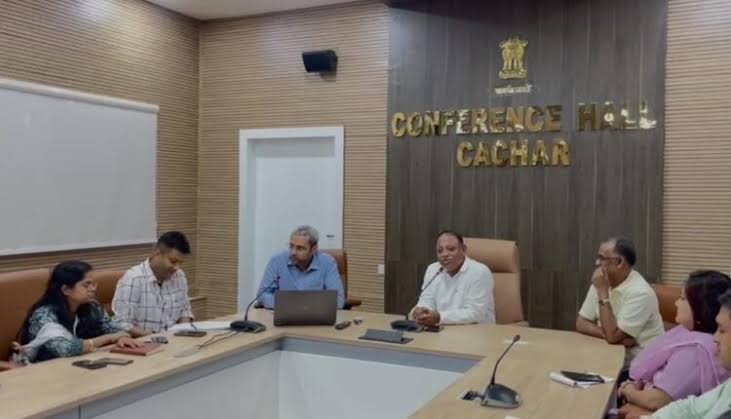
Barak Valley road projects have received a fresh push after Silchar MP Parimal Suklabaidya sought the Centre’s approval for seven major road works in southern Assam. The BJP parliamentarian has taken up the proposals with the Union government, highlighting the region’s long-standing connectivity needs.
The move comes as Barak Valley seeks stronger road links with the rest of Assam and neighbouring states. The region covers Cachar, Hailakandi and Karimganj districts and remains strategically important for links with Mizoram, Tripura and parts of Manipur.
Barak Valley road projects seek Centre’s approval
Suklabaidya’s request focuses on securing central clearance for seven proposed road projects. The proposals are aimed at improving connectivity across the valley and addressing infrastructure gaps that affect movement of people and goods.
However, seeking approval does not mean the projects have already been sanctioned. The proposals must go through the required assessment, approval and funding processes before construction can begin.
The MP has previously raised road connectivity issues in Parliament. In August 2024, he asked the Union Ministry of Road Transport and Highways about the status of the East-West Corridor and the Jowai-Malidor stretch.
Why Barak Valley needs better road links
Road connectivity has remained a major development concern in Barak Valley. Poor or congested links can increase travel time, raise transport costs and make access to healthcare, education and markets more difficult.
Moreover, Silchar serves as an important urban centre for southern Assam. Better roads can strengthen links between the valley’s towns and rural areas while supporting trade and movement across district boundaries.
The region also connects Assam with neighbouring northeastern states. Therefore, improvements to Barak Valley road projects could have wider implications for regional connectivity and economic activity.
The need for better infrastructure has featured in public and political discussions for years. In 2017, the Assam government said improving connectivity in Cachar, Karimganj and Hailakandi was a priority and announced funding for road works in the valley.
Existing projects provide wider context
The latest demand comes against the backdrop of several major connectivity initiatives involving Silchar and Barak Valley.
In 2020, Union Road Transport and Highways Minister Nitin Gadkari laid the foundation stone for and inaugurated multiple road infrastructure projects in Assam. The programme covered 27 road infrastructure projects worth Rs 2,366 crore, according to the Assam government.
The Centre has also previously focused on the East-West Corridor. A 2024 parliamentary reply said 638 km of the corridor in Assam had been completed, while work on the remaining 23 km was under implementation at that time.
Meanwhile, a new Sairang-Silchar passenger train launched in February 2026 has strengthened rail connectivity between Mizoram and Barak Valley. The service was described by the Union government as a step towards improving regional integration.
Barak Valley road projects could boost regional connectivity
If approved and implemented, the proposed Barak Valley road projects could improve connections between important population centres and key transport routes.
Additionally, stronger roads could help businesses move agricultural products and other goods more efficiently. Better connectivity may also support tourism and make access to major institutions in Silchar easier for people from surrounding districts.
At the same time, implementation will depend on technical assessments, land-related requirements, financial approvals and construction schedules. The Centre and state authorities would need to coordinate closely to ensure that approved works move beyond the planning stage.
For residents, the key issue will be timely execution. Previous road projects in the region have faced challenges linked to construction, materials, land acquisition and other administrative issues.
Fresh push puts focus on execution
Suklabaidya’s latest initiative places Barak Valley road projects back in focus at the national level. His parliamentary interventions have also included other infrastructure-related demands concerning Silchar and the wider valley.
The MP has sought central attention for regional infrastructure at a time when connectivity remains closely linked to economic growth in the Northeast. His road proposals now await the Centre’s consideration and the formal processes that would determine their feasibility and funding.
Overall, the proposed projects underline the continuing demand for stronger road infrastructure in Barak Valley. If the Centre grants the necessary approvals, the next challenge will be ensuring that Barak Valley road projects are implemented efficiently and deliver measurable improvements for residents and businesses across southern Assam.