






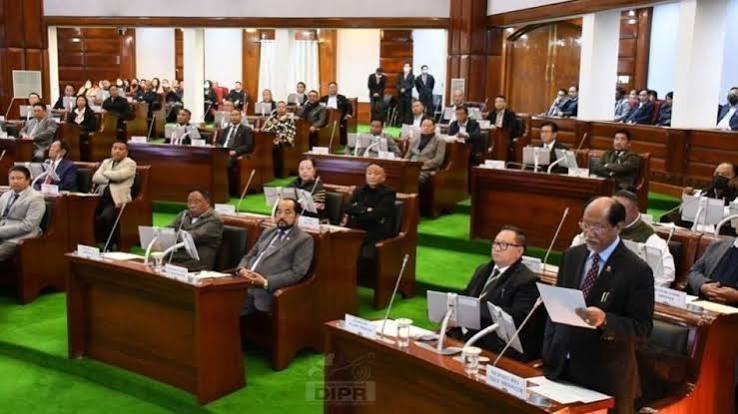
Nagaland Assembly proceedings begin on September 1, with the revised Frontier Nagaland Territorial Authority (FNTA) Bill expected to be among the most closely watched items of business.
The ninth session of the 14th Nagaland Legislative Assembly is scheduled for September 1 and 3. Chief Minister Neiphiu Rio has indicated that the revised bill could be tabled on the opening day and may be passed on September 3.
Nagaland Assembly to consider revised FNTA Bill
The proposed FNTA legislation seeks to establish a special institutional arrangement for six districts in eastern Nagaland. These are Mon, Tuensang, Longleng, Kiphire, Noklak and Shamator.
The proposal follows a Memorandum of Agreement signed on February 5, 2026, between the Centre, the Nagaland government and the Eastern Nagaland Peoples’ Organisation (ENPO). The agreement seeks to provide greater administrative autonomy and strengthen development efforts in the eastern region.
However, the original bill faced legal and constitutional concerns. It was introduced in the Assembly on March 26 but was deferred the following day after the Centre sought more time to examine the issue of legislative powers for the proposed authority.
Why the Nagaland Assembly deferred the earlier bill
The earlier FNTA Bill raised questions about whether legislative powers could be transferred to the proposed authority through state legislation.
According to the Nagaland government, the state Advocate General had advised that legislative powers could not be conferred on the FNTA through state legislation under the constitutional framework. The Ministry of Home Affairs subsequently informed the state that the matter remained under examination and that the Solicitor General’s opinion was being sought.
As a result, the bill was returned to the government for further examination. The government later began work on a revised arrangement after consultations with the ENPO, eastern Nagaland legislators and other stakeholders.
Revised proposal seeks legal clarity
The revised approach is intended to address the concerns that stalled the earlier legislation. Rio said the government had discussed the proposal with the ENPO and legislators from eastern Nagaland while seeking legal opinions.
The revised proposal has also been sent to the Ministry of Home Affairs, according to reports. Rio has expressed hope that the legislation will clear the House during the two-day session.
Other business before the Nagaland Assembly
Besides the FNTA Bill, the Nagaland Assembly is expected to take up questions, government bills, resolutions, reports and other legislative matters.
Rio has also said that issues linked to the Foreign Contribution Regulation Act, or FCRA, will be discussed during the session. However, he clarified that the Nagaland Liquor Total Prohibition Act will not form part of the scheduled business.
The session is therefore expected to cover a wider range of administrative and legislative matters, although the FNTA proposal is likely to draw the greatest attention because of its regional and constitutional implications.
Nagaland Assembly and eastern region’s autonomy demand
The FNTA proposal is linked to a long-standing demand for greater administrative and developmental attention in eastern Nagaland.
The February agreement envisages a special arrangement within Nagaland rather than a separate state. It aims to support decentralised governance and address developmental concerns in the six districts covered by the proposal.
The government has previously acknowledged developmental gaps in the eastern region. The proposed authority is also intended to oversee transferred departments and subjects and prepare development plans within allocated funds.
Key test ahead for the House
The September session puts the revised FNTA proposal before the Nagaland Assembly after months of legal scrutiny and consultations.
If introduced and passed as expected, the legislation could mark a significant step in implementing the February agreement. However, its progress will depend on the final provisions and their compatibility with the Constitution and the agreed framework.
For now, all eyes are on the Assembly’s September 1 sitting, when the revised FNTA Bill is expected to return to the legislative process. The outcome could shape the next phase of the government’s efforts to establish the proposed institutional arrangement for eastern Nagaland.
Assam Congress Holds Statewide Protests Over Proposed Kaziranga ESZ Reduction