




Assam Chief Minister Himanta Biswa Sarma has taken a fresh swipe at Congress leader Rahul Gandhi over his allegations of electoral manipulation, invoking an episode from the Congress party’s history to question his criticism. Sarma described the situation as ironic, referring to Gandhi as Jawaharlal Nehru’s great-grandson.
In a post on X on November 1, Sarma recalled the 1946 Congress presidential contest involving Sardar Vallabhbhai Patel and Jawaharlal Nehru. He argued that the party’s historical handling of the leadership selection raised questions about its present claims on democratic practices.
Himanta Biswa Sarma invokes the 1946 Congress episode
Himanta Biswa Sarma referred to the internal Congress developments of 1946, when the party was preparing to choose its president ahead of India’s independence.
According to Sarma, 12 of the 15 Provincial Congress Committees supported Sardar Vallabhbhai Patel for the position. However, none of the committees nominated Jawaharlal Nehru.
Despite Patel receiving overwhelming support from the provincial committees, he eventually withdrew his candidature. Nehru subsequently became Congress president and later India’s first Prime Minister.
Sarma used this historical episode to challenge Rahul Gandhi’s criticism of the country’s electoral process.
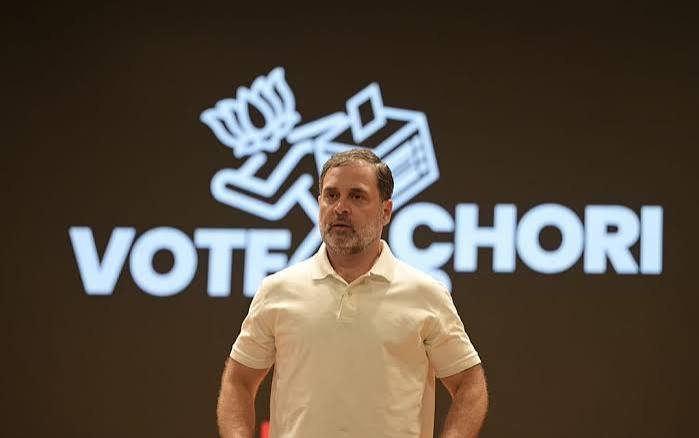
“Today, Nehru’s great-grandson lectures the entire nation on ‘Vote Chori’. What an irony! Shame!” Sarma wrote on X.
His remarks quickly brought the historical leadership contest into the ongoing political debate over electoral transparency and the Congress party’s allegations against the ruling BJP.
Rahul Gandhi’s vote chori campaign draws BJP criticism
The remarks come amid an intensifying political confrontation between the Congress and BJP over alleged irregularities in India’s electoral system.
Rahul Gandhi has repeatedly questioned the integrity of elections and accused the BJP and the Election Commission of facilitating electoral manipulation. He has also raised concerns about changes to electoral rolls and the removal of eligible voters’ names.
The Congress leader has demanded accountability from the Election Commission, particularly over the Special Intensive Revision (SIR) of electoral rolls.
Meanwhile, the BJP has rejected the allegations and accused the opposition of questioning democratic institutions whenever election results go against it.
Himanta Biswa Sarma has been among the most vocal BJP leaders challenging Gandhi’s claims. He has repeatedly argued that the Congress applies different standards to electoral outcomes depending on which party wins.
INDIA bloc holds major protest in Delhi
Sarma’s latest remarks also coincide with a major opposition demonstration in the national capital on November 1.
The INDIA bloc organised a rally at Delhi’s Ramlila Maidan, with Rahul Gandhi and several opposition leaders participating. The demonstration demanded accountability from Chief Election Commissioner Gyanesh Kumar and raised concerns over electoral roll revisions.
Opposition parties have alleged that the voter-list revision process could disproportionately affect certain communities and remove eligible voters from electoral records.
The Election Commission and the central government have rejected accusations of political bias. They have maintained that the exercise aims to identify duplicate and ineligible entries and improve the accuracy of electoral rolls.
The scale of the controversy has made electoral transparency a major political issue. Furthermore, the rival positions have intensified the confrontation between the ruling alliance and opposition parties.
Sarma’s earlier attacks on Rahul Gandhi
Himanta Biswa Sarma has also challenged Gandhi over his criticism of electronic voting machines and the Election Commission.
On October 12, the Assam Chief Minister said he was willing to contest elections through ballot papers if Congress governments in Kerala, Karnataka and Telangana resigned over the alleged electoral irregularities.
Sarma argued that if Congress questioned elections conducted under the existing system, it should also question the legitimacy of its own electoral victories.
He further defended the Special Intensive Revision, calling for the exercise to take place every five years. According to him, regular revisions would help address concerns over changes in voter demographics and ensure accurate electoral records.
However, the Congress has maintained that its concerns relate to transparency, accountability and the protection of voters’ rights.
Political debate over electoral credibility continues
The latest exchange highlights the growing political divide over the credibility of India’s electoral institutions.
By invoking the 1946 Congress presidential contest, Himanta Biswa Sarma has attempted to connect the party’s historical leadership decisions with Rahul Gandhi’s present criticism of electoral processes.
However, the historical selection of a Congress president and allegations concerning modern elections involve different political and institutional circumstances. The comparison remains Sarma’s political argument rather than proof of electoral wrongdoing.
For the Congress, the central issue remains its demand for greater transparency in voter-list revisions and the functioning of electoral institutions.
For the BJP, the opposition’s campaign represents an attempt to undermine institutions and question election results without sufficient evidence.
As both sides continue exchanging accusations, electoral integrity is likely to remain a prominent issue in national politics. The debate also places greater attention on the Election Commission’s responsibility to maintain public confidence in the voting process.
Northeast Southeast Asia Flights Open New Regional Transit Corridors