

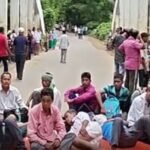
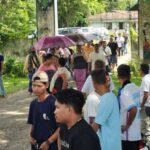

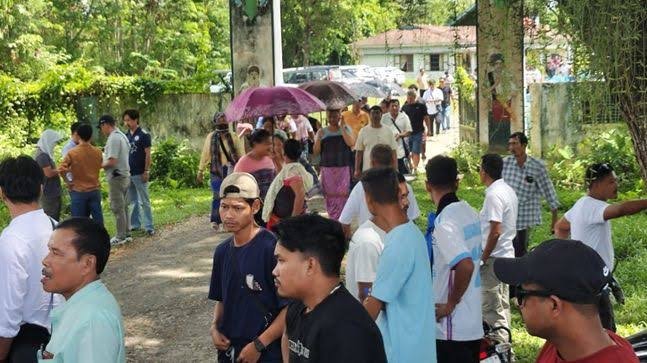
Bordumsa SIR hearing in Arunachal Pradesh turned tense on Friday after protests over the inclusion of Chakma community members in the electoral-roll revision process escalated into clashes at the Additional Deputy Commissioner’s office in Bordumsa, Changlang district.
The protest involved the All Arunachal Pradesh Students’ Union (AAPSU), the Bordumsa Students’ Union and other student and local organisations. The groups raised objections to the inclusion of people who allegedly arrived in Arunachal Pradesh after 2006 in the Special Intensive Revision (SIR) process.
Bordumsa SIR hearing disrupted by clashes
The latest violence followed an earlier disruption on Thursday, when claims and objections linked to the 49/33-Bijoypur polling station were being heard at the Panchayat Hall. An official notice issued by the Electoral Registration Officer (ERO) said 222 of 252 Form-6 applications and 150 of 303 Form-7 applications were heard and disposed of before the proceedings were disrupted.
The remaining 30 Form-6 and 153 Form-7 applications were adjourned and rescheduled for Friday at the ADC Conference Hall. However, the hearing again came under strain as protesters and opposing groups gathered at the venue.
According to reports, an unidentified person allegedly threw stones at the ADC office. A student organisation member was injured, and the ADC’s vehicle was damaged. The incident was followed by a physical confrontation involving AAPSU activists and members of Chakma organisations.
Police response as Bordumsa SIR hearing turns tense
Police intervened as the situation worsened. Reports said security personnel used tear gas and fired in the air to disperse people. However, accounts of the firing differed, and it was not immediately clear who fired first.
An AAPSU leader was also reportedly attacked with a machete during the confrontation and sustained injuries. The circumstances of the alleged attack, including the identities of those responsible, have not been independently established.
Security forces from across Changlang district were subsequently mobilised in Bordumsa and adjoining areas. The hearing was ultimately postponed after the unrest. Reports also said the Electoral Registration Officer’s office was damaged during the disturbance.
Why the Bordumsa SIR hearing is sensitive
The dispute centres on voter inclusion and objections during the ongoing SIR of electoral rolls. AAPSU and allied groups have opposed what they describe as the inclusion of ineligible or non-genuine names, including entries they associate with Chakma-Hajong and other refugee populations.
Those claims remain allegations and have not been established as facts. The issue has already drawn wider attention. Last month, the Chakma Development Foundation of India (CDFI) urged the Election Commission of India to intervene over objections involving 1,292 Chakma electors in four Assembly constituencies, including 413 in Bordumsa-Diyum. The group sought observers and security arrangements for the hearings.
Chakma group seeks protection after hearing
The violence has also triggered a separate response from the Chakma community. The CDFI approached the National Human Rights Commission (NHRC), alleging that Chakma electors were prevented from attending SIR hearings in Bordumsa.
It also referred to the Supreme Court’s 1996 judgment in National Human Rights Commission versus State of Arunachal Pradesh, which directed the state government to protect the life and personal liberty of Chakmas residing in Arunachal Pradesh.
The NHRC complaint comes amid concerns over repeated disruptions. It seeks intervention from the Union Ministry of Home Affairs, the Arunachal Pradesh government and the Election Commission to ensure security during upcoming hearings.
Security and scrutiny remain key
Authorities now face the task of restoring calm while allowing the electoral process to continue. The episode has highlighted how sensitive voter-roll verification can become when questions of eligibility, migration and community rights overlap.
At the same time, allegations from either side need to be assessed through the official process rather than treated as established facts. With security tightened and the latest hearing postponed, attention will remain on the next steps by election authorities and law-enforcement agencies.
The handling of the remaining claims and objections will be important in ensuring that the revision process proceeds peacefully and transparently.