







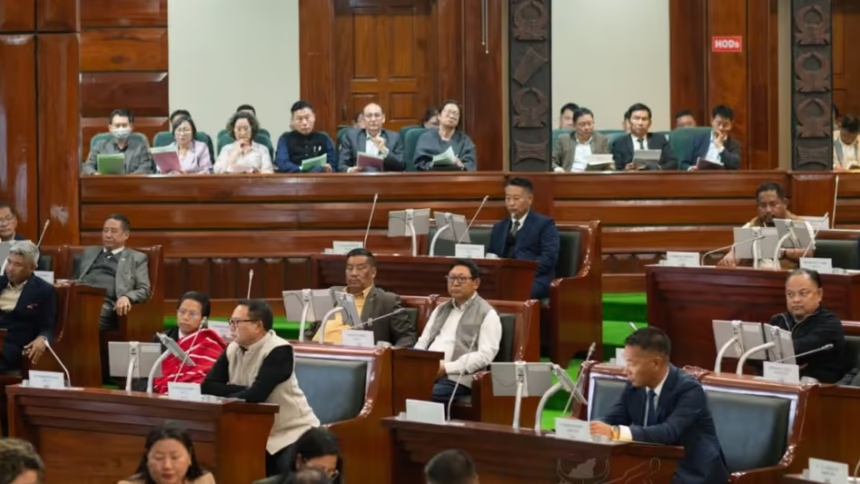
Nagaland Public Services Reform advanced alongside town-planning changes after Chief Minister Dr. Neiphiu Rio moved the Nagaland Town & Country Planning (Sixth Amendment) Bill, 2026, and the Nagaland Right to Public Services Bill, 2026, in the Legislative Assembly. The official Assembly record states that both Bills were unanimously passed on September 3 during the Ninth Session of the 14th Nagaland Legislative Assembly.
Mizoram Areca Nut Seizure: 12,000 Kg Consignment Worth ₹1.32 Crore Recovered
Nagaland Public Services Reform Moves Through Assembly
The Nagaland Right to Public Services Bill, 2026, featured among the key legislative measures considered during the Assembly session. Chief Minister Dr. Neiphiu Rio moved the Bill alongside the Town & Country Planning amendment legislation.
Moreover, the official record confirms that the Assembly unanimously passed both Bills on September 3. Therefore, the development goes beyond simply introducing the proposed legislation.
A right-to-public-services framework can create a structured system for delivering government services. However, the exact services, timelines, designated authorities and remedies depend on the enacted law and subsequent rules.
Consequently, implementation will become important after the Assembly’s approval. Departments and public authorities will need to follow the procedures established by the final legislation.
Town Planning Law Receives Sixth Amendment
Alongside the public-services legislation, Rio moved the Nagaland Town & Country Planning (Sixth Amendment) Bill, 2026. The measure forms part of Nagaland’s continuing legislative work on town and country planning.
Furthermore, planning legislation can influence land use, infrastructure and regulated development in urban and developing areas. However, the exact changes introduced through the sixth amendment require reference to the final Bill text.
The Assembly’s unanimous approval therefore marks a formal step toward updating Nagaland’s planning framework.
Meanwhile, town planning has wider implications for growing urban centres. Effective planning can help authorities coordinate development and infrastructure requirements. It can also guide the use of available land.
Therefore, the amendment will become relevant to urban governance once officials begin applying its provisions.
Public Services Bill Highlights Citizen-Focused Governance
The Right to Public Services Bill represents a separate area of governance reform. Its title indicates a focus on access to government services. However, the detailed obligations will depend on the enacted provisions.
Moreover, a statutory framework can provide greater clarity about administrative responsibilities. It can also establish procedures for citizens seeking specified services from government departments.
However, the practical impact will depend on implementation. Officials will need clear procedures and designated responsibilities. Appropriate monitoring mechanisms may also become important for service delivery.
Consequently, rules and administrative directions issued after enactment will remain significant.
The Assembly’s unanimous passage nevertheless confirms that the House approved both government measures during the session.
Nagaland Assembly Concludes Two-Day Legislative Session
The two Bills formed part of a broader legislative programme during the Ninth Session of the 14th Nagaland Legislative Assembly. According to the official record, the House considered and passed six Bills during the two-day session.
The session also included one resolution and discussions on other matters of public interest.
Additionally, the programme included two GST amendment Bills moved by Chief Minister Rio. The House also considered the Nagaland Paramedical Council (Repeal) Bill, moved by Minister P. Paiwang Konyak.
The Speaker later adjourned the session sine die on September 3. The official account said Speaker Sharingain Longkumer thanked Assembly members and others involved in conducting the session.
Therefore, the passage of the Right to Public Services Bill and the Town & Country Planning amendment forms part of a wider legislative agenda.
The next stage will focus on the remaining legal process and implementation. Departments will then need to apply the new provisions according to the final legislation and applicable rules.
Conclusion
Nagaland Public Services Reform gained legislative approval on September 3. The Assembly unanimously passed the Nagaland Right to Public Services Bill, 2026, alongside the Nagaland Town & Country Planning (Sixth Amendment) Bill, 2026.
The two measures address different areas of governance. One concerns public-service delivery, while the other concerns town and country planning.
However, their practical impact will depend on the final legal framework, subsequent rules and implementation by the relevant departments.
FAQs
1. Which public-services Bill did the Nagaland Assembly pass?
The Assembly passed the Nagaland Right to Public Services Bill, 2026.
2. What town-planning legislation did the House pass?
The House passed the Nagaland Town & Country Planning (Sixth Amendment) Bill, 2026.
3. When did the Assembly pass the two Bills?
The Assembly unanimously passed both Bills on September 3, 2026, during the Ninth Session of the 14th Nagaland Legislative Assembly.
4. What is the purpose of a Right to Public Services framework?
Such legislation generally creates a legal framework for delivering specified government services. However, the exact provisions depend on the enacted Nagaland law.
5. What happens after the Bills are passed?
The legislation must proceed through the remaining legal and administrative process. Departments will then implement the provisions according to the final law and applicable rules.