




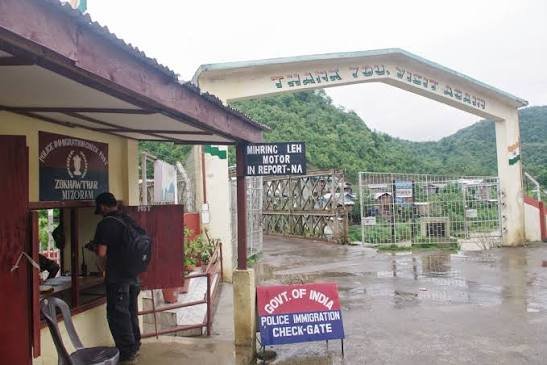
Zokhawthar border trade expansion is gaining attention as customs authorities and trade stakeholders work to improve clearance procedures and reduce bottlenecks at Mizoram’s key Land Customs Station along the India-Myanmar border. A recent customs review in Aizawl examined trade-clearance timelines, digital connectivity and border infrastructure, with the broader objective of making cross-border commerce more efficient.
The discussions are particularly relevant to Zokhawthar because the border point serves as an important gateway for trade with Myanmar. Moreover, Mizoram’s logistics policy identifies the Zokhawthar Land Customs Station as a key facility for cross-border commerce and notes that the station has been undergoing upgrades.
Oiii Police Theatrical Release: Ravi Sarma Film
Zokhawthar Border Trade Expansion Focuses on Clearance Efficiency
The latest review of customs operations in Mizoram took place through the Inland Container Depot and Land Customs Station Feedback Sharing Committee. The meeting, held in Aizawl in August 2026, reviewed the implementation of procedural reforms announced in the Union Budget 2026-27.
Officials and trade stakeholders discussed several practical issues affecting cross-border commerce. These included cargo-clearance timelines, documentation, digital connectivity and infrastructure constraints at border facilities.
Therefore, the focus has shifted beyond simply increasing trade volumes. Faster and more predictable clearance procedures can also make it easier for legitimate traders to plan transportation and manage perishable or essential commodities.
The meeting also included an interactive session with customs officers and trade representatives. Participants discussed practical constraints and offered suggestions for improving border systems.
Such consultations can help authorities identify operational problems that may not appear in formal procedures. Consequently, feedback from traders can contribute to adjustments aimed at making customs processes more responsive.
Zokhawthar Serves as an Important Trade Gateway
Zokhawthar lies in Champhai district and connects Mizoram with Myanmar across the Tiau River. The Land Customs Station has long been identified as an important gateway for formal India-Myanmar trade.
Mizoram’s State Logistics Policy identifies Zokhawthar as a major border-trade facility and states that the Land Customs Station has been functional since 2015 and is being upgraded.
The station’s importance also comes from its location near communities that have historically maintained economic and social links across the international boundary. Earlier government discussions noted the importance of organised border trade for people living in remote border areas.
Moreover, formal trade infrastructure can provide a regulated channel for the movement of permitted commodities. This can support local economic activity while allowing authorities to apply customs, taxation, food-safety and other regulatory requirements.
Past assessments, however, identified several infrastructure and staffing challenges at Zokhawthar. These included inadequate warehousing and testing facilities, as well as shortages of personnel.
Therefore, improvements in customs procedures need to develop alongside physical infrastructure and adequate staffing.
Essential Commodities Need Reliable Border Logistics
The importance of efficient clearance becomes clearer when considering the types of goods moving through the border region. Earlier reporting on movement around Zokhawthar identified commodities such as edible oil, lentils and soya products among goods transported between the two sides.
Essential commodities often require predictable logistics because delays can affect availability, transportation costs and local markets. Consequently, streamlined customs procedures can support smoother movement when goods meet all applicable regulatory requirements.
Food-related consignments can also require inspection and testing. Historical government records identified food-testing capacity as an important requirement for agricultural commodities moving through northeastern Land Customs Stations.
The issue therefore involves more than reducing waiting time. Customs authorities must balance faster clearance with verification, documentation and compliance with applicable laws.
Additionally, better digital connectivity can help reduce paperwork-related delays. The August 2026 customs meeting specifically included digital connectivity among the areas reviewed by officials and trade representatives.
As digital systems improve, traders can potentially receive greater clarity about documentation and procedural requirements before consignments reach the border.
Digital Reforms Could Improve Trade Facilitation
The customs review in Aizawl formed part of a wider effort to examine procedural reforms introduced through the Union Budget 2026-27. The discussions focused on how these reforms were working in the Northeast and what additional improvements might be needed.
Digital connectivity has become particularly important for modern customs operations. Electronic documentation and improved information exchange can help authorities process legitimate consignments more systematically.
Furthermore, better communication between customs officials, logistics operators and traders can reduce confusion over requirements. This can become especially important at border locations where transportation networks and supporting infrastructure remain more limited than in major commercial centres.
Mizoram’s logistics policy also highlights the need to strengthen border infrastructure, including warehouses, roads and other facilities connected to trade routes.
Therefore, the latest customs discussions should be viewed as part of a broader logistics-development effort rather than an isolated administrative change.
The state’s objective is to improve connectivity between border areas and wider markets while ensuring that formal trade channels remain properly regulated.
Infrastructure Remains Important for Zokhawthar
Efficient customs clearance depends partly on the infrastructure available at the border. Warehouses, inspection facilities, communication networks, roads and adequate staffing all influence how quickly authorities can process consignments.
A previous assessment by the Mizoram Governor’s office noted that manpower shortages and inadequate warehouses had affected the efficiency of customs operations in the state. The same assessment recorded improvements such as Wi-Fi connectivity and electronic customs mapping at Zokhawthar.
The station has also received government attention as part of efforts to strengthen formal India-Myanmar trade. Mizoram’s logistics policy describes Zokhawthar as a functional Land Customs Station undergoing upgrades.
Meanwhile, the wider border-trade framework requires coordination between customs, state authorities, security agencies and other departments. This coordination becomes especially important because border trade involves both economic and regulatory considerations.
Consequently, the effectiveness of the latest clearance reforms will depend on whether procedural improvements translate into smoother day-to-day operations at the border.
Zokhawthar Border Trade Expansion Could Support Regional Commerce
The Zokhawthar border trade expansion comes as Mizoram seeks to strengthen its position within Northeast India’s wider cross-border logistics network. Improved clearance procedures can help legitimate traders move goods more efficiently while supporting stronger connections between border communities and regional markets.
The approach also aligns with the broader national objective of improving trade facilitation at Land Customs Stations. Recent customs consultations in Mizoram specifically examined ways to address bottlenecks and improve the efficiency of border operations.
However, expanding formal trade requires more than faster clearance windows. Authorities must also maintain effective inspection, documentation and regulatory systems. At the same time, traders need adequate infrastructure and clear information about customs requirements.
Therefore, continued coordination between customs officials and trade stakeholders will remain important. Regular feedback can help authorities identify emerging bottlenecks and determine where additional infrastructure or procedural changes are required.
For Zokhawthar, a stronger customs and logistics system could gradually improve the reliability of formal cross-border commerce. The results will ultimately depend on sustained investment, efficient administration and compliance by all participants.
Conclusion
Zokhawthar border trade expansion is being supported by efforts to improve customs procedures, digital connectivity, infrastructure and cargo-clearance processes in Mizoram. The August 2026 customs review brought officials and trade stakeholders together to examine bottlenecks and discuss ways to make border operations more efficient.
Zokhawthar already serves as an important Land Customs Station for India-Myanmar trade, and Mizoram’s logistics policy identifies the facility as a key border-trade point undergoing upgrades.
Improved clearance processes could benefit legitimate movement of essential and other permitted commodities. However, faster processing must continue alongside proper inspection, documentation and regulatory compliance.
With continued infrastructure development and regular consultation between customs authorities and traders, Zokhawthar can strengthen its role in Mizoram’s formal cross-border trade network.
FAQs
What is the Zokhawthar border trade expansion?
The Zokhawthar border trade expansion refers to efforts to improve customs clearance, digital connectivity and supporting infrastructure at Mizoram’s India-Myanmar trade gateway.
Why is Zokhawthar important for Mizoram?
Zokhawthar is a key Land Customs Station connecting Mizoram with Myanmar and supports formal cross-border movement of permitted goods.
What did the 2026 customs review discuss?
Officials and trade stakeholders discussed clearance timelines, documentation, digital connectivity, infrastructure bottlenecks and procedural reforms affecting border trade.
Can faster customs clearance help essential commodity supplies?
More predictable clearance can improve logistics for permitted commodities by reducing avoidable delays, although goods must still meet applicable customs, safety and regulatory requirements.
What challenges remain at Zokhawthar?
Infrastructure, staffing, warehousing, digital connectivity and coordination remain important areas for continued improvement at the border-trade facility.