







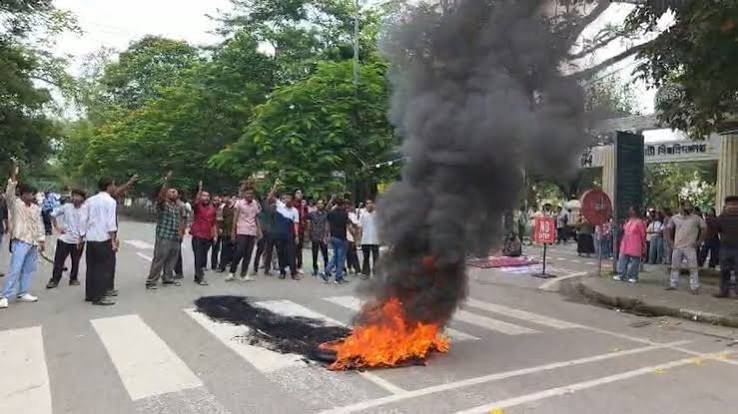
The Gauhati University poll has triggered a fresh campus row after an AASU-backed candidate launched a hunger strike against the rejection of his candidature. The student has challenged the decision and wants university authorities to reconsider his nomination before polling.
The protest comes just days before the university’s Post Graduate Students’ Union election. Gauhati University has scheduled polling for September 30, with vote counting set for October 1.
Gauhati University poll sparks candidate protest
The AASU-backed candidate began the hunger strike after election authorities rejected his candidature. He has protested the decision and demanded a review of the nomination.
His move has drawn attention from student circles as the university enters the final stage of the election process. The dispute now centres on whether the authorities will reconsider the rejected nomination before voters cast their ballots.
The candidate and his supporters have challenged the rejection. However, the university’s stated grounds for rejecting the candidature remain central to determining whether the nomination meets the election rules.
The dispute therefore remains unresolved. Any claim that the authorities wrongly rejected the nomination remains an allegation unless the university changes its decision or provides a formal clarification.
PGSU election moves towards September 30
The Gauhati University poll will elect office-bearers for the 2026–27 Post Graduate Students’ Union. The university announced the election schedule earlier this month, setting September 30 as polling day and October 1 as the counting date.
Candidates and student groups have entered the final phase of campaigning. The candidature dispute, however, has created an additional issue for the election authorities to address.
The timing matters because the election process has already moved past nominations. Any decision to restore a rejected candidate could affect the final contest and campaign plans.
Meanwhile, student organisations will closely watch the university’s next move. The administration must apply the same election rules while addressing the candidate’s challenge.
Nomination rules at the centre
The nomination stage plays a key role in student elections because candidates must meet the eligibility conditions set by the university. Previous Gauhati University PGSU election rules have included requirements linked to student status and attendance.
For the current election, the university’s 2026–27 notification provides the relevant framework. Therefore, the exact grounds for the rejection and the available appeal or review process depend on the rules governing this year’s election.
Hunger strike puts pressure on authorities
The hunger strike has now placed the candidature dispute firmly in the public spotlight. The candidate’s decision to continue the protest signals his determination to challenge the rejection before polling begins.
At the same time, university authorities face a tight election schedule. They must manage the dispute while continuing preparations for voting, security and other election arrangements.
The development also comes as Gauhati University deals with other administrative concerns. On September 18, the university announced a committee to examine recent incidents that disrupted administrative functioning and recommend measures.
However, that committee’s work should not be confused with the current candidature dispute. No information currently establishes a direct link between the two matters.
Gauhati University poll faces key test
The Gauhati University poll now faces a key test over the rejected candidature. The AASU-backed candidate has chosen a hunger strike to demand reconsideration, while the university must decide the matter under the applicable election rules.
The scheduled polling date remains September 30, followed by counting on October 1. The administration’s next decision could therefore come at a critical point in the election calendar.
For the candidate, the immediate goal remains clear: secure reconsideration of the rejected nomination. For the university, the issue requires a transparent application of election rules and clear communication about the decision.
As the election approaches, the candidature dispute has added another layer of tension to the campus contest. The university’s response will determine whether the protest ends before polling or continues into the final stages of the election.