







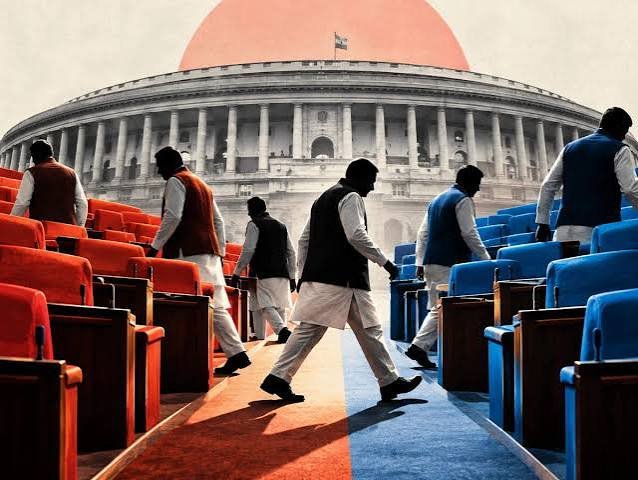
Nagaland defections have emerged as the highest recorded cases of party switching among elected lawmakers in India, according to a new analysis by the Association for Democratic Reforms (ADR) and National Election Watch. The report found that 111 MPs and MLAs changed political parties after winning elections between 2022 and 2026.
The analysis covered 26 Lok Sabha MPs, seven Rajya Sabha members and 78 MLAs. It examined elections and by-elections during the period and included several forms of political change, including individual defections, party mergers, resignations followed by by-election victories and disqualifications followed by successful by-elections.
Nagaland Defections Record 32 Cases
Nagaland recorded 32 cases, the highest figure among the states and Union Territories covered by ADR. All 32 cases involved MLAs, putting the state ahead of West Bengal, which recorded 20 cases involving Lok Sabha members.
ADR said most of the Nagaland cases were connected to a political realignment involving the ruling Nationalist Democratic Progressive Party (NDPP) and the Naga People’s Front (NPF). The analysis recorded 25 legislators originally elected from the NDPP among those who changed parties.
At the same time, the NPF emerged as the largest recipient of lawmakers across the entire dataset, receiving 32 legislators who changed parties. The figures therefore highlight the scale of the political realignment in Nagaland during the period under review.
National Party Switching Shows Wide Spread
The Nagaland defections formed part of a broader pattern across Indian politics. ADR identified 111 sitting MPs and MLAs who changed political parties after winning their respective elections.
West Bengal followed Nagaland with 20 cases. Telangana recorded nine, all involving MLAs elected from the Bharat Rashtra Samithi. Goa and Punjab each recorded eight cases, while Maharashtra had six. Meghalaya recorded six MLA cases, while Manipur had five.
Furthermore, the analysis found cases in Arunachal Pradesh, Gujarat, Himachal Pradesh, Rajasthan, Karnataka, Madhya Pradesh, Sikkim, Uttar Pradesh and Delhi. This indicates that party switching occurred across several regions and involved both Parliament and state legislatures.
NDPP Had Highest Number of Exits
The party-level data also shows a significant concentration of exits among a few parties. The NDPP recorded the highest number of lawmakers who left, with 25 cases. The All India Trinamool Congress followed with 20, while the Congress recorded 19.
Together, these three parties accounted for 64 of the 111 cases, or about 58 per cent of the total. The Bharat Rashtra Samithi recorded nine exits, while the Aam Aadmi Party and Nationalist Congress Party recorded seven each.
On the receiving side, the NPF recorded 32 incoming lawmakers, followed by the BJP with 29 and the Nationalist Citizens Party of India (NCPI) with 20. These three parties accounted for 81 of the 111 lawmakers identified in the analysis.
ADR Flags Gaps in Defection Data
ADR also cautioned that its list may not be exhaustive. The organisation said India does not have a systematically maintained and readily accessible official database tracking lawmakers who change political parties.
Therefore, the 111 cases should be understood as cases identified through ADR’s analysis rather than a definitive count of every political switch during the period. The report also categorised the cases according to how the changes occurred, including mergers and resignations followed by by-elections.
Nagaland Defections Renew Anti Defection Debate
The latest figures have also brought renewed attention to India’s anti-defection framework. ADR recommended transferring the power to decide disqualification petitions from presiding officers to the President for MPs and Governors for MLAs, based on the Election Commission’s advice.
The watchdog also called for a fixed time limit for deciding disqualification petitions. Additionally, it suggested restricting defectors from holding public office until they are re-elected.
The findings place Nagaland at the centre of the latest national discussion on political defections. With 32 cases recorded in the state, the ADR analysis highlights the scale of party realignments while also pointing to continuing questions about how India’s anti-defection system handles changes in political allegiance.
Imphal Free Internet Zones: Public Connectivity Gains Attention as Digital Access Expands