






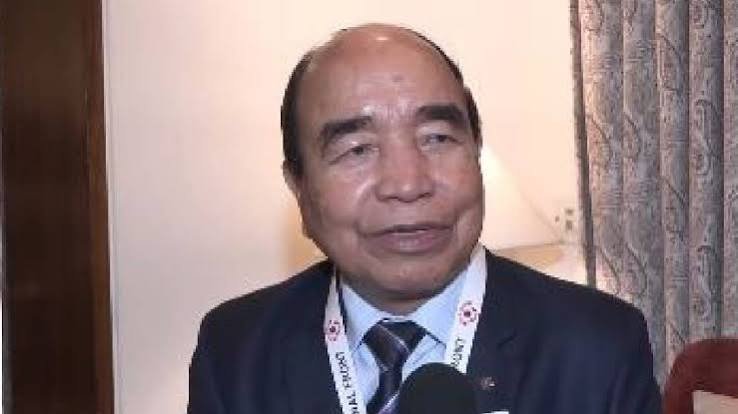
Manipur dialogue can help address the deep divisions between the Meitei and Kuki communities, former Mizoram chief minister Zoramthanga has said. He argued that the wounds from the prolonged conflict are serious, but dialogue remains necessary to find a way forward.
Zoramthanga made the remarks in an interview with Scroll published in June 2026, where he discussed his political journey, the Mizoram peace process and the continuing crisis in Manipur. He drew on his experience of the Mizo peace process while discussing the challenges facing the neighbouring state.
Manipur dialogue must address deep divisions
Zoramthanga said the divisions between the Meitei and Kuki communities have become deeply entrenched. However, he indicated that the situation should not be treated as beyond repair.
According to a social media post referring to the interview, Zoramthanga said the wounds affecting the two communities are too deep and need to be healed separately. His remarks underline the scale of mistrust that has developed during the conflict.
The ethnic violence that erupted in Manipur in May 2023 caused deaths, displacement and extensive damage to homes and places of worship. More than three years later, efforts to rebuild trust remain a major challenge.
Therefore, any Manipur dialogue process would have to address the concerns and fears of both communities rather than focus only on ending immediate violence.
Zoramthanga points to Mizoram peace experience
Zoramthanga’s comments carry particular weight because of his role in Mizoram’s own transition from insurgency to peace. He was a prominent leader of the Mizo National Front during the insurgency before the 1986 Mizoram Peace Accord ended the armed conflict.
The accord brought the MNF into the constitutional political process. Zoramthanga later served as Mizoram chief minister for three terms, including from 1998 to 2008 and from 2018 to 2023.
In June 2026, he described the 1986 accord as a major peace achievement and credited political parties, churches, civil society groups and the people of Mizoram for helping create lasting peace.
Why Manipur dialogue faces a harder task
The Manipur situation differs from the Mizoram conflict in important ways. The violence involves competing ethnic claims, territorial concerns and a severe breakdown of trust between communities.
Zoramthanga has also previously involved himself in peace efforts beyond Mizoram. He helped facilitate discussions between the Centre and northeastern insurgent groups and later worked as an interlocutor in Myanmar’s peace process.
As a result, he has repeatedly emphasised trust-building as an essential part of peace negotiations.
Dialogue must include all affected communities
A sustainable Manipur dialogue would require participation from the communities directly affected by the conflict. It would also need to address displacement, security concerns, political demands and the return of normal social relations.
The continuing sensitivity around these issues makes public trust especially important. At the same time, violence and allegations of attacks can further deepen separation between communities.
Zoramthanga’s comments suggest that reconciliation may need to proceed gradually. Separate efforts to address each community’s grievances could potentially create conditions for broader engagement later.
Peace needs patience and sustained engagement
Zoramthanga’s recent comments also come as Manipur continues to deal with the effects of the 2023 conflict. In earlier remarks, he had called for peace and normalcy and expressed concern over violence affecting people with ethnic links to Mizoram.
His experience in Mizoram shows that peace negotiations can take years and face repeated obstacles. The 1986 accord followed a long period of conflict and negotiations before the MNF entered mainstream politics.
For Manipur, the challenge remains more immediate. However, Zoramthanga’s message is that deep divisions do not remove the need for communication.
A long road toward reconciliation
The Manipur dialogue debate now centres on how to rebuild trust after years of violence and separation. Zoramthanga’s remarks highlight the need to recognise the distinct wounds of the Meitei and Kuki communities while keeping open the possibility of wider reconciliation.
His assessment does not offer a quick solution. Instead, it points to sustained engagement, mutual trust and patient negotiations as essential elements of any future peace process. For a state still dealing with the consequences of conflict, keeping channels of communication open could remain an important step toward restoring stability.