


IPFT tribal autonomy strategy remains a central political issue for the Indigenous People’s Front of Tripura as the party prepares for future contests in the state’s tribal areas. Senior leaders have repeatedly discussed organisational strengthening, electoral preparations and the party’s long-standing demand for greater constitutional protection for indigenous communities.
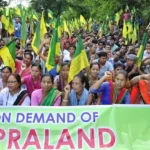
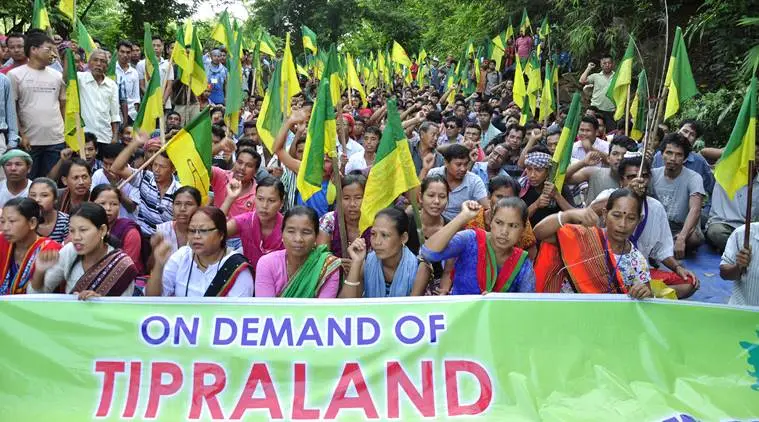
The IPFT is a constituent of Tripura’s BJP-led coalition government, but it has maintained its separate political identity and ideological position on tribal issues. In particular, the party continues to advocate its demand for a separate state for the indigenous population under the Sixth Schedule framework.
Recent political developments have also highlighted the party’s position within the wider NDA alliance. Although BJP, Tipra Motha and IPFT coordinated for the September 28 Village Committee elections, the three parties continued to have overlapping electoral interests in several tribal constituencies.
Assam NRC Rejection Slips Remain Pending for 19 Lakh Applicants
IPFT Tribal Autonomy Strategy Remains a Core Political Issue
The IPFT’s political position continues to combine electoral participation with its long-standing demand for stronger constitutional safeguards for Tripura’s indigenous communities. Party leaders have maintained that their alliance with the BJP represents a political arrangement and does not erase the IPFT’s separate ideological position.
IPFT president Prem Kumar Reang has previously reiterated the party’s demand for a separate state under the Sixth Schedule. The party has also continued to describe indigenous rights and identity as central elements of its political programme.
At the same time, the party has sought to rebuild its organisational base after its weak performance in the 2021 TTAADC elections. Senior IPFT leader and Cooperation Minister Shukla Charan Noatia said in August that the organisation had regained strength and that several former leaders and workers had returned.
That organisational recovery has become important as the party evaluates its position in future tribal-area contests. Consequently, internal meetings have focused not only on electoral candidates but also on strengthening the party structure and reconnecting with supporters at the grassroots level.
The issue also carries significance because the TTAADC covers a substantial portion of Tripura’s geographical area and plays an important role in the administration of tribal areas. Therefore, political parties continue to view the council and its institutions as major platforms for representing indigenous interests.
Future Contests Could Test Alliance Coordination
The relationship between the IPFT and its NDA partners has become more complicated because alliance cooperation does not always translate into identical electoral interests. The September Village Committee elections provided a clear example, with BJP, Tipra Motha and IPFT contesting under the broader NDA framework while still having candidates in overlapping areas.
Before the Village Committee polls, senior representatives of the three parties met in Dhalai to discuss coordination, organisational preparations and seat-sharing issues. Power Minister Ratan Lal Nath chaired the meeting, which included IPFT Minister Shukla Charan Noatia and senior Tipra Motha and BJP representatives.
The alliance had decided to contest the Village Committee elections together, although local-level differences remained. Nath acknowledged that some issues had emerged despite the seat-sharing arrangements and said the purpose of the meeting was to identify and resolve them.
Earlier discussions also showed that alliance coordination required continued negotiation. BJP and Tipra Motha leaders held separate rounds of talks over candidate adjustments and withdrawals, while the IPFT was absent from one such meeting.
Such developments underline the challenge facing the IPFT. The party must preserve its own political space while working within an alliance that includes larger organisations with wider electoral ambitions.
Moreover, the party’s future electoral approach could depend on how effectively it balances alliance commitments with its traditional tribal agenda. That balance may remain particularly important in constituencies where regional parties compete for the same indigenous electorate.
Tribal Representation and Resource Allocation Draw Attention
Questions of tribal representation extend beyond elections and include the allocation of government attention and resources to indigenous communities. Political discussions in Tripura have frequently focused on education, healthcare, infrastructure, livelihoods and other welfare measures in tribal areas.
The BJP-led government has highlighted development programmes for Janajati communities, while IPFT leaders have continued to emphasise constitutional safeguards and political autonomy. These positions overlap on some welfare concerns but differ in their broader political objectives.
Earlier BJP discussions on TTAADC preparations also highlighted the government’s focus on the socioeconomic development of Tripura’s tribal population. Senior leaders referred to education, healthcare, infrastructure, sports and livelihood opportunities while discussing representation for the state’s recognised tribal communities.
For the IPFT, however, development remains closely connected with questions of political identity and autonomy. The party has consistently linked its separate-state demand with the protection of indigenous rights and interests.
Additionally, the party recently raised concerns about electoral procedures in Sixth Schedule areas. In August, the IPFT urged the Election Commission to consider a distinct enumeration method for residents of tribal areas during the Special Intensive Revision of electoral rolls.
That demand demonstrates how the party has sought to bring tribal-area administrative concerns into broader electoral policy discussions. Accurate electoral rolls, representation and participation are particularly important for communities living under autonomous district council arrangements.
Therefore, the party’s IPFT tribal autonomy strategy extends beyond the demand for a separate state. It also involves questions surrounding electoral representation, constitutional safeguards, local governance and the allocation of development priorities in tribal regions.
Party Organisation Faces New Political Test
The IPFT’s organisational revival will remain an important factor in determining its influence in future contests. Noatia said in August that the party had regained strength after difficulties that affected its 2021 TTAADC performance. He also pointed to the return of former leaders and workers as evidence of renewed organisational activity.
The party’s earlier performance provides a difficult benchmark. In the 2021 TTAADC elections, Tipra Motha won 18 of the 28 elected seats, while the BJP won nine and an independent candidate secured one. The IPFT failed to emerge as a major force in that contest.
Since then, the political landscape has changed considerably. Tipra Motha entered the state government, the BJP and its regional partners developed a broader NDA arrangement, and the IPFT continued as an alliance partner while retaining its separate political agenda.
The Village Committee elections offered another test of that relationship. Voting took place across 587 Village Committees on September 28, with counting beginning on October 5. The State Election Commission reported that polling took place for 2,950 of the 4,597 seats, while the BJP and Tipra Motha won 1,644 seats uncontested.
The results will provide political parties with fresh information about their grassroots standing. For the IPFT, the outcome can help leaders assess organisational reach, local support and the effectiveness of its coordination with other NDA partners.
Meanwhile, the party’s ideological position remains distinct. Its leaders have repeatedly stated that the alliance with the BJP is political and does not amount to abandoning the demand for greater autonomy or separate statehood.
Consequently, future internal discussions are likely to involve both electoral calculations and questions about how the party should present its tribal agenda. Maintaining organisational strength while preserving its political identity will remain a significant challenge.
Conclusion
The IPFT tribal autonomy strategy continues to combine organisational expansion, participation in electoral contests and advocacy for stronger constitutional protection for Tripura’s indigenous communities. The party remains part of the ruling alliance while maintaining its separate position on autonomy and the long-standing Tipraland demand.
Recent Village Committee election coordination has demonstrated both the value and complexity of cooperation among BJP, Tipra Motha and IPFT. Going forward, the party’s ability to strengthen its grassroots organisation while maintaining its distinct tribal agenda will shape its role in Tripura’s future political contests.
FAQs
What is the IPFT tribal autonomy strategy?
The IPFT’s approach combines electoral participation, organisational strengthening and advocacy for greater constitutional protection and autonomy for Tripura’s indigenous communities.
What is the IPFT’s position on Tipraland?
The IPFT continues to support its long-standing demand for a separate state for indigenous communities and has linked the demand with constitutional provisions and the protection of indigenous interests.
Is the IPFT part of the ruling alliance in Tripura?
Yes. The IPFT is an alliance partner in the BJP-led government in Tripura and has also coordinated with BJP and Tipra Motha in recent Village Committee elections.
Why is the TTAADC important for Tripura politics?
The TTAADC administers tribal areas and plays a significant role in indigenous representation and local governance. Its elections therefore remain politically important for parties seeking support among Tripura’s tribal communities.
What electoral issues has the IPFT raised recently?
The IPFT has raised concerns about electoral procedures in Sixth Schedule areas and asked the Election Commission to consider a distinct enumeration method for residents of those areas during the Special Intensive Revision.