






Tripura border trade infrastructure gaps have emerged as a political concern as opposition Congress leaders question the pace at which the state’s cross-border connectivity potential is being converted into functioning trade facilities. The criticism comes against the backdrop of Tripura’s strategic location along the Bangladesh border and its long-standing plans to develop the state as a gateway to regional markets.
Congress has argued that major connectivity projects need supporting infrastructure and effective operations to deliver their intended economic benefits. The concern is particularly relevant around the Maitri Setu and Sabroom corridor, where infrastructure exists but full-scale international trade operations have faced delays.
The issue also comes as the state government and Centre continue to project Tripura as an important gateway to Bangladesh and Southeast Asia. Meanwhile, businesses and trade bodies have sought more predictable arrangements for cargo movement, customs procedures and border-market activity.
Assam NRC Rejection Slips Remain Pending for 19 Lakh Applicants
Tripura Border Trade Infrastructure Gaps Draw Political Attention
Tripura shares a long international boundary with Bangladesh, making cross-border connectivity an important component of its economic strategy. The state’s industrial investment policy identifies Bangladesh-facing infrastructure as a major opportunity for trade and logistics development. It lists three Integrated Check Posts at Agartala, Srimantapur and Sabroom, along with five Land Customs Stations.
Against that background, Tripura border trade infrastructure gaps have become a focus of political discussion. Congress has questioned whether the infrastructure created over recent years is being matched by the operational arrangements required for sustained trade.
The criticism centres on the difference between building physical assets and making an entire trade corridor functional. A bridge, road or check post can provide connectivity, but cargo movement also requires customs, immigration, warehousing, parking, regulatory coordination and compatible arrangements on both sides of the border.
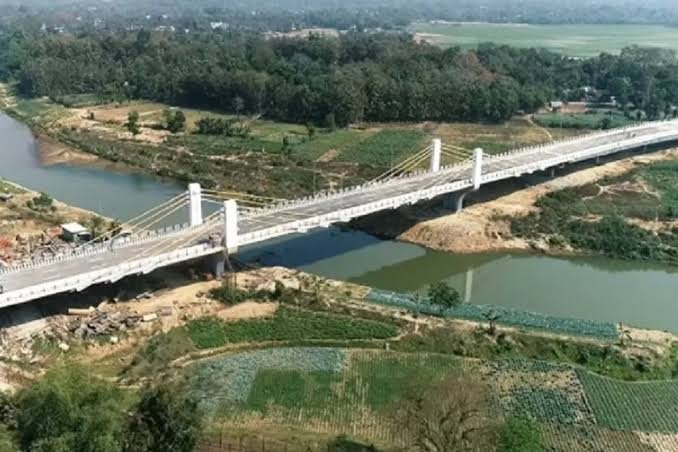
Maitri Setu illustrates that challenge. The 1.9-kilometre bridge over the Feni River connects Sabroom in Tripura with Ramgarh in Bangladesh. The National Highways and Infrastructure Development Corporation Limited lists the bridge project as completed.
However, a recent Tripura report said the bridge remained pre-operational as a full-fledged international commercial corridor. The report also highlighted continuing difficulties involving the Sabroom Integrated Check Post and border haats.
Consequently, the political debate is increasingly moving beyond whether Tripura has received major infrastructure projects. The more important question is whether those projects are working together as a reliable trade network.
Maitri Setu and Sabroom Corridor Face Operational Questions
Maitri Setu was inaugurated in 2021 as a major link between Tripura and Bangladesh. At the time, the Centre described the project as an important component of a wider trade corridor and said the Sabroom area could develop into a major centre for international trade.
The Union government also linked the bridge with the development of the Sabroom Integrated Check Post. The planned facility was designed to include logistics-related infrastructure such as parking, warehouses and container trans-shipment facilities.
Those plans established an ambitious framework for southern Tripura. In practice, however, political and operational developments in Bangladesh have affected the pace at which the corridor has become fully functional.
A recent report noted that the Maitri Setu itself is listed as completed by NHIDCL, while the broader international trade corridor still faces infrastructure and institutional issues. It also reported that Tripura’s Industries and Commerce Department had continued efforts to secure operationalisation.
This distinction matters when assessing the Congress criticism. The existence of a completed bridge does not automatically mean that traders can use the entire corridor at the scale originally envisaged.
Furthermore, businesses require certainty about operating schedules and permissible goods. They also need cargo-handling facilities and efficient customs procedures. Without these supporting systems, the economic benefits of cross-border connectivity can remain below their potential.
The issue has therefore become relevant to the broader debate over Tripura border trade infrastructure gaps. Congress’s criticism focuses political attention on whether the state and Centre have addressed the complete logistics chain rather than individual construction milestones.
At the same time, government statements have continued to emphasise Tripura’s strategic position. Union Home Minister Amit Shah has said three land ports at Agartala, Srimantapur and Sabroom have been completed and identified additional locations for future development. He has also linked the Maitri train and Nischintapur railway infrastructure with cross-border trade.
Border Haats and Trade Facilities Remain Part of the Debate
Border haats represent another important component of Tripura’s cross-border economic network. These local markets were designed to support communities living near the international border and encourage regulated trade between people on both sides.
Tripura has two officially sanctioned India-Bangladesh border haats, at Srinagar-Chhagalnaiya and Kamalasagar-Kasba. However, recent reporting has highlighted prolonged disruptions in their functioning. The Kamalasagar-Kasba haat has remained closed, while the Srinagar facility has also faced interruptions.
Such disruptions add another dimension to the Congress criticism. Large infrastructure projects attract attention because of their scale, but smaller trade facilities can have a direct impact on border communities and local traders.
The question is therefore not limited to international cargo. It also concerns whether existing local trading platforms are operating consistently and providing the economic opportunities for which they were established.
Moreover, the condition of border haats has drawn attention from representatives of the business community and diplomatic officials. During the Destination Tripura Business Conclave 2026, Bangladesh High Commissioner to India Mohammad Reaz Hamidullah visited the Kamalasagar-Kasba border haat area and discussed its closure and trader participation, according to the recent report.
The report said the issue could be taken up through discussions involving the foreign ministries of India and Bangladesh. Therefore, some obstacles extend beyond the direct control of the Tripura government.
This is important for understanding the political dispute. While Congress can criticise the state government’s handling of infrastructure and trade facilitation, cross-border operations also depend on central agencies and bilateral arrangements with Bangladesh.
Similarly, the state’s industrial policy recognises the potential of better connectivity with Bangladesh. It points to the Sabroom Special Economic Zone and improved road and rail connectivity as measures that could strengthen exports and open new markets.
The challenge now lies in converting those plans into dependable commercial activity. Better coordination among state departments, central agencies, customs authorities and their Bangladeshi counterparts would be necessary for that transition.
Connectivity Needs Roads, Rail and Logistics Support
Border trade depends on reliable domestic transport infrastructure. Goods entering or leaving Tripura must travel between border points, production centres, markets, warehouses and transport hubs.
The Tripura High Court recently stressed the importance of safe, motorable highways for the state’s economy. In a September 8 judgment, the court highlighted the role of national highways across the Northeast. These roads carry people and goods throughout the region. The court also examined problems on NH-208 and NH-108B, including sections near the Bangladesh border.
These observations add context to the political debate. International border facilities alone cannot guarantee efficient trade. Weak domestic road links can slow the entire transport corridor.
Consequently, Tripura border trade infrastructure gaps represent a network-wide challenge. Roads, railways, land ports, customs facilities and cargo services must work together. Effective coordination with Bangladesh also remains essential.
Tripura’s industrial policy recognises the need for better transport links between southern districts and the wider Northeast. Improved connectivity could also help local businesses expand exports and reach new markets.
Rail Links and Cross-Border Logistics
Rail connectivity forms another part of Tripura’s trade strategy. The Agartala-Akhaura rail link connects Tripura with Bangladesh. Meanwhile, authorities have identified Nischintapur as an important location for future cross-border cargo operations.
The Centre has also promoted Tripura as a potential regional trade gateway. Amit Shah has highlighted the state’s land ports and railway infrastructure. These facilities could support trade with Bangladesh and markets farther east.
However, infrastructure development represents only the first step. Tripura must now turn completed projects into dependable commercial services. Traders need predictable cargo movement, clear customs procedures and suitable storage facilities.
This transition will require continued investment and coordination. Authorities must also address practical concerns about permitted goods, cargo handling and operating schedules.
Political Debate Centres on Delivery and Economic Potential
Congress has criticised the ruling coalition over the results of major connectivity investments. Meanwhile, the BJP-led government continues to present infrastructure development as a central part of its broader development agenda.
Both sides recognise Tripura’s strategic location and the need for better border connectivity. Their disagreement centres on implementation, project performance and the operational status of existing facilities.
Opposition Questions Project Implementation
Opposition leaders can point to delays in making major projects fully functional as evidence of implementation problems. The government, by contrast, views completed infrastructure as a foundation for future trade growth. Some outstanding issues also require action from central agencies and progress in bilateral relations.
This distinction matters as Tripura seeks stronger economic ties with Bangladesh. The state has limited direct land access to the rest of India. Therefore, policymakers have long considered Bangladesh a potential route to seaports and wider markets.
Maitri Setu and the Wider Trade Corridor
The Centre originally promoted Maitri Setu as a way to improve access to Chattogram port. The project also promised opportunities for tourism, trade and port-led development.
However, a bridge alone cannot deliver these benefits. Customs services, functioning check posts, reliable roads and rail links must support cross-border movement. India and Bangladesh must also coordinate their operating arrangements.
For local businesses, the real test is whether these facilities reduce transport difficulties. Traders need predictable procedures and reliable delivery schedules. Border communities also need sustained economic opportunities from cross-border commerce.
Turning Infrastructure into Commercial Results
The debate over Tripura border trade infrastructure gaps will likely continue as authorities work to operationalise major connectivity projects. Policymakers must focus on how these facilities function together, not simply whether construction has ended.
Reliable transport links could help businesses move goods more efficiently. Better coordination could also reduce delays at border points. However, sustained progress will depend on practical implementation and cooperation among the agencies involved.
Conclusion
Tripura border trade infrastructure gaps have become an important political issue as Congress questions the economic returns from major connectivity projects. Maitri Setu, the Sabroom corridor, land ports and border haats reflect Tripura’s trade ambitions. Their operational challenges also highlight the work that remains.
The wider picture includes roads, railways, customs services and bilateral coordination. The Centre and state government continue to promote Tripura as a gateway to Bangladesh and Southeast Asia. However, sustained trade growth will depend on a reliable, integrated logistics network.
FAQs
What are Tripura border trade infrastructure gaps?
Tripura border trade infrastructure gaps refer to shortcomings in the systems that support cross-border commerce. These include roads, land ports, customs facilities, cargo handling, border haats and coordination between authorities.
Why is Maitri Setu important for Tripura?
Maitri Setu connects Sabroom in Tripura with Ramgarh in Bangladesh across the Feni River. The bridge forms part of a wider corridor intended to connect Tripura and the Northeast with Bangladesh and regional trade routes.
What is the status of Maitri Setu?
NHIDCL lists the Maitri Setu construction project as complete. However, recent reports have highlighted operational and institutional challenges affecting the wider corridor’s use as a commercial gateway.
How important are border haats to Tripura?
Border haats support regulated local trade and provide economic opportunities for communities near the India-Bangladesh border. Tripura has two sanctioned border haats. However, reports have highlighted prolonged disruptions to their operations.
What infrastructure could strengthen Tripura’s border trade?
Better roads, reliable rail links and fully functioning land ports could strengthen cross-border commerce. Customs facilities, cargo services, operational border haats and coordinated India-Bangladesh arrangements would also help improve the trade network.