

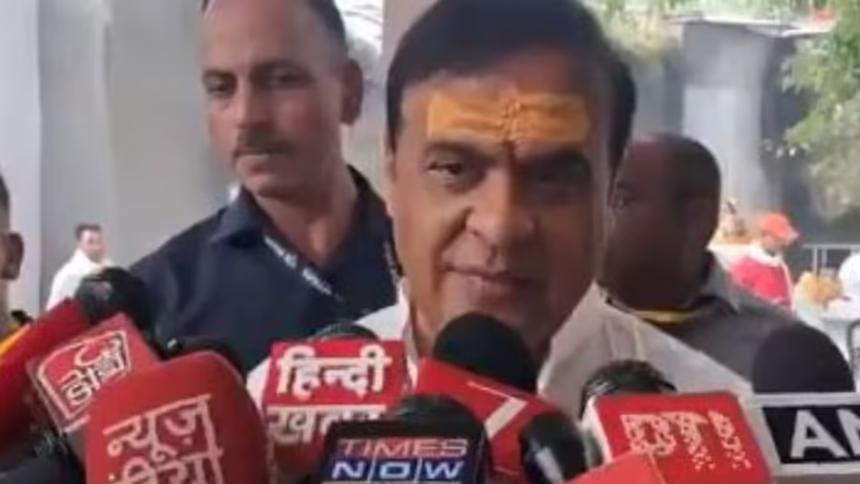
Assam Chief Minister Himanta Biswa Sarma on Saturday, October 10, dismissed the Opposition’s protest in Delhi, calling it an expression of frustration. Speaking in Haridwar, Uttarakhand, Sarma said such demonstrations would not affect the government’s focus on public welfare. He maintained that the government would continue working for the people despite protests by Opposition parties. His remarks came as Opposition leaders staged a protest in the national capital against Chief Election Commissioner Gyanesh Kumar. The demonstration also led to traffic restrictions in several parts of Delhi.
Read More: Mukul Sangma Rules Out Joining BJP
Key Facts
- Date: October 10, 2026
- Speaker: Assam Chief Minister Himanta Biswa Sarma
- Location of remarks: Haridwar, Uttarakhand
- Protest location: Raj Ghat, New Delhi
- Main issue: Opposition protest against Chief Election Commissioner Gyanesh Kumar
- Traffic impact: Restrictions on trucks and large commercial passenger vehicles in central Delhi
Himanta Sarma Criticises Opposition Protest
Himanta Biswa Sarma said the Opposition’s protest would not affect the government’s work or its focus on public welfare.
“When the Opposition is frustrated, they stage such spectacles. It makes no difference,” Sarma said while speaking in Haridwar.
The Assam Chief Minister also urged the government to remain focused on development and public service.
He said the government should continue working for citizens and expressed confidence that people would continue to support it.
Opposition Protest in Delhi
Sarma’s comments came amid a major Opposition demonstration in New Delhi against Chief Election Commissioner Gyanesh Kumar.
Opposition Members of Parliament had gathered in the national capital as part of their protest. Leaders and supporters later moved towards Raj Ghat, where they staged a dharna.
The protest followed a lunch meeting hosted by Congress president Mallikarjun Kharge at Moets in central Delhi on Thursday, October 8.
After the meeting, Opposition leaders and thousands of supporters reportedly walked towards Raj Ghat in the late afternoon.
The leaders sat in protest at the location for around an hour before deciding to leave the area.
Delhi Traffic Restrictions
The Opposition protest also affected traffic movement in central Delhi.
Delhi Traffic Police announced significant restrictions around the protest area. The restrictions included a ban on the movement of trucks and other large commercial passenger vehicles.
DTC buses were also among the vehicles affected by the restrictions. These buses play an important role in daily commuting across Delhi and the National Capital Region.
The traffic measures were introduced to manage congestion and maintain security around the protest location.
Political Reaction
Sarma’s statement adds to the political exchange surrounding the Opposition’s protest against the Election Commission leadership.
While Opposition parties have raised concerns over the functioning of the electoral system, the ruling side has continued to defend its approach and focus on governance.
The latest remarks from the Assam Chief Minister indicate that the political confrontation is likely to continue as both sides present competing views on the issue.
What Happened?
Assam Chief Minister Himanta Biswa Sarma dismissed the Opposition’s protest in Delhi as an expression of frustration and said it would not affect the government’s work.
Why Were Opposition Leaders Protesting?
Opposition MPs staged a demonstration in New Delhi against Chief Election Commissioner Gyanesh Kumar.
Where Was the Protest Held?
The Opposition leaders held a dharna at Raj Ghat in central Delhi before leaving the location after around an hour.
How Did the Protest Affect Traffic?
Delhi Traffic Police imposed restrictions around the protest area, including restrictions on trucks and large commercial passenger vehicles such as DTC buses.
Location Context
New Delhi is India’s political centre and regularly hosts major demonstrations involving national political parties. Protests in central Delhi can also have a significant impact on traffic and public transportation across the National Capital Region.