






The Jiribam Imphal rail link remains one of Manipur’s most significant railway infrastructure projects, designed to connect the state capital with India’s wider railway network. Northeast Frontier Railway continues construction across challenging hills, deep valleys and difficult geological formations. The 110.625-kilometre railway line includes dozens of tunnels and bridges, making it a complex engineering undertaking. Although reports have cited different completion figures over the years, available official data does not confirm the headline’s claim of 92% completion as of October 2026. Construction progress, safety inspections and the completion of remaining sections will determine when the full connection becomes operational.
Tripura BJP Candidate List Finalised Ahead of ULB Polls
Jiribam Imphal Rail Link Construction Progress and Latest Updates
The Jiribam Imphal rail link forms part of the Indian Railways network expansion programme in the Northeast. The project aims to provide direct railway connectivity to Imphal, reducing the region’s dependence on road transport for passenger journeys and the movement of essential goods.
According to a report published in August 2026, Northeast Frontier Railway (Construction) General Manager Ashish Bansal inspected several sections of the railway line. These included Jiribam–Khongsang, Khongsang–Awangkhul and Awangkhul–Imphal. During the inspection, he reviewed construction activities and the status of important infrastructure.
The inspection also examined preparations for a Commissioner of Railway Safety (CRS) inspection scheduled for October 2026. Railway officials reviewed tunnel construction, station yards and other works along the alignment. Bansal stressed the importance of construction quality, safety standards and timely execution.
However, the inspection report did not announce that the entire project had reached 92% completion. Government progress reports have published different figures at different times, and the latest confirmed percentage must be tied to a dated official update.
A Ministry of Statistics and Programme Implementation report recorded 72% physical progress in January 2026. The same report listed the revised project cost at approximately ₹21,885.9 crore and the revised completion target as June 2029. These figures differ from earlier completion expectations and show why readers should check the reporting date when comparing project updates.
Meanwhile, the project has already opened sections in stages. Indian Railways commissioned the Jiribam–Vangaichungpao section in February 2017 and the Vangaichungpao–Khongsang section in September 2022. These sections have improved rail access along part of the route.
The remaining sections require further construction and the necessary safety clearances. Therefore, progress on individual stretches should not be confused with completion of the full railway line. The latest confirmed reports point to continuing work rather than a verified declaration that the entire route is ready for regular train services.
Jiribam Imphal Rail Link Features Tunnels and Major Bridges
The railway project covers approximately 110.625 kilometres through some of the region’s most challenging terrain. Its engineering requirements include extensive tunnelling, major bridges, minor bridges, station infrastructure and associated railway systems.
The alignment includes 54 tunnels with a combined length of approximately 66.47 kilometres. These tunnels cross mountainous areas where construction teams must deal with geological variations, water management and other site-specific conditions.
Tunnel construction requires careful monitoring throughout excavation and finishing work. Engineers must assess ground stability, drainage, ventilation requirements and structural safety. In addition, workers must coordinate different construction activities to ensure that each tunnel meets the required engineering standards.
The project also includes 15 major bridges and 116 minor bridges, according to the August 2026 progress report. These structures help the railway cross rivers, valleys and other natural obstacles along the route.
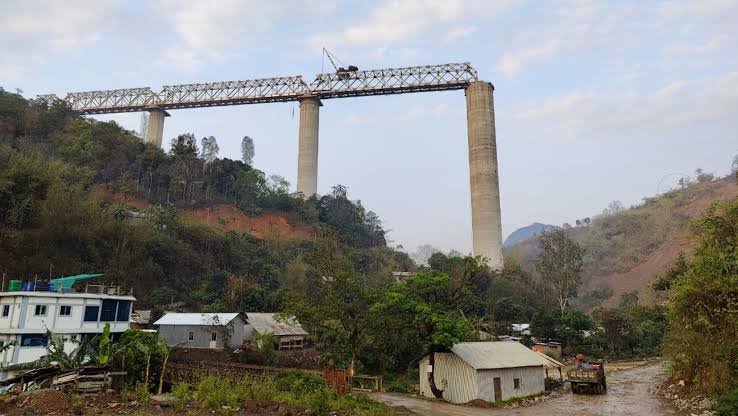
One of the most notable structures is Bridge No. 164 at Noney. Its tallest pier reaches approximately 141 metres, making it a prominent feature of the railway project. Constructing such a high bridge in mountainous terrain requires detailed engineering, careful material handling and strict quality checks.
Nevertheless, completing a tunnel or bridge does not automatically make a railway section ready for passenger operations. Teams must also finish track work, signalling, telecommunications, electrical systems and other essential infrastructure where required. Railway authorities then assess the completed section and arrange the necessary safety inspections and approvals.
These interconnected tasks explain why the final stage of a major railway project can take considerable time. Even when substantial civil engineering work is complete, outstanding technical installations or safety requirements can affect the commissioning schedule.
The 11 planned stations along the route are Jiribam, Vangaichungpao, Rani Gaidinliu, Kambiron Halt, Thingou, Khongsang, Awangkhul, Noney, Tupul, Haochong Road Halt and Imphal. Together, these stations are intended to improve access for communities along the railway corridor.
How the Jiribam Imphal Rail Link Could Transform Connectivity
The completion of the railway line could change how people and businesses travel between Manipur and other parts of India. At present, road transport plays a major role in connecting Imphal with Jiribam and the wider transport network. A direct railway connection could provide another option for passengers and freight operators.
One expected benefit is improved movement of essential commodities. Railways can carry large quantities of goods, potentially helping businesses transport supplies and agricultural products over longer distances. Depending on the services introduced, the new connection could support trade and reduce some logistical difficulties.
The railway could also create opportunities for local producers. Businesses may find it easier to connect with markets outside Manipur when transport services offer suitable schedules, capacity and pricing. However, the scale of these benefits will depend on actual freight services, terminal facilities and connections with road networks.
Tourism represents another potential area of growth. Improved rail access could make travel to Manipur more convenient for visitors, depending on available passenger services and onward transport arrangements. Hotels, transport operators, restaurants and local businesses may benefit if the railway attracts more visitors.
Furthermore, the project could improve travel options for residents who need to reach educational institutions, hospitals and commercial centres. The extent of these improvements will depend on station locations, train frequency, ticket affordability and connections to nearby settlements.
Construction itself can also support economic activity through demand for materials, transport, services and skilled labour. Once the line becomes fully operational, railway-related activities may create additional opportunities in station services, maintenance and logistics.
However, these outcomes are potential benefits rather than guaranteed results. Railway connectivity works best when it links with dependable local transport, efficient freight handling and services that meet passenger needs. Authorities and businesses will need to coordinate these elements to maximise the value of the investment.
Jiribam Imphal Rail Link Faces Completion and Safety Challenges
Despite significant construction work, the railway project faces the technical challenges associated with building through difficult terrain. Mountainous geology, heavy rainfall, difficult access and construction logistics can affect progress. Teams must also maintain strict safety standards while working on tunnels, bridges and steep sections.
The project’s changing completion estimates underline the importance of realistic scheduling. Earlier reports expected completion sooner, while official monitoring data in 2026 listed June 2029 as the revised target. Such changes do not by themselves establish the reason for every delay, but they demonstrate that the project timeline has evolved.
Safety inspections will remain essential as construction advances. The Commissioner of Railway Safety assesses railway infrastructure before authorities authorise operations on the relevant section. These checks help establish whether completed works meet the required standards for safe train movement.
The commissioning process may also depend on the readiness of signalling, track systems, communication equipment and other railway installations. Authorities must coordinate these elements before introducing services on the remaining sections.
Another important consideration involves maintaining the infrastructure after construction. Tunnels, bridges, drainage systems and track formations require regular inspections and upkeep. In a region with challenging terrain and heavy seasonal rainfall, continued maintenance will be important for reliable operations.
The revised cost also reflects the scale of the undertaking. With the estimated project cost reaching approximately ₹21,885.9 crore in the January 2026 monitoring report, effective financial oversight and construction management remain important. Future progress reports can help the public understand how expenditure, physical work and completion schedules evolve.
Ultimately, the next major milestones will include finishing the remaining construction, completing technical installations, securing safety clearances and announcing confirmed commissioning dates. Until railway authorities publish an updated completion figure, the claim that the project has reached 92% should remain unverified.
Conclusion
The Jiribam Imphal rail link is a major infrastructure project intended to connect Manipur’s capital with the national railway network. Its extensive tunnels, high bridges and mountainous alignment have made construction technically demanding. Although railway officials reviewed progress and safety preparations in August 2026, the available reports do not confirm the headline’s claim of 92% completion.
The project has already improved connectivity through the commissioning of earlier sections. However, the remaining stretches require construction, technical work and safety clearances before authorities can introduce services across the complete route. The January 2026 government monitoring report listed a revised completion target of June 2029, highlighting the importance of using dated and verified information when reporting progress.
Once completed and fully operational, the railway could improve passenger travel, support freight movement and create opportunities for businesses and tourism. These benefits will depend on reliable services, suitable connections and effective maintenance. For now, continued construction and safety inspections remain central to delivering the project.
FAQs
1. What is the Jiribam Imphal rail link project?
It is a 110.625-kilometre railway project designed to connect Jiribam with Imphal in Manipur. The route forms part of the effort to provide the state capital with direct railway connectivity to the wider Indian railway network.
2. Has the Jiribam Imphal rail link reached 92% completion?
The available sources reviewed for this article do not confirm 92% completion as of October 2026. A government monitoring report recorded 72% physical progress in January 2026, while a later railway inspection report described continuing construction without providing a new overall percentage.
3. How many tunnels and bridges does the railway project include?
The project includes 54 tunnels with a combined length of approximately 66.47 kilometres. It also includes 15 major bridges and 116 minor bridges, according to the August 2026 progress report.
4. What is the revised completion target for the Jiribam Imphal rail link?
The Ministry of Statistics and Programme Implementation’s January 2026 report listed June 2029 as the revised completion target. The final operational date will depend on construction progress, technical readiness and required safety approvals.
5. How could the railway benefit Manipur?
The completed line could improve passenger connectivity, support the movement of essential goods and create opportunities for trade and tourism. The actual impact will depend on train services, freight facilities and connections with local transport networks.