






The Guwahati Metro feasibility study has gained attention following Assam’s announcement of a proposed mass-transit system along the planned Guwahati Ring Road. The state government outlined the proposal in its 2026–27 Budget, with the aim of improving regional connectivity and easing traffic congestion. The proposed network would examine links between Guwahati and surrounding growth centres. However, available reports do not confirm that the new study has been submitted to the Union Ministry for final clearance. Technical assessments, financial viability and decisions on the preferred transport system must guide the next stage.
Tripura BJP Candidate List Finalised Ahead of ULB Polls
Guwahati Metro Feasibility Study and the New Ring Road Proposal
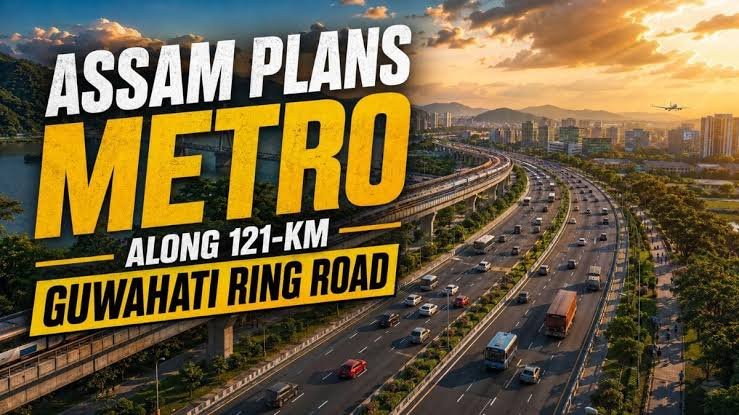
Assam’s latest transit proposal focuses on the planned 121-kilometre Guwahati Ring Road. In July 2026, the state government announced that it would examine the feasibility of developing a mass rapid transit system along or alongside the proposed road corridor.
The announcement came during the presentation of the 2026–27 state Budget. The government said the study would assess whether a metro-based transport system could support the region’s expanding travel needs. The proposal reflects concerns about congestion in Guwahati and the growth of settlements beyond the existing urban core.
The proposed Ring Road is a major infrastructure project intended to improve traffic movement around the city. Its planned components include a northern bypass, a bridge across the Brahmaputra and upgrades to sections of National Highway 27. A mass-transit corridor could potentially complement these road connections if the study establishes that the arrangement is technically and financially viable.
Chief Minister Himanta Biswa Sarma discussed the proposal following the Budget announcement. The state’s stated objective is to improve connectivity between Guwahati and surrounding areas while supporting planned urban expansion.
However, the proposal remains at the assessment stage. An announcement to conduct a feasibility study does not mean that the government has approved construction, selected a final alignment or secured all necessary central clearances.
The study will need to examine passenger demand, route options, construction requirements, operating costs and the relationship between the transit system and the Ring Road. It must also consider whether a conventional metro or another form of mass transit would suit the region’s needs.
These assessments are important because large urban transport projects require substantial public investment. Authorities must understand expected passenger numbers, construction costs and long-term operating requirements before committing to a final design.
Guwahati Metro Feasibility Study Follows Earlier Planning Efforts
Guwahati has explored rail-based mass transit for more than a decade. Earlier plans proposed a metro network with multiple corridors intended to connect important parts of the city and surrounding areas.
RITES prepared a feasibility report and a detailed project report for the earlier metro proposal. The initial Phase I plan covered approximately 61.4 kilometres across four corridors. The Assam government approved the proposal in 2016 and established the Guwahati Metro Rail Corporation to advance the project.
However, the Union government introduced the Metro Rail Policy in 2017, which changed the requirements for evaluating metro proposals. The policy placed greater emphasis on comprehensive mobility planning, alternative transport options and the integration of different modes of travel.
As a result, the earlier proposal required further assessment and revisions. The Guwahati Metropolitan Development Authority later worked on a Comprehensive Mobility Plan and an Alternative Analysis report to evaluate transport needs and possible solutions.
The earlier planning process demonstrates why a feasibility study must examine more than the construction of railway tracks. Authorities need to compare available transport systems and assess how they would work alongside buses, roads, waterways and other public transport options.
The new Ring Road proposal differs from the earlier city-centred plan because it focuses on regional connectivity. Rather than concentrating only on movement within central Guwahati, the concept considers how a mass-transit system might link peripheral areas and satellite towns with the metropolitan region.
This approach could support future development outside the city’s busiest areas. Nevertheless, the precise routes, stations and technology will depend on the findings of the new study and the government’s subsequent decisions.
The earlier metro proposal should therefore not be confused with the new Ring Road transit concept. They represent different stages and approaches to addressing Guwahati’s long-term transport requirements.
Potential Benefits of a Guwahati Metro Feasibility Study
A detailed feasibility assessment could help authorities determine whether mass transit can reduce pressure on Guwahati’s roads. The city serves as a major commercial, educational, healthcare and transport centre for Assam and other parts of Northeast India. Its expanding urban area creates growing demand for reliable movement between residential neighbourhoods, workplaces and regional destinations.
If the study identifies a suitable and viable system, improved public transport could offer an alternative to private vehicles for some journeys. A well-planned network may help commuters reach major employment and service centres with fewer transfers and more predictable travel times.
Regional connectivity is another important consideration. The Ring Road proposal could examine links with satellite towns and peripheral settlements, including areas such as Baihata Chariali and Sipajhar. Better transport connections may help residents access employment, education and healthcare in Guwahati.
Mass transit could also complement existing railway stations, bus services and other transport facilities. Effective integration would allow passengers to switch between modes more conveniently. However, planners must include last-mile connections so that people can reach stations from their homes and workplaces.
Environmental considerations may also influence the assessment. If a mass-transit system attracts passengers away from private vehicles, it could help reduce road traffic and associated emissions. The actual impact would depend on passenger demand, the energy used by the system and the number of car and two-wheeler journeys replaced.
Construction and operation could create economic opportunities, although the scale would depend on the project’s final design. Potential activities include civil engineering, equipment installation, station management and system maintenance. Better transport access may also influence commercial development around stations.
Nevertheless, these benefits are not guaranteed. A system that costs too much to build or attracts too few passengers could place a substantial burden on public finances. The feasibility study must therefore compare expected benefits with construction, operating and maintenance costs.
Funding, Approvals and Challenges Ahead
The next stage will depend on the scope and findings of the feasibility study. Authorities must establish passenger demand, identify suitable corridors and assess the technical requirements of the preferred system. They must also compare the financial implications of different transport options.
The Union government’s approval process for metro projects involves detailed examination of proposals. National policy requirements and the availability of resources can influence whether a project receives approval. Therefore, submission of a report alone would not automatically result in final clearance.
Funding remains a central consideration. Urban mass-transit projects require investment in tracks or guideways, stations, signalling, power systems, depots and passenger facilities. The final cost would depend on the selected technology, route length, construction conditions and integration with other transport infrastructure.
Planners must also examine land requirements and the impact on existing roads and communities. Building a transit system alongside a major road corridor could create opportunities for coordinated infrastructure development, but it would require careful engineering and traffic management.
Passenger forecasts are equally important. The study should identify where travel demand is strongest, how it changes during the day and whether the proposed network would serve residents across the metropolitan region. These findings can help determine station locations, service frequency and future expansion possibilities.
The government will also need to consider how the proposed system would connect with buses, regional railways and other public transport services. Without reliable connections, even a technically sound transit line may fail to attract the expected number of passengers.
For now, the new Ring Road transit proposal remains a planning initiative rather than an approved construction project. The next meaningful milestones will include completion of the feasibility assessment, decisions on the preferred transport system and any subsequent submissions or approvals announced by the authorities.
Conclusion
The Guwahati Metro feasibility study is part of Assam’s wider effort to address urban congestion and improve regional transport connections. The 2026–27 Budget announced an assessment of a proposed mass-transit system along or alongside the planned Guwahati Ring Road. The concept focuses on connecting Guwahati with surrounding areas and supporting the region’s future growth.
The new proposal follows earlier metro planning efforts that required revision under national policy and transport-planning guidelines. The feasibility assessment must establish passenger demand, technical suitability, funding needs and the best way to integrate mass transit with existing transport networks. Available reports do not confirm that the new study has been submitted to the Union Ministry for final clearance.
If the assessment identifies a viable system, the proposal could create a path towards improved public transport in the Guwahati region. However, construction and implementation will depend on further decisions, approvals and financial arrangements. Clear official updates will be essential for tracking the project’s progress.
FAQs
1. Has the Guwahati Metro feasibility study been submitted to the Union Ministry for final clearance?
Available reports reviewed for this article do not confirm such a submission. Assam announced a feasibility assessment for a proposed mass-transit system along the Guwahati Ring Road in its 2026–27 Budget.
2. What is the new Guwahati metro proposal about?
The proposal examines whether a mass-transit system could operate along or alongside the planned 121-kilometre Guwahati Ring Road. Its objective is to improve regional connectivity and help address traffic congestion.
3. How is the new proposal different from the earlier Guwahati Metro plan?
The earlier proposal focused on several corridors within and around Guwahati. The new concept focuses on regional connections linked to the proposed Ring Road and requires a fresh feasibility assessment.
4. What benefits could a mass-transit system bring to Guwahati?
A viable system could provide another commuting option, improve access to employment and services, and connect peripheral settlements with the metropolitan region. The actual benefits would depend on route planning, affordability and passenger demand.
5. When could construction of the proposed system begin?
No confirmed construction start date is established by the reports reviewed here. The government must assess feasibility and determine the preferred system before further decisions on approvals, funding and implementation.