






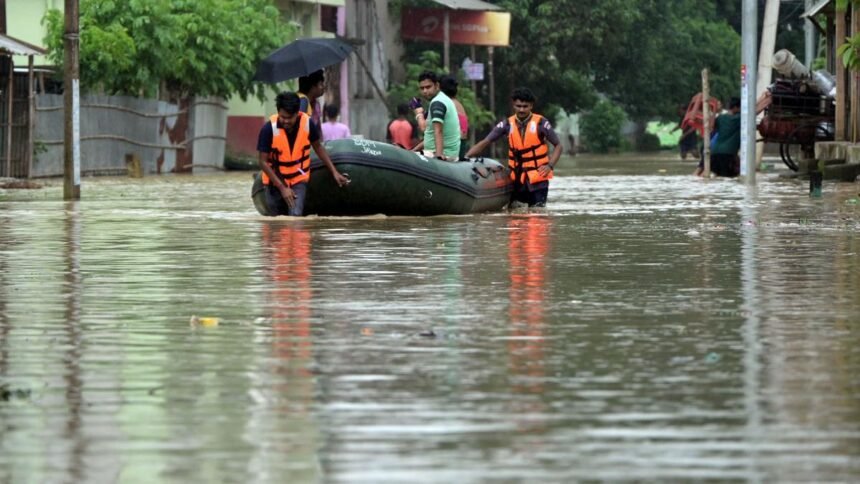
Unseasonal mid-November showers have triggered flash flooding in low-lying agricultural fields across Sepahijala district. The sudden rainfall has raised concerns among farmers over possible damage to standing paddy and vegetable crops. Water accumulation in farmland could affect cultivation activities and threaten farmers’ seasonal earnings. Moreover, the situation has created uncertainty for agricultural households relying on their harvest. Farmers are now concerned about the impact of continued rainfall and the time required for excess water to drain from their fields.
Srimantapur ICP Gets New Border Trade Upgrade Plan
Flash Flooding Affects Low-Lying Farmland
Unseasonal showers have caused water to accumulate in low-lying agricultural areas of Sepahijala district. As a result, several crop fields face immediate flooding concerns.
Low-lying farmland often faces drainage challenges during heavy rainfall. Therefore, sudden water accumulation can put standing crops at risk, particularly when fields remain submerged.
The extent of flooding and the number of affected agricultural areas have not been specified in the available information.
Paddy Farmers Face Crop Damage Concerns
Paddy farmers are among those concerned about the unexpected rainfall. Excess water in agricultural fields can disrupt crop growth and create difficulties during important cultivation stages.
Furthermore, prolonged waterlogging may increase the risk of crop losses. Farmers will need favourable weather and proper drainage to protect their standing crops.
However, the actual damage to paddy cultivation remains unclear.
Vegetable Cultivation Also Under Pressure
Vegetable farmers in the district are also facing concerns following the unseasonal showers. Many vegetable crops remain vulnerable to excess water around their roots and prolonged field waterlogging.
Consequently, flash flooding could affect crop quality and reduce expected yields. In addition, damaged vegetable fields may require extra labour and recovery expenses.
Farmers are therefore watching weather conditions closely as they assess the situation.
Unseasonal Rainfall Raises Agricultural Concerns
Mid-November rainfall can create unexpected challenges for farmers who plan their cultivation around seasonal weather patterns. This latest spell has increased uncertainty across affected agricultural areas.
Meanwhile, the condition of individual fields will depend on rainfall intensity, drainage facilities and the duration of water accumulation.
The available information does not confirm any official crop-loss assessment or compensation announcement.
Farmers Await Weather Relief
Farmers in Sepahijala will need rainfall to ease and excess water to drain from affected fields. Improved weather conditions could help limit further agricultural disruption.
Additionally, timely assessment of damaged farmland would help determine the extent of losses. Any support measures would depend on the findings of the relevant authorities.
For now, paddy and vegetable growers remain concerned about the possible impact on their harvests and household income.
Conclusion
Unseasonal mid-November showers have triggered flash flooding concerns in low-lying agricultural fields across Sepahijala district. Paddy and vegetable farmers now face uncertainty over potential crop damage. The extent of losses remains unclear. However, weather conditions and water drainage will play an important role in determining the impact on local agriculture.
Frequently Asked Questions
1. Where have the unseasonal rains caused flooding concerns?
The rainfall has triggered flash flooding concerns in low-lying agricultural fields in Sepahijala district, Tripura.
2. When did the unseasonal rainfall occur?
The reported showers occurred during mid-November.
3. Which crops face possible damage?
Paddy and vegetable crops face immediate concerns due to water accumulation.
4. Why are farmers worried about the rainfall?
Excess water and prolonged waterlogging could affect crop growth, quality and expected yields.
5. Has the extent of crop damage been confirmed?
No confirmed damage assessment has been provided in the available information.
6. What will determine the impact on agriculture?
Rainfall intensity, drainage conditions and the duration of water accumulation will influence the extent of crop damage.