






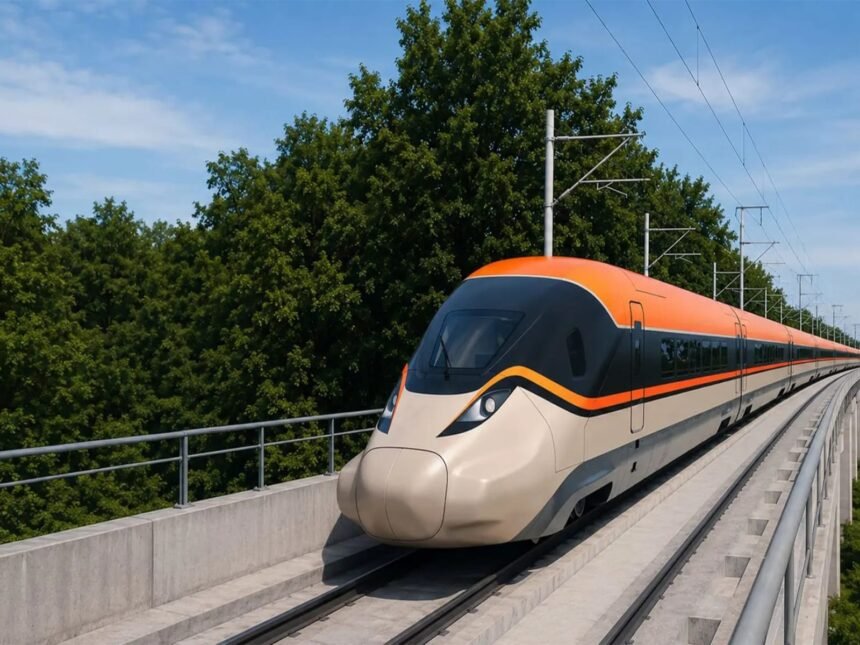
Prime Minister Narendra Modi has approved the proposed Northern Bullet Train Corridor connecting Delhi with Guwahati through Siliguri. The decision brings Assam into India’s planned high-speed rail network and marks a major development for Northeast connectivity. Railway Minister Ashwini Vaishnaw announced the approval on October 31, 2026. Assam Chief Minister Himanta Biswa Sarma welcomed the extension on November 1, describing it as an important opportunity for eastern India. The proposed corridor will connect major cities across five regions and could reduce Delhi-Guwahati travel time to under eight hours. However, detailed construction schedules and final project arrangements remain awaited.
Gauhati High Court Quashes Pranab Doley’s NSA Detention
PM Modi Approves Northern Bullet Train Corridor
Railway Minister Ashwini Vaishnaw announced the Prime Minister’s approval during an event in Varanasi on October 31. He said the proposed Northern corridor would connect Delhi with Guwahati through several major cities.
The announcement followed the launch programme for the Varanasi-New Delhi Vande Bharat Sleeper Express.
According to the minister, the high-speed rail network will cover approximately 1,500 kilometres. It will pass through Uttar Pradesh, Bihar and West Bengal before entering Assam.
The proposed route includes Delhi, Agra, Kanpur, Lucknow, Ayodhya, Varanasi, Prayagraj, Patna, Siliguri and Guwahati.
The approval marks an important step for the proposed corridor. However, it should not be confused with the start of construction or the announcement of an operational date.
Further planning, technical assessments and project implementation arrangements will determine the next stages.
Guwahati Extension Brings Northeast Into High-Speed Network
The extension to Guwahati changes the proposed corridor’s original geographical reach. The Northern high-speed rail plan initially focused on connecting Delhi with Siliguri through important cities in northern and eastern India.
Assam Chief Minister Himanta Biswa Sarma had requested the Railway Ministry to extend the proposed route beyond Siliguri.
Sarma said he wrote to Railway Minister Ashwini Vaishnaw on June 7 and later met him in July. He argued that Guwahati serves as a major economic and transportation gateway to the Northeast.
Following the approval, Sarma thanked Prime Minister Modi and Vaishnaw. He described the extension as a significant development for eastern India.
The Chief Minister also highlighted the potential benefits for businesses, industries and employment. He said faster connectivity could support Assam’s plans to attract high-technology industries.
The extension could also strengthen links between Assam and major economic centres. Moreover, it would place Guwahati within the proposed national high-speed rail network.
Proposed Route Connects Ten Major Cities
The Northern corridor will connect major destinations across northern and eastern India.
The proposed route includes ten key cities:
- Delhi
- Agra
- Kanpur
- Lucknow
- Ayodhya
- Varanasi
- Prayagraj
- Patna
- Siliguri
- Guwahati
The route will cross several important urban and economic centres before reaching Assam.
Delhi will serve as the northern starting point, while Guwahati will become the proposed eastern terminal.
Siliguri will play an important role as the corridor enters the Northeast. The city already serves as a major transportation gateway connecting the eastern Himalayan region with the rest of India.
However, the final station locations, alignment details and land requirements will depend on further project planning.
Delhi-Guwahati Journey Could Take Under Eight Hours
One of the biggest expectations surrounding the proposal concerns travel time.
According to Sarma, the proposed high-speed connection could reduce the Delhi-Guwahati journey to less than eight hours.
The Railway Minister has also shared indicative journey times for several city pairs along the proposed corridor.
These estimates include:
- Delhi to Agra: 59 minutes
- Delhi to Kanpur: 1 hour 45 minutes
- Delhi to Lucknow: 2 hours 12 minutes
- Delhi to Varanasi: approximately 3 hours 35 minutes
- Varanasi to Lucknow: 1 hour 21 minutes
- Varanasi to Patna: approximately 1 hour
- Varanasi to Prayagraj: approximately 33 minutes
These figures represent proposed journey estimates rather than confirmed operating schedules.
Nevertheless, they indicate the potential time savings from high-speed rail connectivity. Faster journeys could make business travel and tourism more convenient across the connected regions.
Assam Sees Opportunities for Industry and Investment
The proposed Guwahati extension could support Assam’s wider economic development plans.
Improved connectivity may help businesses access markets in northern and eastern India. It could also make travel easier for investors, professionals and industrial operators.
Sarma has linked the corridor to Assam’s ambition to attract high-technology industries. He believes faster connections with major cities could create opportunities for businesses and livelihoods.
Guwahati already serves as an important commercial centre for the Northeast. A future high-speed rail connection could strengthen its position as a regional transportation and business hub.
Furthermore, improved access could support tourism across Assam and neighbouring states.
However, these benefits will depend on project implementation, station accessibility and integration with local transport networks.
The actual economic impact will become clearer once authorities publish detailed project plans.
Union Budget Had Already Announced High-Speed Rail Corridors
The latest approval builds on the high-speed rail expansion announced in the Union Budget 2026–27.
Finance Minister Nirmala Sitharaman announced seven proposed high-speed rail corridors during the Budget presentation.
These included Mumbai-Pune, Pune-Hyderabad, Hyderabad-Bengaluru, Hyderabad-Chennai, Chennai-Bengaluru, Delhi-Varanasi and Varanasi-Siliguri.
The proposed Northern corridor connects elements of the Delhi-Varanasi and Varanasi-Siliguri high-speed rail plans. Its extension to Guwahati brings Assam into the proposed network.
India is also developing its first bullet train corridor between Mumbai and Ahmedabad. The project is expected to serve as a foundation for the country’s wider high-speed rail expansion.
The Northern corridor would represent another major step in that long-term strategy.
Construction Timeline and Final Details Awaited
Although the Prime Minister has approved the proposed corridor, several implementation details remain outstanding.
Authorities have not yet announced a confirmed construction schedule or operational date for the Delhi-Guwahati service.
Detailed station arrangements, final route alignment and land acquisition requirements also need further clarification.
The proposed journey times will depend on the final design and operational planning.
Therefore, the approval should be viewed as a major project milestone rather than confirmation that bullet train services will begin soon.
The Railway Ministry’s subsequent announcements will provide greater clarity about the project’s execution.
Conclusion
Prime Minister Narendra Modi’s approval of the Northern Bullet Train Corridor has brought Guwahati into India’s proposed high-speed rail network. The route will connect Delhi with Assam through major cities, including Agra, Lucknow, Varanasi, Patna and Siliguri. Assam Chief Minister Himanta Biswa Sarma welcomed the extension and highlighted its potential economic benefits. Although the project could reduce Delhi-Guwahati travel to under eight hours, construction schedules and final implementation details remain awaited. The proposal marks an important development for Northeast India’s future connectivity.
FAQs
1. Has PM Modi approved the Delhi-Guwahati bullet train corridor?
Yes. Railway Minister Ashwini Vaishnaw announced the Prime Minister’s approval of the proposed Northern corridor on October 31, 2026.
2. Which cities will the proposed corridor connect?
The route includes Delhi, Agra, Kanpur, Lucknow, Ayodhya, Varanasi, Prayagraj, Patna, Siliguri and Guwahati.
3. How long could the Delhi-Guwahati journey take?
Assam Chief Minister Himanta Biswa Sarma said the proposed journey could take less than eight hours.
4. Why did Assam seek the corridor’s extension?
Chief Minister Himanta Biswa Sarma requested the extension because Guwahati serves as a major economic and transportation gateway to Northeast India.
5. What benefits could the bullet train bring to Assam?
The proposed connection could improve passenger mobility, support tourism, strengthen business links and create opportunities for investment.
6. When will construction of the Delhi-Guwahati bullet train begin?
A confirmed construction start date and operational timeline have not yet been announced.