







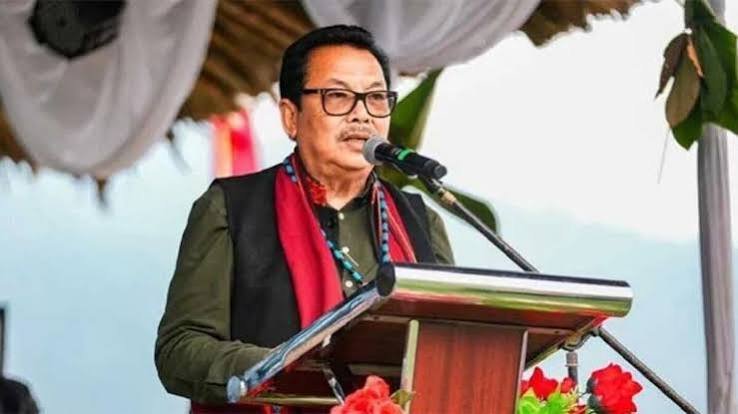
The Siang project debate in Arunachal Pradesh has entered another phase of discussion after Deputy Chief Minister Chowna Mein invited groups opposing the proposed hydropower initiative for fresh talks. He said the state government would maintain a united position while addressing concerns raised by local communities.
Mein also stressed that there was no difference between his position and that of Chief Minister Pema Khandu. His remarks signal the government’s willingness to continue engaging with affected communities amid sustained opposition to the proposed Siang Upper Multipurpose Project (SUMP).
Siang Project: Mein Calls for a United Government Position
Speaking on the controversy, Mein maintained that he and the Chief Minister shared the same understanding of the proposed project. He said the government would speak with one voice and remain committed to the interests of Arunachal Pradesh’s people.
“There is no difference of opinion on this issue from my side. I stand with the people of Arunachal Pradesh,” Mein said.
His statement comes amid growing public attention surrounding the proposed project, particularly in the Siang and Upper Siang regions. Several community organisations and local groups have raised concerns about its possible impact on indigenous communities.
Moreover, Mein sought to clarify that discussions between the government and stakeholders had focused on the project’s Pre-Feasibility Report (PFR), rather than an announcement to begin dam construction.
He challenged claims suggesting that either he or Pema Khandu had announced plans to construct a dam. According to Mein, the government’s position had consistently centred on examining the proposal and holding discussions with the people.
Siang Project Talks Have Already Taken Place
Mein said the government had previously taken steps to establish communication with community representatives. He recalled inviting community leaders to Itanagar for discussions on the proposed initiative.
He also confirmed that another round of discussions took place with members of the Adi-Galo Welfare Society at his residence.
These meetings formed part of the government’s efforts to understand local concerns and explain its position on the proposed development project.
Furthermore, Mein reiterated that he remained willing to meet organisations opposing the initiative. He indicated that discussions should continue rather than allowing differences to prevent communication between the government and local residents.
“What we have always said is that we need to engage in discussions with the people,” he said.
However, the latest invitation comes against a backdrop of continuing disagreements over the proposed project. Several organisations have questioned the government’s approach and demanded greater public participation before any further steps.
Why the Siang Project Faces Local Opposition
The proposed Siang Upper Multipurpose Project has attracted considerable opposition, particularly among sections of the indigenous Adi community.
The proposed 11,200-megawatt hydropower initiative has raised concerns about possible displacement, environmental consequences and the loss of ancestral land.
Residents and community organisations fear that the project could affect villages, agricultural areas, forests and culturally important locations. They have also questioned how authorities would protect traditional livelihoods and indigenous identity.
According to reports, around 27 villages could face submergence, while several other settlements may experience indirect impacts. However, the final extent of the affected areas requires detailed assessment.
Moreover, protesters have demanded meaningful consultation and greater transparency regarding the project’s Pre-Feasibility Report.
Several organisations have also called for the withdrawal of additional security personnel from affected areas and the release of people detained during protests.
The opposition reflects wider concerns about balancing infrastructure development with community rights and environmental protection.
Siang Project Dispute Intensifies Amid Protests
The disagreement has extended beyond discussions between government representatives and community organisations.
In October, demonstrations and shutdowns took place in parts of Arunachal Pradesh over the proposed project. The protests also brought attention to concerns about security deployment and the ongoing survey process.
On October 29, youth activists, student groups and indigenous organisations held a rally in Itanagar supporting communities opposing the SUMP.
Participants demanded the release of detained protesters, a halt to survey activities and meaningful consultation with affected residents.
Meanwhile, the Arunachal Pradesh Congress Committee also opposed the proposed project. On November 2, it demanded the project’s cancellation and called for the release of arrested protesters.
The party argued that development initiatives should not come at the cost of indigenous communities’ ancestral land, culture and livelihoods.
These developments have added pressure on the state government to address public concerns through dialogue and transparent communication.
What Lies Ahead for the Siang Project?
Mein’s latest remarks indicate that the government wants to keep communication channels open with organisations opposing the proposal.
However, the willingness to hold further discussions does not mean that the differences surrounding the project have been resolved. Community representatives continue to raise questions about its potential consequences.
The distinction between preparing a Pre-Feasibility Report and approving actual construction also remains central to the government’s explanation.
For residents, the key concerns involve the future of their villages, land, livelihoods and cultural heritage. Therefore, meaningful engagement will remain important as discussions continue.
The proposed project also carries wider strategic significance because of China’s planned hydropower development on the Yarlung Tsangpo River in Tibet, which enters India as the Siang.
Overall, the coming discussions could provide an opportunity for the government and community organisations to address their differences. Mein’s assurance that the government will speak with one voice sets out its position, but building public confidence remains an important challenge.