






Nagaland is taking steps towards the formal adoption of the Prohibition of Child Marriage Act, 2006, as officials renew efforts to prevent early marriages across the state. At a stakeholder consultation and pledge drive in Kohima, Social Welfare Secretary Limawabang Jamir revealed that 5.6% of women aged 20–24 in Nagaland had married before turning 18, according to National Family Health Survey-5 data.
Assam Goods Train Derailment Strands 194 Mizoram-Bound Schoolchildren
Nagaland Strengthens Efforts to Prevent Child Marriage
Nagaland is moving towards strengthening its institutional response to child marriage. The state government is currently processing the formal adoption of the Prohibition of Child Marriage Act, 2006, according to Social Welfare Secretary Limawabang Jamir.
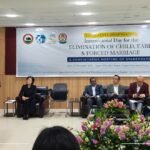
Officials discussed the issue during a state-level observance of the International Day for the Elimination of Child, Early and Forced Marriage in Kohima on November 27. The programme included a stakeholder consultation and a pledge-taking drive under the Bal Vivah Mukt Bharat campaign.
The Department of Social Welfare organised the event through Mission Vatsalya and Mission Shakti. It also collaborated with Prodigals’ Home and Just Rights for Children.
The consultation brought together government representatives and other stakeholders to discuss ways to prevent child marriage. Moreover, participants emphasised the need for stronger community involvement and coordinated action.
NFHS-5 Data Highlights Child Marriage in Nagaland
During the programme, Jamir shared figures from the National Family Health Survey-5 (NFHS-5). According to the survey, 5.6% of women aged 20–24 in Nagaland married before reaching 18.
However, the figures show a significant difference between rural and urban areas.
- Rural areas: 7.3% of women aged 20–24 married before 18.
- Urban areas: 2.4% of women in the same age group married before 18.
- Overall state figure: 5.6%.
These figures highlight the need for continued awareness and preventive measures, particularly in rural communities.
Jamir also identified teenage pregnancy as a concern that requires attention alongside child marriage. He called for sustained community-level efforts to protect children and ensure that early marriage does not deprive them of education and future opportunities.
Child Marriage Prohibition Officers Designated in All 17 Districts
The Social Welfare Department has taken steps to strengthen prevention mechanisms across Nagaland. Jamir said the department had designated Child Marriage Prohibition Officers (CMPOs) in all 17 districts.
These officers play an important role in preventing child marriages and supporting official intervention when authorities identify children at risk.
Meanwhile, District Child Protection Units under Mission Vatsalya have been organising awareness programmes in schools and local communities. These activities aim to improve public understanding and encourage people to report cases of suspected child marriage.
The department has also been working with local stakeholders to promote children’s rights and strengthen protection systems.
Additionally, the Beti Bachao, Beti Padhao initiative under Mission Shakti supports efforts to promote girls’ education, address school dropouts and challenge discriminatory social practices.
Nagaland Plans Wider Community Participation
Social Welfare Advisor and MLA Wangpang Konyak stressed that government departments alone cannot eliminate child marriage. He called for stronger cooperation among churches, tribal and community leaders, educational institutions, NGOs and civil society organisations.
Konyak also highlighted the importance of protecting the rights and dignity of women and girls. He urged communities to ensure that every child receives opportunities for education and personal development.
Furthermore, he expressed concern about teenage pregnancy, particularly in rural areas. He cautioned against assuming that the absence of formally solemnised or officially reported child marriages means the problem no longer exists.
The consultation therefore focused on building stronger coordination among government agencies and community institutions. Such cooperation can help identify children at risk and ensure timely intervention.
100-Day Campaign to Reach One Lakh People
The state-level programme also outlined a wider awareness campaign against child marriage and child trafficking.
According to the Nagaland government’s Department of Information and Public Relations, the statewide 100-day campaign will run from November 27, 2026, to March 8, 2027. The initiative aims to reach one lakh people across the state.
The campaign will focus on five key areas:
- Community responsibility: Encouraging communities to take an active role in preventing child marriage.
- Institutional accountability: Strengthening the responsibility of government departments and organisations.
- Protection of children: Supporting children who face the risk of early or forced marriage.
- Education and empowerment: Helping children continue their education and access future opportunities.
- District-level action: Developing clear plans and accountability mechanisms across districts.
Moreover, the campaign will promote coordinated reporting, timely intervention, counselling and rehabilitation. It will also encourage continued educational support for children affected by early marriage.
Participants took a pledge under the Bal Vivah Mukt Bharat campaign. They committed to upholding the legal marriage age of 18 for women and 21 for men, reporting cases where children face the risk of early or forced marriage, and helping vulnerable children continue their education.
Formal Adoption of the Act Remains a Key Step
The formal adoption of the Prohibition of Child Marriage Act, 2006, remains an important part of Nagaland’s efforts to strengthen its response to the issue.
Jamir confirmed that the state government is processing the formal adoption of the law. He also noted that the department already implements its principles through various interventions.
The ongoing initiatives include district-level officers, awareness programmes, school-based activities and cooperation with civil society organisations.
However, sustained implementation will remain essential. Awareness campaigns must reach remote communities, while officials and local institutions need effective systems to identify and protect children at risk.
Nagaland’s proposed 100-day campaign and ongoing efforts to formalise the Act reflect a wider push to address child marriage through legal, institutional and community-level measures.
Ultimately, the state’s efforts aim to protect children’s rights, support girls’ education and ensure that young people can make decisions about their futures without pressure or coercion.
Frequently Asked Questions (FAQs)
1. Is Nagaland formally adopting the Prohibition of Child Marriage Act?
Yes. Social Welfare Secretary Limawabang Jamir said the Nagaland government is processing the formal adoption of the Prohibition of Child Marriage Act, 2006.
2. What percentage of women in Nagaland married before turning 18?
According to NFHS-5 data cited by the Social Welfare Secretary, 5.6% of women aged 20–24 in Nagaland married before reaching 18.
3. Is child marriage more prevalent in rural or urban Nagaland?
The NFHS-5 figures show a higher prevalence in rural areas at 7.3%, compared with 2.4% in urban areas.
4. How many Child Marriage Prohibition Officers has Nagaland designated?
The Social Welfare Department has designated Child Marriage Prohibition Officers in all 17 districts of Nagaland.
5. What is the Bal Vivah Mukt Bharat campaign?
Bal Vivah Mukt Bharat is a national campaign that aims to eliminate child marriage through public awareness, community participation and coordinated action.
6. When will Nagaland’s 100-day campaign against child marriage run?
The statewide campaign will run from November 27, 2026, to March 8, 2027. It aims to reach one lakh people and raise awareness about child marriage and child trafficking.